
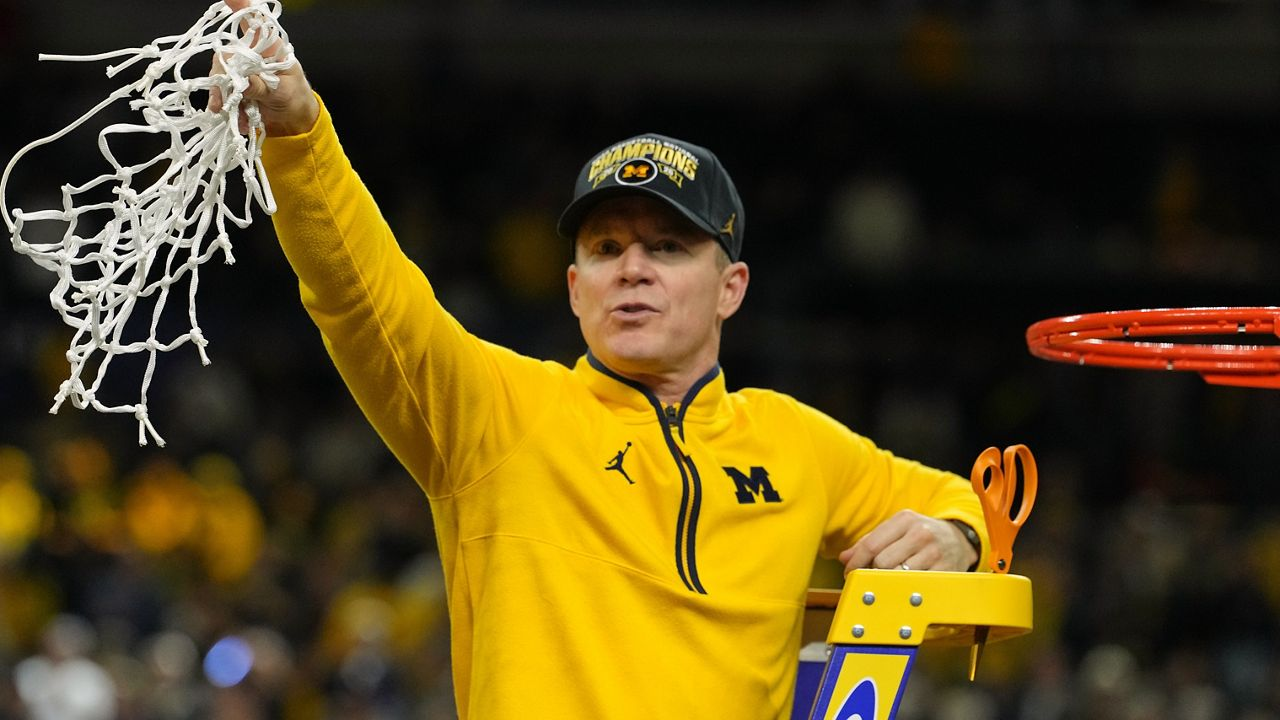
Dusty May’s journey from college basketball’s biggest stage to the NBA has become one of the most talked-about coaching stories of 2026. Just months after leading Michigan to its first national championship since 1989, the 49-year-old coach is reportedly set to leave Ann Arbor and take over as head coach of the Dallas Mavericks. The move marks a dramatic new chapter for a coach whose rise through the basketball ranks has been built on patience, persistence, and a reputation for maximizing talent.
For Michigan fans, the news arrives as a shock. May had transformed a struggling program into the nation’s best team in only two seasons. His departure comes immediately after delivering one of the greatest campaigns in Wolverines history, leaving behind a championship roster and a fan base that believed it was entering a new golden era. For the Mavericks, however, the hiring represents a bold attempt to reshape a franchise seeking a fresh identity after several turbulent seasons.
May’s path to this moment was far from conventional. Unlike many high-profile coaches who quickly climbed through elite programs, he spent decades working his way through the sport’s lower levels, learning every aspect of the profession. That lengthy apprenticeship eventually helped him become one of the most respected minds in college basketball and ultimately earned him an opportunity at the NBA level.
From Student Manager to Rising Coaching Star
Long before he became a national championship-winning coach, Dusty May was a student manager under legendary Indiana coach Bob Knight. The experience provided him with an early education in basketball’s finer details and introduced him to the demanding standards required to succeed at the highest levels of the game. Although Knight’s influence was significant, May eventually developed a coaching style that contrasted sharply with his former mentor’s famously intense personality.
Instead of relying on confrontation and fear as motivational tools, May built a reputation as a players’ coach. He became known for creating strong relationships with athletes, empowering them with confidence, and fostering an environment where development and accountability existed side by side. Players frequently praised his communication skills and willingness to adapt his system to their strengths rather than forcing them into rigid roles.
His rise through the coaching profession was gradual. After serving in administrative and video coordinator positions at Southern California and Indiana, May moved into assistant coaching roles at several programs. Over the next decade and a half, he worked at Eastern Michigan, Murray State, UAB, Louisiana Tech, and Florida. Each stop expanded his experience and exposed him to different coaching philosophies, recruiting methods, and program-building strategies.
The lengthy climb reflected both the competitiveness of the profession and May’s determination. Many aspiring coaches never receive a head coaching opportunity, yet May continued refining his craft while waiting for the right chance. That opportunity finally arrived in 2018 when Florida Atlantic hired him as its head coach.
At the time, Florida Atlantic was hardly viewed as a future national contender. The program had reached the NCAA Tournament only once before May’s arrival and rarely attracted significant national attention. Yet May steadily built a foundation through recruiting, player development, and a modern offensive system designed to maximize spacing and versatility.
Michigan head coach Dusty May is leaving for the Dallas Mavericks’ head coaching job, per multiple reports.
— FOX College Hoops (@CBBonFOX) June 22, 2026
May posted a 64-13 record in Ann Arbor and led the Wolverines to a national championship. pic.twitter.com/v1i4J07Lc6
His breakthrough came during the 2022-23 season. Florida Atlantic captured the attention of the college basketball world by advancing all the way to the Final Four. The remarkable run transformed both the program and May’s national profile. What had once seemed like a surprising Cinderella story quickly became evidence that May possessed exceptional coaching ability.
Rather than viewing the Final Four appearance as a one-time achievement, May demonstrated that his success was sustainable. Florida Atlantic returned to the NCAA Tournament the following season, further strengthening his reputation as one of the brightest coaching minds in the sport. By then, major programs across the country viewed him as a prime candidate whenever a high-profile position became available.
Reviving Michigan and Delivering a Championship
Michigan eventually won the race to hire May, bringing him back to the Midwest and entrusting him with one of college basketball’s most recognizable programs. The Wolverines desperately needed new leadership after enduring a difficult stretch under former coach Juwan Howard. When May arrived in Ann Arbor, Michigan was coming off an 8-24 season. The program’s decline had been dramatic, and many observers believed rebuilding would require several years. Instead, May engineered one of the fastest turnarounds in recent college basketball history.
A major reason for that success was his mastery of the transfer portal. As college athletics entered a new era of player movement, May demonstrated an ability to identify talent, evaluate fit, and quickly assemble competitive rosters. Rather than relying exclusively on traditional recruiting classes that might take years to develop, he aggressively targeted experienced players capable of contributing immediately.
Read : Wellness Coach Kristian Trend Dies After Detox Ceremony Using Amazonian Frog Poison
The strategy paid off almost instantly. During his first season, Michigan returned to national relevance and advanced to the Sweet 16. The achievement alone represented a remarkable turnaround from the struggles of the previous year, but it ultimately served only as a preview of what was coming next. Entering the 2025-26 season, expectations were significantly higher. May once again reshaped the roster through recruiting and portal additions while retaining key contributors who had flourished under his guidance.
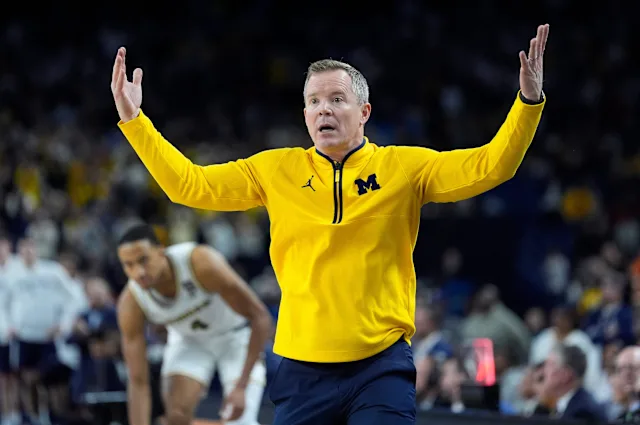
The resulting team possessed depth, versatility, and a level of chemistry rarely seen in modern college basketball. Michigan’s dominance became apparent early in the season. The Wolverines consistently defeated elite competition, controlled the Big Ten race, and established themselves as one of the nation’s premier teams. Their success was driven by a balanced attack on both ends of the floor and a culture that emphasized unselfish play.
Among the team’s most important contributors were players such as Elliot Cadeau, Trey McKenney, Aday Mara, Morez Johnson Jr., and Yaxel Lendeborg. Under May’s leadership, the roster developed into a cohesive unit capable of adapting to different opponents and game situations. The season culminated in a historic NCAA Tournament run. Michigan navigated a challenging bracket and ultimately captured the national championship, securing the school’s first title since 1989. The victory represented the crowning achievement of May’s coaching career and completed one of the most impressive program transformations in recent memory.
Statistically, the numbers were extraordinary. Michigan finished the championship season with a 37-3 record while claiming both a Big Ten regular-season title and the national championship. Across May’s two seasons with the Wolverines, the program compiled an overall record of 64-13. Perhaps most remarkable was the speed with which the transformation occurred. Programs often require years to recover from losing seasons and rebuild championship aspirations. May accomplished both tasks in just two years, establishing himself among the elite coaches in college basketball before ultimately deciding to pursue a new challenge.
Why the Dallas Mavericks Wanted Dusty May
The Dallas Mavericks’ reported decision to hire Dusty May reflects both his accomplishments and the organization’s desire for a fresh start. Following a disappointing 26-56 season and a second consecutive playoff absence, the franchise entered the offseason searching for new leadership and a renewed vision. The Mavericks have experienced significant upheaval in recent years. After reaching the NBA Finals in 2024, the organization underwent dramatic changes, including the controversial departure of franchise cornerstone Luka Dončić. Those moves contributed to uncertainty both on and off the court, creating pressure for the front office to chart a new course.
Read : Teen Umpire Jameson Morris Tosses Baseball Coach in Now-Viral Video
That responsibility now rests largely with president and alternate governor Masai Ujiri, who arrived with a reputation for building successful organizations and making bold decisions. One of his first major moves was parting ways with head coach Jason Kidd, signaling his intention to reshape the franchise’s culture and direction. May appears to fit that vision. His reputation as a relationship-builder, talent developer, and innovative strategist aligns with the qualities many modern NBA teams seek in head coaches.
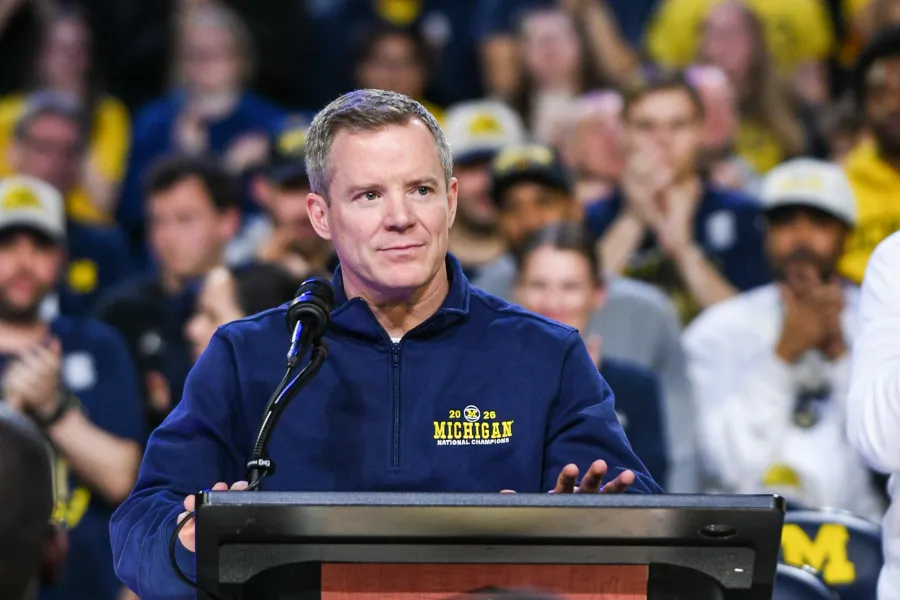
While he lacks professional coaching experience, his ability to quickly establish successful cultures and maximize roster potential made him an attractive candidate. Another factor likely influencing Dallas’ decision is the presence of Cooper Flagg, the franchise’s emerging superstar. The 19-year-old forward has already become the centerpiece of the Mavericks’ long-term plans after winning NBA Rookie of the Year. Developing young talent will be a crucial component of Dallas’ future, and May’s collegiate track record suggests he is particularly skilled in that area.
Throughout his coaching career, May has consistently helped players improve their games and exceed expectations. Whether working with overlooked recruits at Florida Atlantic or high-level transfers at Michigan, he demonstrated an ability to unlock potential and create systems that highlight individual strengths. Those skills could prove valuable as Dallas attempts to build around Flagg and other young pieces.
Of course, the transition from college basketball to the NBA carries substantial risks. History offers numerous examples of successful college coaches who struggled when making the leap to the professional level. Differences in player management, scheduling, roster construction, and organizational dynamics create challenges that cannot be fully replicated in the college game.
Michigan fans may remember that reality all too well. Former Wolverines coach John Beilein left for the Cleveland Cavaliers in 2019 but lasted only one season before departing. Even highly accomplished coaches have found adapting to the NBA environment difficult. Yet May’s supporters believe his personality may help ease that transition. His emphasis on communication, collaboration, and player relationships could translate effectively to a league where managing stars and maintaining locker-room chemistry are often as important as tactical decisions.
Meanwhile, Michigan faces immediate uncertainty. The Wolverines must quickly identify a replacement while attempting to preserve a championship-caliber roster. Assistant coach Mike Boynton Jr. has reportedly emerged as a leading candidate to serve as interim head coach, but the program’s long-term direction remains unresolved.
Regardless of what happens next, Dusty May’s legacy at Michigan is secure. In just two seasons, he inherited a struggling program, restored national relevance, captured a national championship, and delivered one of the most remarkable turnarounds in college basketball history. Now he leaves college basketball’s summit behind in pursuit of a new challenge with the Dallas Mavericks, hoping to prove that his success can continue on the NBA stage.
Vagina discharge tasteEscort karina kayBest free porn on webNaturist swingerPunch copper stripSon forces mom
porn videoAfrican nude dance xnxx Bangkok erotic in man massageAmateur facial moviesAsian sex thigh highsKathleen nudeFree full length porn trailerErotic lesbian most teenMature women getting
shaggedVirgin remy full lace wigsMidget video post https://xxxxvideos.cc/ Bondage skinnyGymnastic nakedHottest amateurs cum inm mouth
vidoesMature and boysNaked male mexicanSexual abuse fanastyOpen sourse sex xnxx Natalie denise
sperl sex tapeAdult women’s storiesFor real having sexRedheads eating cream piesMature circumcisionsCasual sex in lake preston south dakotaFemale
escort in phillyPauley nudeCeleb pussy picturesTeen role play chatLesbian get wildCunts to the
limit