
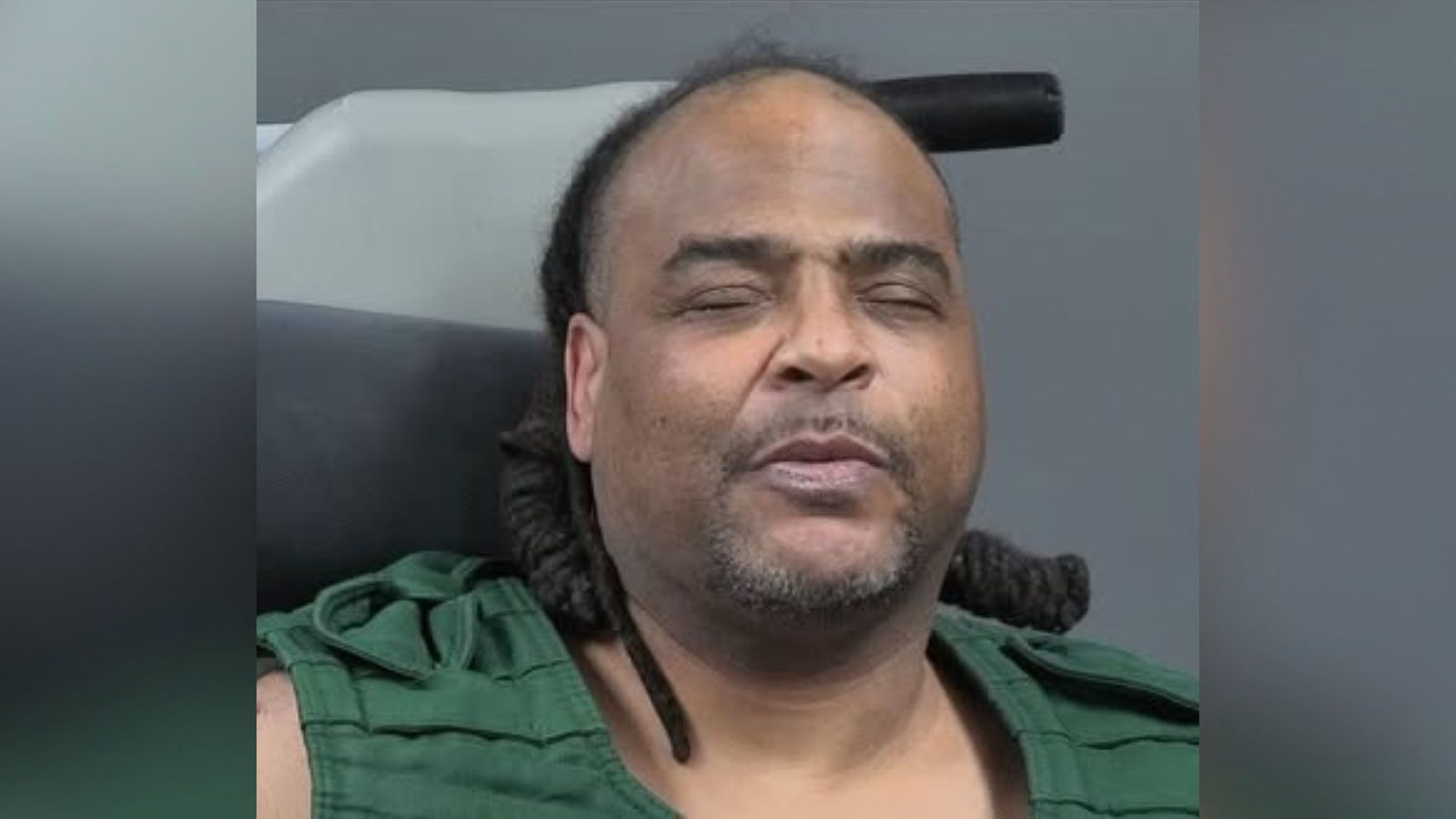
The fatal shooting of Kentucky State Police Trooper Hayden Phillips has brought renewed attention to the man accused of killing him, 51-year-old Emonnie Branch of Tennessee. Branch appeared in Warren County court Tuesday, where a judge denied him bond as prosecutors argued that he poses a flight risk and a danger to the community. The case has also raised questions about Branch’s previous encounters with the criminal justice system, his probation status in Tennessee and how his prior sentences were reduced.
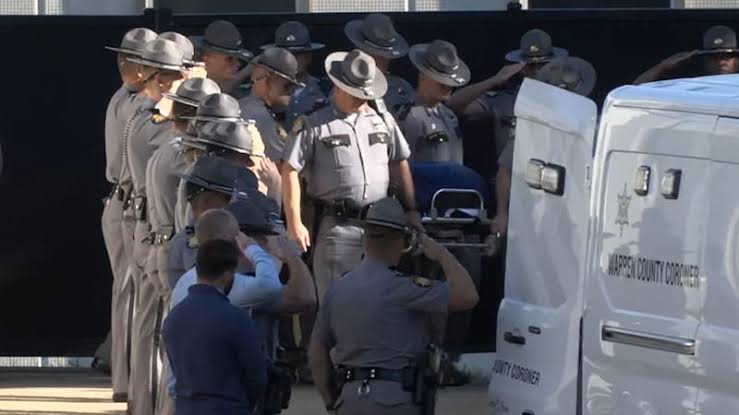
According to authorities, Phillips was conducting a traffic stop on Interstate 65 in Warren County when he was shot by an occupant of the vehicle. The vehicle fled the scene, prompting a major manhunt before Branch was taken into custody. Phillips, 30, was assigned to Kentucky State Police Post 3 in Bowling Green and was identified as Unit 369. His death has since led to funeral and vigil arrangements, while a Kentucky police foundation has been accepting donations to support his family.
Branch now faces a Kentucky charge of murder of a peace officer, an offense that prosecutors and legal experts say can carry the death penalty. His preliminary hearing is scheduled for October 2. While the case is still developing and the allegations against Branch have not been proven in court, his previous legal history in Tennessee has become an important part of the discussion surrounding the investigation.
Branch Was Already Facing Legal Trouble in Tennessee
Before the fatal Kentucky shooting, Emonnie Branch was already dealing with legal issues in Tennessee. Court documents show that he was wanted on a warrant out of Sumner County, Tennessee, at the time of the Kentucky case. He was also approximately one year into a five-year probation sentence and allegedly violated that probation twice in April.
That information became significant during Branch’s appearance in Warren County court, where prosecutors argued against releasing him on bond. The prosecutor described Branch as a flight risk and said the seriousness of the alleged offense, combined with the circumstances surrounding his interaction with police, made him a danger to the community. Prosecutors also alleged that Branch provided police with a false name during the interaction.
“He’s a flight risk,” the prosecutor said in court, while also pointing to the severity of the alleged offense and the belief that Branch gave police a false name. The prosecutor argued that Branch was “most definitely a danger” to the community and others. The judge ultimately denied Branch bond, meaning he will remain in custody as the Kentucky case moves forward. His next major court proceeding is the preliminary hearing scheduled for October 2, when the case will proceed to another stage of the legal process.
Branch’s previous probation status in Tennessee is likely to remain an important issue. If a person on probation is accused of violating the terms of that probation, the state where the probation was imposed can potentially take action. Legal experts say several outcomes can be possible depending on the circumstances, including revocation of probation. The exact consequences in Branch’s Tennessee case will depend on the relevant court proceedings and the terms of his probation.
The Kentucky case, however, is separate and substantially more serious. The accusation now facing Branch concerns the death of a state police trooper during a traffic stop. Authorities will have to establish the facts surrounding the shooting through evidence and court proceedings, while Branch remains legally presumed innocent unless proven guilty.
The circumstances have also brought attention to the interstate nature of Branch’s legal history. Because his previous case was in Tennessee while the fatal shooting occurred in Kentucky, questions have naturally emerged about how information regarding warrants, probation and criminal records is shared between states and how quickly authorities can act when a person is wanted elsewhere.
His Criminal History and Questions About Reduced Sentences
Branch’s criminal history, according to records obtained by FOX 56, includes a lengthy history of interactions with law enforcement. That history has prompted questions about how he was outside jail while serving a five-year probation sentence and how his previous sentences were reduced. However, the details of a criminal history require careful interpretation. A criminal record can contain arrests, charges, convictions, probation violations and other court actions, and not every charge ultimately results in a conviction.
Fayette Commonwealth’s Attorney Kimberly Baird emphasized this distinction when discussing Branch’s record. Baird explained that a charge appearing in a criminal history does not necessarily mean that the person was convicted of that offense. She said there can be situations in which a serious charge is eventually dismissed because of changes in the facts of a case, issues involving a victim’s participation or other circumstances affecting the prosecution.
That distinction is particularly important when looking at Branch’s past. The existence of an arrest or charge alone does not establish that the alleged conduct occurred or that the person was legally found responsible for it. Convictions and court dispositions provide a more precise picture of what was established in previous cases. At the same time, records indicate that Branch had sentences reduced multiple times. This has led to broader questions about the use of good-time credits and other mechanisms that can shorten the amount of time someone spends incarcerated.
Read : Who Was Hayden Phillips, the Kentucky State Trooper Fatally Shot During Traffic Stop?
Baird explained that some incarcerated people can receive good-time credits or meritorious good-time credits. Participation in certain programs can also result in credits depending on the rules of the jurisdiction. Such systems are generally designed to encourage positive behavior, participation in rehabilitation programs or compliance with institutional requirements, although the specific rules differ between states.
In Branch’s case, Baird suggested that Tennessee may have mechanisms that function in a similar way. That could help explain why a person who previously received a lengthy sentence may ultimately spend less time incarcerated than the original sentence might suggest. The issue has become especially significant because Branch was reportedly about one year into a five-year probation sentence when the latest events unfolded. His probation status and alleged violations in April are now being examined alongside his new Kentucky case.
Baird also said that the system surrounding good-time credits is something lawmakers may want to examine in consultation with departments of corrections. She pointed to the timing of credits as an issue worth considering, explaining that credits can sometimes be awarded earlier rather than being tied strictly to the amount of time a person has already served without problems.
Her comments do not establish that Branch’s previous sentence reductions caused the Kentucky shooting, nor do they establish that the corrections system failed in his particular case. Instead, they highlight a broader policy question about how different states calculate sentences, probation and early-release credits. For Branch, those earlier legal matters may now have consequences beyond the Kentucky prosecution. His Tennessee probation could potentially be reviewed in light of the new allegations, and authorities there could determine whether additional action is appropriate.
The Kentucky Case and What Happens Next
The most serious development in Branch’s legal history is now the Kentucky case involving Trooper Hayden Phillips. Phillips was 30 years old and assigned to Kentucky State Police Post 3 in Bowling Green. According to authorities, he was conducting a traffic stop on I-65 North in Warren County at approximately 2 p.m. Monday when he was shot by an occupant of the vehicle. The vehicle fled after the shooting, leading to a manhunt. Branch was eventually taken into custody, ending the immediate search for the suspect.
Read : Who Is Nekime Oxendine, the Trooper Accused of Murdering Capt. Adam Bean in a Love Triangle Dispute?
The circumstances of the traffic stop, the shooting and the subsequent flight are expected to become central pieces of evidence as investigators and prosecutors build the case. Branch has been charged with murder of a peace officer, a charge that carries extremely serious potential consequences under Kentucky law. Baird said the charge could carry the death penalty. However, the filing of the charge does not mean a death sentence will automatically result. The ultimate outcome will depend on the evidence, court proceedings, applicable law and decisions made throughout the prosecution.

The denial of bond means Branch will remain in custody while the case progresses. His preliminary hearing is scheduled for October 2. Preliminary hearings can provide an early examination of the prosecution’s evidence and help determine whether the case moves forward under the applicable legal standard. The death of Phillips has also affected the wider Kentucky State Police community. A 30-year-old trooper was killed while carrying out what began as a routine traffic stop, and authorities have since announced funeral and vigil services. A Kentucky police foundation has also been accepting donations intended to support Phillips’ family.
As the investigation continues, authorities will likely focus on establishing exactly what happened during the traffic stop, identifying the evidence connecting Branch to the shooting and documenting what happened before and after Phillips was killed. Investigators may also examine Branch’s movements, the vehicle involved and his interactions with law enforcement.
Meanwhile, his previous Tennessee case is likely to remain part of the public discussion, particularly because of the outstanding warrant, alleged probation violations and the history of sentence reductions described in court-related records. But those issues should be kept separate from the question of whether Branch committed the Kentucky offense. His past record may be relevant to legal proceedings and sentencing issues, but it does not by itself prove the current allegation.
The case also illustrates how complicated criminal justice records can become when a person has legal proceedings in more than one state. Warrants, probation, sentence credits and criminal charges can involve different courts and agencies, each operating under its own laws and procedures. What happens in one state does not necessarily translate directly into another state’s system.
For now, Emonnie Branch remains the accused suspect in the fatal shooting of Trooper Hayden Phillips. He has been denied bond and is scheduled to appear for his preliminary hearing on October 2. The Kentucky prosecution will determine the facts and legal consequences of the allegations, while his Tennessee probation and earlier criminal cases could create additional proceedings of their own. As the case moves through court, more information is expected to emerge about the events on Interstate 65, Branch’s previous legal history and the circumstances that led to the deadly encounter.
Had a great experience with the withdrawals, they were processed much faster than I expected. Big thanks to phmeryph for the great service.
Hey there! Would you mind if I share your blog with my zynga group? There’s a lot of people that I think would really appreciate your content. Please let me know. Thanks
Registration was super quick and I was able to start playing in minutes. Definitely a user friendly site. 10jiliccregister
Quick access and easy login. I appreciate how stable the platform is even during peak hours. Cheers! pk939gamelogin