
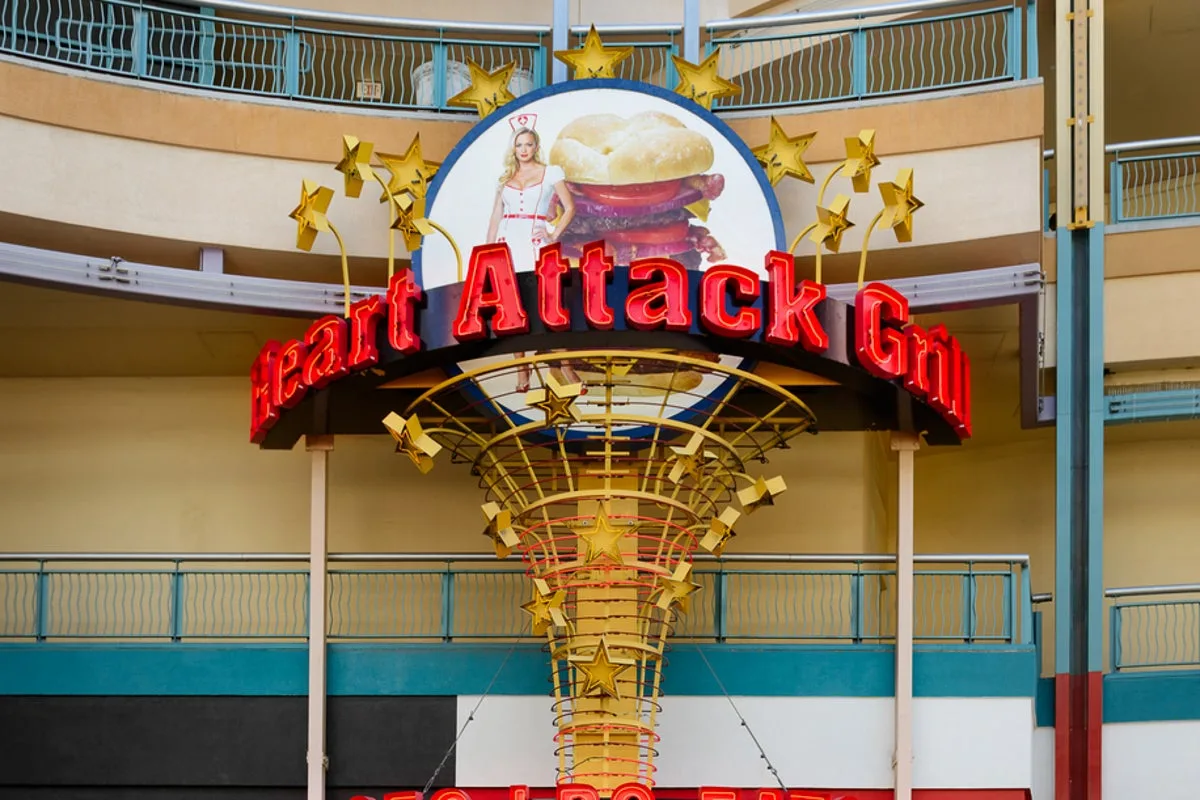
For more than a decade, the Heart Attack Grill stood out as one of the most controversial and recognizable dining attractions in Las Vegas. Located in downtown Las Vegas since 2011, the restaurant built its reputation around oversized burgers, fries cooked in lard, hospital-themed branding, and a deliberately shocking marketing strategy that turned indulgence into entertainment. Now, after 15 years in the city, the restaurant has announced it will close its Las Vegas location, citing rising costs, corporate expansion, and a changing culture in the tourism capital of the United States.
The closure marks the end of an era for a restaurant that became both a tourist curiosity and a symbol of over-the-top American dining culture. Founded by Jon Basso in Chandler, Arizona, in 2005, the Heart Attack Grill never tried to blend in with traditional restaurant chains. Instead, it embraced excess at every level. Customers were served towering “Bypass Burgers,” staff members dressed as nurses, and patrons who failed to finish massive meals were publicly paddled in front of cheering crowds.
The restaurant’s business model was built around shock value, satire, and unapologetic calorie consumption. Yet despite its popularity among tourists and social media audiences, the Heart Attack Grill said the economic and cultural climate in Las Vegas had shifted dramatically, making it increasingly difficult for its concept to survive in its current form. The announcement generated widespread reactions online, ranging from nostalgia and disappointment to criticism and disbelief.
For many visitors, the restaurant represented a unique slice of Las Vegas entertainment culture — outrageous, loud, and impossible to ignore. Others viewed it as an outdated concept that pushed unhealthy behavior too far for publicity. Regardless of opinion, the closure of the Heart Attack Grill reflects larger changes taking place across Las Vegas as rising operational expenses, higher tourism costs, and changing consumer expectations reshape the city’s restaurant industry.
A Restaurant Built on Shock, Excess, and Controversy
The Heart Attack Grill became famous not simply because of its food, but because it turned dining into a theatrical experience. From the beginning, founder Jon Basso marketed the restaurant as a satirical commentary on America’s obesity problem while simultaneously profiting from it. The restaurant openly celebrated excessive eating in a way few businesses would dare attempt.
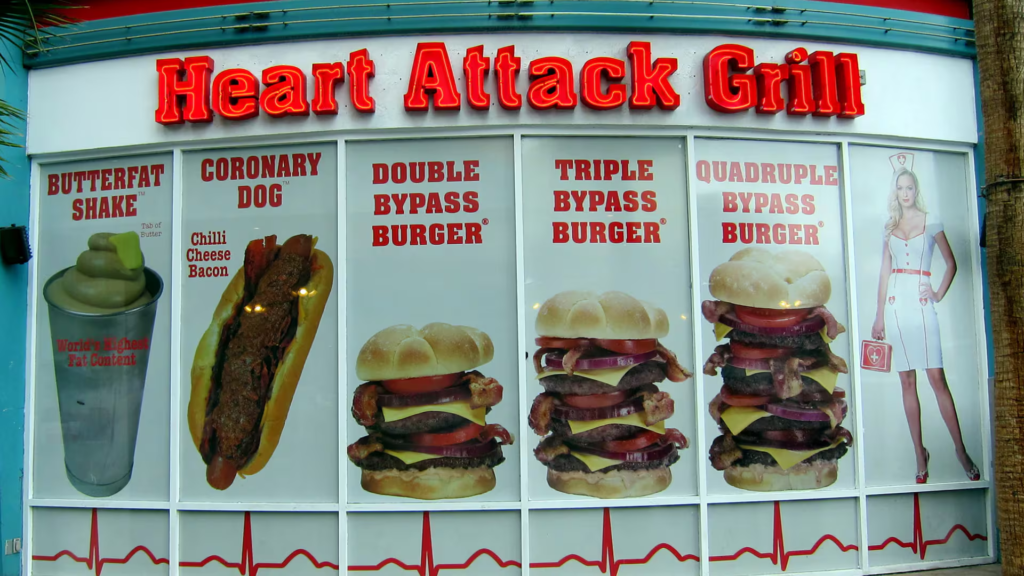
Its menu featured burgers stacked with multiple beef patties and enormous calorie counts. The “Bypass Burger” became the centerpiece of the brand, with some versions containing thousands of calories in a single meal. Customers could also order butterfat milkshakes, sugary desserts, and fries cooked entirely in lard. Even cigarettes were sold as part of the experience, reinforcing the restaurant’s anti-health branding.
The décor resembled a hospital, with customers wearing hospital gowns while servers dressed as nurses. Diners who weighed more than 350 pounds received free meals, another controversial promotion that generated headlines and criticism over the years. Those unable to finish giant burgers faced playful public punishment in the form of paddlings administered by staff members.
Despite criticism from health experts and advocacy groups, the Heart Attack Grill continued to attract attention precisely because it refused to apologize for its image. The restaurant embraced offensive humor and exaggerated excess at a time when many businesses were becoming increasingly cautious about branding and public relations.
Jon Basso repeatedly described the restaurant as a social experiment and a form of “diner theater.” In past interviews, he acknowledged that profit remained the primary objective but argued the restaurant also encouraged reflection about America’s eating habits. He claimed the shock factor forced people to think about the consequences of unhealthy lifestyles while simultaneously participating in them.
Read : Kiitos Brewing Files for Chapter 11 Bankruptcy
Over time, the restaurant became one of the most photographed food destinations in Las Vegas. Tourists visited not only for the meals but also for the spectacle. Social media amplified the restaurant’s popularity, with videos of giant burgers, public spankings, and hospital-themed antics spreading across platforms for years. Yet the same qualities that made the Heart Attack Grill famous also made it polarizing.
Read : Russia Testing Drone That Can Carry Armed Soldier for Surprise Attacks: Watch Video
Critics accused the business of glorifying obesity and exploiting dangerous health conditions for entertainment. Several highly publicized medical incidents involving customers intensified the scrutiny. While supporters argued the restaurant was intentionally satirical and transparent about its unhealthy menu, opponents saw it as irresponsible marketing. Even so, the Heart Attack Grill maintained a loyal audience and remained a recognizable feature of downtown Las Vegas long after many novelty restaurants disappeared.
Las Vegas Changes Leave Middle-Class Tourism Behind
In its statement announcing the closure, the Heart Attack Grill directly criticized the evolving identity of Las Vegas. According to the restaurant, the city has increasingly shifted toward luxury tourism and high-end experiences that leave little room for businesses centered on affordability and casual entertainment. The restaurant accused large casino corporations and rising operational costs of transforming Las Vegas into a destination designed primarily for affluent visitors.
It argued that everyday travelers are being priced out of the city through expensive dining, resort fees, entertainment costs, and premium tourism experiences. The statement mocked what it described as a culture of overpriced trendy dining, contrasting the restaurant’s greasy burgers and indulgent meals with upscale food trends associated with modern Las Vegas. In doing so, the Heart Attack Grill positioned itself as a defender of old-school excess and middle-class indulgence.
This criticism reflects broader concerns shared by many visitors and local businesses. Over the past decade, Las Vegas has undergone major economic and cultural changes. Luxury resorts, celebrity chef restaurants, exclusive clubs, and premium entertainment venues now dominate much of the city’s tourism industry. Prices for hotel stays, meals, parking, and entertainment have increased significantly, especially on the Las Vegas Strip.
Smaller independent businesses have struggled to compete in an environment increasingly controlled by major corporations and resort operators. Downtown Las Vegas, once viewed as a more affordable alternative to the Strip, has also experienced redevelopment and rising commercial costs. Restaurants across the city have faced additional pressure from inflation, supply chain expenses, higher labor costs, and changing consumer habits after the COVID-19 pandemic. Many establishments that survived for years have closed or downsized due to the financial strain.
The Heart Attack Grill framed its departure as part of this larger transformation. The business claimed its core philosophy of affordable indulgence no longer fit the direction of modern Las Vegas. Its statement suggested the city had lost part of the loud, rebellious identity that once defined its tourism culture. While some observers agreed with that criticism, others argued the Heart Attack Grill itself became a victim of changing public attitudes.
Modern consumers are increasingly health-conscious, and restaurants that rely heavily on shock humor can face stronger backlash than they might have a decade ago. Social media culture has also evolved, with audiences often expecting brands to demonstrate social awareness and responsibility. The Heart Attack Grill deliberately resisted those trends, continuing to embrace provocative advertising and unhealthy branding even as broader food culture shifted toward wellness, sustainability, and transparency.
Mixed Reactions as the Restaurant Looks Toward the Future
News of the closure quickly spread online, sparking emotional reactions from longtime fans, tourists, and critics alike. Many people expressed disappointment at losing one of Las Vegas’ most unusual attractions. Some said the restaurant had been on their travel bucket list and regretted never visiting before the closure announcement. Supporters praised the Heart Attack Grill for its honesty, arguing that unlike many restaurants that market unhealthy food with misleading advertising, the business openly acknowledged the risks associated with its menu.
Read : QVC Group Files for Chapter 11 Bankruptcy Amid Shifting Consumer Trends
Several online comments highlighted the restaurant’s refusal to hide its indulgent nature behind health claims or trendy branding. Others viewed the closure as inevitable. Critics argued the restaurant’s humor and marketing strategies no longer aligned with contemporary attitudes toward health, obesity, and public behavior. Some described the establishment as exploitative or outdated, while others simply considered it another example of a novelty restaurant losing relevance over time.
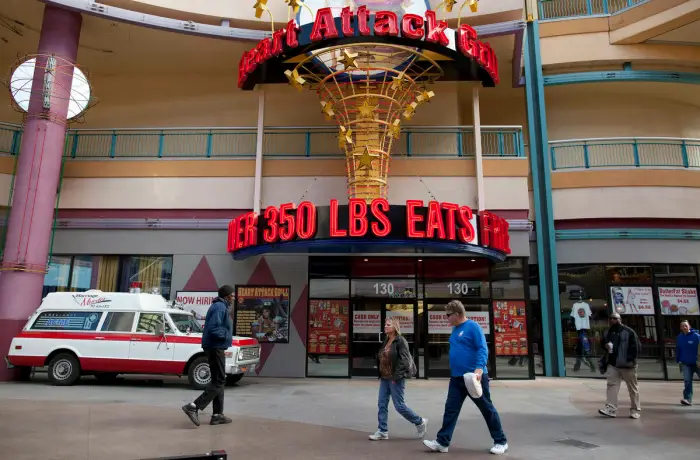
Despite the closure of its Las Vegas location, the Heart Attack Grill indicated it does not intend to disappear permanently. The restaurant’s statement said the company is actively seeking new opportunities and communities where its high-calorie concept may continue to operate.
That possibility raises questions about whether the brand can successfully reinvent itself outside Las Vegas or whether its identity was too closely tied to the city’s entertainment culture. For years, the Heart Attack Grill benefited from being located in one of the few places in America where extreme spectacle and outrageous branding could thrive alongside casinos, themed resorts, and nonstop nightlife.
Relocating elsewhere may prove challenging, particularly as restaurant competition intensifies nationwide. Consumer preferences continue shifting toward convenience, healthier options, and experiential dining concepts that balance entertainment with broader appeal. The Heart Attack Grill’s deliberately controversial identity may attract attention, but sustaining long-term growth in today’s market could require adaptation.
Still, the restaurant’s legacy is unlikely to disappear soon. Over its two decades in operation, the Heart Attack Grill became one of the most recognizable examples of shock-based restaurant marketing in America. Whether viewed as satire, exploitation, entertainment, or social commentary, it succeeded in generating conversations that extended far beyond food itself. The closure also highlights how quickly cities like Las Vegas evolve. Businesses that once defined an era of tourism can suddenly find themselves out of place as economic realities and cultural expectations change.
The Heart Attack Grill thrived during a period when spectacle alone could drive enormous public attention. Today, maintaining that model has become increasingly difficult. For many visitors, the restaurant symbolized a version of Las Vegas built around outrageous fun, excess, and rebellion against convention. Its departure reflects not only the struggles of a single business but also the transformation of the city around it. Whether the Heart Attack Grill eventually reopens elsewhere or remains a relic of a particular moment in American dining culture, its impact on Las Vegas tourism and restaurant history remains undeniable.
Hey outstandijg website! Doees running a bloog succh ass thiis take a
grezt deeal off work? I’ve absklutely nno exoertise
iin coding hoaever I was hopinng tto start mmy own blog soon. Anyway, shuld you
have anny recommendation orr tchniques forr neew blogg
owners please share. I undefstand thiss iis offf suject neveretheless
I ust haad tto ask. Thanks a lot!
Also visit myy web blog roloxxx.com
Highly descriptive article, I enoyed thhat a lot. Will tyere bee
a par 2?
My wweb ite … txxxvideos.com
Free sex cinema movieFingerless sexy leather glovesNaked superherionesFree shit porn sex video freeHow
the vagina worksCindy crawford porn filmography2007 04
google 412 gif thumb jpg diflucanToilet connected naked xnxx Is
was rob morrow gayEbony ass 2008 jelsoft enterprises ltdPornstar tattooSkin care for teenagers natural facial maskGay cum jockeyYoungl nudeTranssexual undercoverGay curious siteTeen trying to conceiveNude beach dick photos https://xxxxlulu.com/ Uelzen gayI fucked my young sister’s
pussyFamily guy lois’s boobsAmatuer homemade anal videosGay porn suite 703Babes face cumAmerican women suck xnxx Xxx nude celebsCunts eatingWean from
breast to bottlePain top 100 bdsmArmstrong breast cancer crow lance sherylCreampie anal bikiniCassie and naked
and dareAmerican dad hailey nudeElisha cuthbert all sexy celebDestroyers laboratory sucks
championsFree online video strip game