

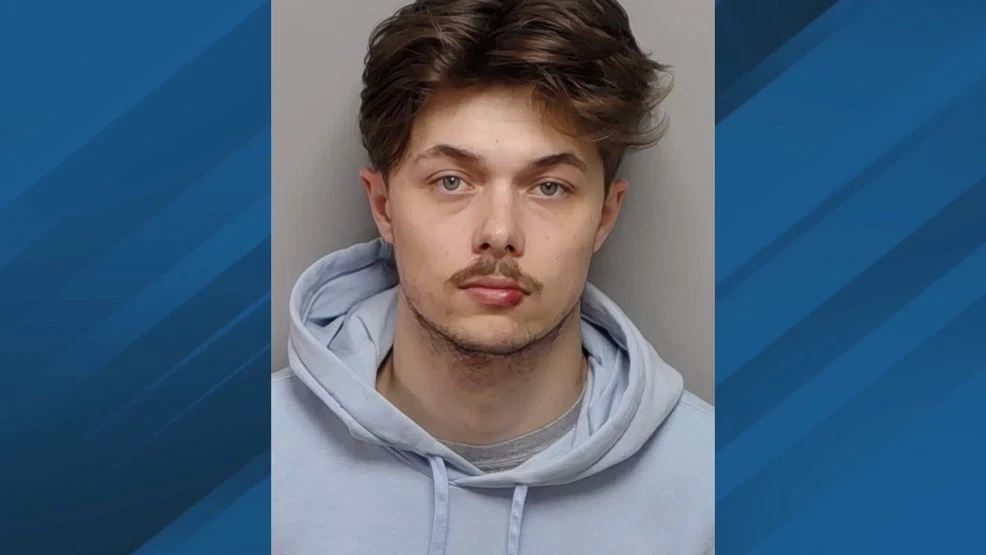
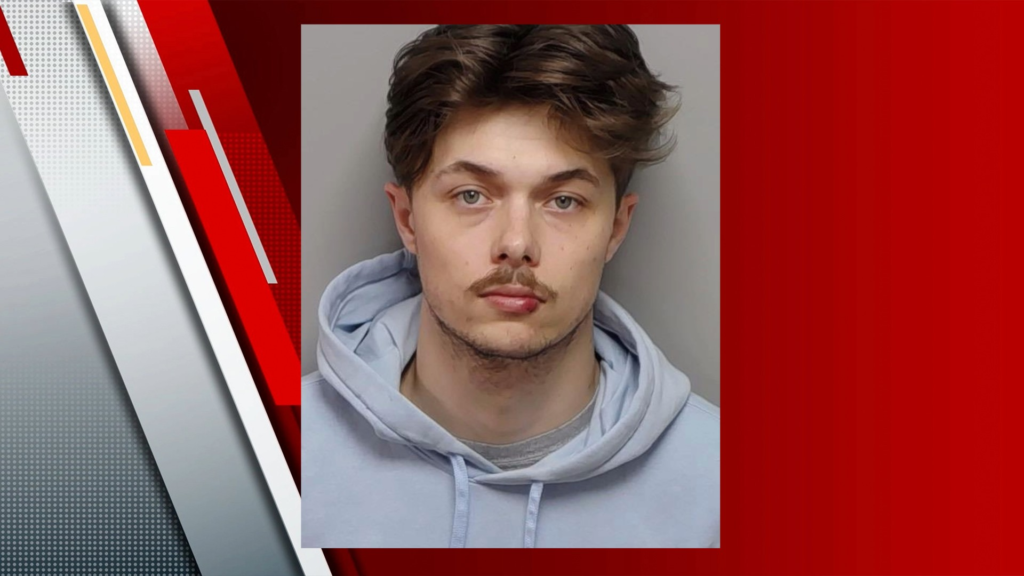
The arrest of 26-year-old Jacob Wenske in San Antonio has drawn national attention after authorities accused him of making violent threats against Erika Kirk and a major upcoming event hosted by Turning Point USA. Investigators allege that Wenske used social media posts and emails to threaten bombings and death against Kirk and other speakers connected to the conservative organization’s Women’s Leadership Summit scheduled to take place in downtown San Antonio. The case has intensified concerns about politically motivated threats, online extremism, and the growing dangers public figures face in the current climate of political polarization.
According to charging documents obtained by local investigators, Wenske now faces two felony counts of making a terroristic threat causing public fear. Authorities said the threats were detailed enough to prompt an immediate criminal investigation and heightened security concerns surrounding the event. The allegations have sparked broader conversations about online rhetoric escalating into criminal conduct and the responsibilities law enforcement agencies have in responding to threats before violence occurs.
The incident also comes at a sensitive moment for Turning Point USA and Erika Kirk personally. Kirk became the organization’s CEO following the death of her husband, Charlie Kirk, who was fatally shot during a Turning Point event in Utah last year. With emotions already heightened among supporters and critics of the organization, the alleged threats against Kirk and conference attendees have added another layer of tension ahead of the summit.
Social Media Posts and Emails Led to Terroristic Threat Charges
Authorities allege that the investigation into Jacob Wenske began after law enforcement became aware of threatening comments made online regarding Turning Point USA’s Women’s Leadership Summit, which is scheduled for June 5 through June 7 at the San Antonio Marriott Rivercenter located along the city’s River Walk. The summit is expected to bring together conservative speakers, activists, and attendees from across the country.
Investigators said Wenske responded to a social media post promoting the event by allegedly writing, “I know exactly where to bomb.” In another message within the same discussion thread, he allegedly stated, “I can’t wait to be the valet for her escort.” Authorities interpreted the comments as credible threats connected to the upcoming gathering and its featured speakers. The arrest warrant further states that investigators uncovered an email allegedly connected to an account registered to Wenske.
In the message, the sender reportedly wrote, “Death to Erika Kirk and every single speaker there!! America will live on without those scum on this earth. Every Christian nationalist shall perish in the bombing that will take place at every single Turning Point rally and event.” Law enforcement officials said the language of the messages, combined with references to bombings and violence directed toward specific individuals and events, led investigators to classify the situation as a serious public safety concern.
Authorities reportedly used multiple forms of digital evidence and identifying information to connect the accounts and messages to Wenske before obtaining an arrest warrant. San Antonio police arrested Wenske early Thursday. Court records show his bond was set at a combined $120,000. As of the latest reports, he remains charged with two felony counts tied to terroristic threats causing public fear. The charges do not require authorities to prove that an actual bombing plan existed.
Read : Amazon Driver Caught on Camera Taking Family’s Cat from Doorstep During Delivery
Under Texas law, prosecutors can pursue terroristic threat charges if statements are believed to intentionally place the public or specific groups in fear of serious bodily injury or violent acts. Investigators emphasized that threats involving mass violence, particularly toward organized public gatherings, are treated with urgency due to the potential risks involved. The case also highlights how online statements increasingly become central evidence in criminal investigations involving threats. Social media posts, emails, and digital communications are frequently used by law enforcement agencies to determine intent, identify suspects, and evaluate whether threats appear credible enough to warrant intervention.
Erika Kirk and Turning Point USA Face Heightened Security Concerns
The alleged threats against Erika Kirk come during a period of increased attention surrounding Turning Point USA and its public events. The conservative nonprofit organization has become one of the most recognizable youth-oriented political groups in the country, frequently hosting conferences, speaking tours, and leadership summits that attract thousands of attendees. Erika Kirk assumed leadership responsibilities within the organization after the death of her husband, Charlie Kirk, who had long served as a prominent conservative activist and public figure associated with Turning Point USA.
His fatal shooting at an event in Utah last September shocked supporters nationwide and intensified security concerns surrounding political gatherings. Since taking over as CEO, Erika Kirk has remained a visible figure within conservative political circles. Her upcoming appearance at the Women’s Leadership Summit was expected to be one of the organization’s major events of the year. The summit itself focuses on political engagement, leadership training, and networking opportunities for conservative women and activists.
Read : Astronauts May Suffer Kidney Damage After the Trip to Mars
Following the arrest of Wenske, security surrounding the event is expected to receive additional scrutiny. While authorities have not publicly disclosed specific security measures, high-profile political events commonly involve coordination between local police departments, private security teams, venue officials, and sometimes federal agencies when threats emerge.
Threats against political organizations and public figures have become increasingly common in recent years across the ideological spectrum. Law enforcement agencies throughout the United States have repeatedly warned about the dangers posed by online radicalization, politically charged rhetoric, and individuals who may attempt to intimidate or harm perceived ideological opponents. Experts in political violence prevention often note that public threats, even when they do not result in actual attacks, can still create significant fear and disruption.
Events may require enhanced security spending, organizers may face logistical complications, and attendees can feel unsafe participating in public political activities. The allegations against Wenske also underscore the broader issue of violent rhetoric online. Social media platforms have become central spaces for political debate, but authorities frequently monitor posts that appear to cross into threats of violence. Investigators in such cases typically assess whether the statements target identifiable individuals, reference specific locations or events, and suggest an intent to carry out harm.
In this instance, prosecutors appear to believe the alleged threats were serious enough to justify felony charges due to the references to bombings and targeted violence against speakers associated with the event. Authorities have not publicly stated whether any weapons, explosives, or additional evidence were discovered during the investigation.
Political Violence Concerns Continue to Rise Nationwide
The arrest of Jacob Wenske reflects a broader national pattern in which threats against political figures, activists, and public events have become more frequent and increasingly alarming to law enforcement officials. Across the country, authorities have reported rising numbers of cases involving threats communicated through social media, email, and other online platforms. Political tensions in the United States have intensified over the past several years, with public officials, advocacy organizations, journalists, and activists from multiple ideological backgrounds reporting threats and harassment.
Read : 17-Year-Old Dies After Jumping from Bridge into Jordan Creek with Friends
Experts say the rapid spread of inflammatory content online can contribute to environments where extreme rhetoric becomes normalized. Federal agencies including the FBI and Department of Homeland Security have repeatedly identified domestic extremism and politically motivated violence as major security concerns. While many threatening messages may never lead to physical violence, authorities increasingly intervene early when statements contain specific references to bombings, shootings, or attacks on public gatherings.
Legal experts note that terroristic threat laws are designed partly to prevent violence before it occurs. Prosecutors often argue that waiting until a suspect takes further action could place lives at risk, especially when threats involve crowded public events or identifiable targets. Defense attorneys in such cases, however, sometimes challenge whether online statements constitute genuine threats or protected speech under the First Amendment.
Courts generally evaluate several factors when determining whether speech crosses into criminal territory, including specificity, intent, context, and whether a reasonable person would interpret the statements as serious threats. Cases involving political rhetoric can become legally complex because investigators must distinguish between hyperbolic speech and credible threats of violence. For organizations like Turning Point USA, the situation also illustrates the ongoing challenges associated with hosting politically charged events in an increasingly divided climate.
Security concerns now play a major role in planning public conferences and rallies, particularly when high-profile speakers are involved. The Women’s Leadership Summit in San Antonio is still expected to proceed despite the threats and arrest. Event organizers have not indicated plans to cancel or postpone the gathering. Supporters of the organization argue that intimidation attempts should not prevent political groups from holding public events, while critics continue debating the broader political tensions that often surround such organizations.
As the criminal case moves forward, investigators and prosecutors will likely continue examining Wenske’s online activity, communications, and any additional evidence related to the alleged threats. Court proceedings may provide more information about how authorities identified him and whether investigators believe he had the capability or intent to act on the statements.
The case serves as another reminder of how digital communications can rapidly escalate into criminal investigations when they involve threats of violence. In an era where political discourse increasingly unfolds online, law enforcement agencies continue grappling with the challenge of balancing free speech protections while responding aggressively to statements viewed as potential dangers to public safety.
Üsküdar 7/24 Su Kaçağı Tespiti İnönü Stadyumu civarındaki apartmanımıza çok çabuk geldiler. https://elbvisio.de/