
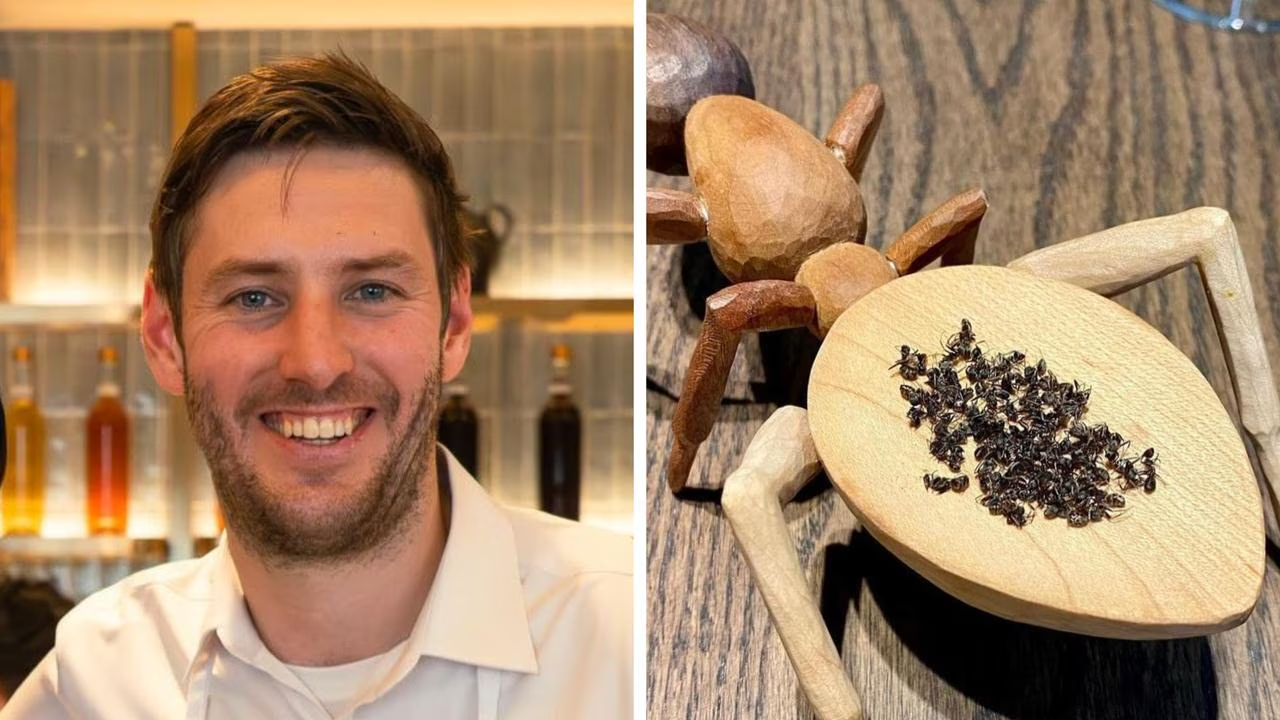
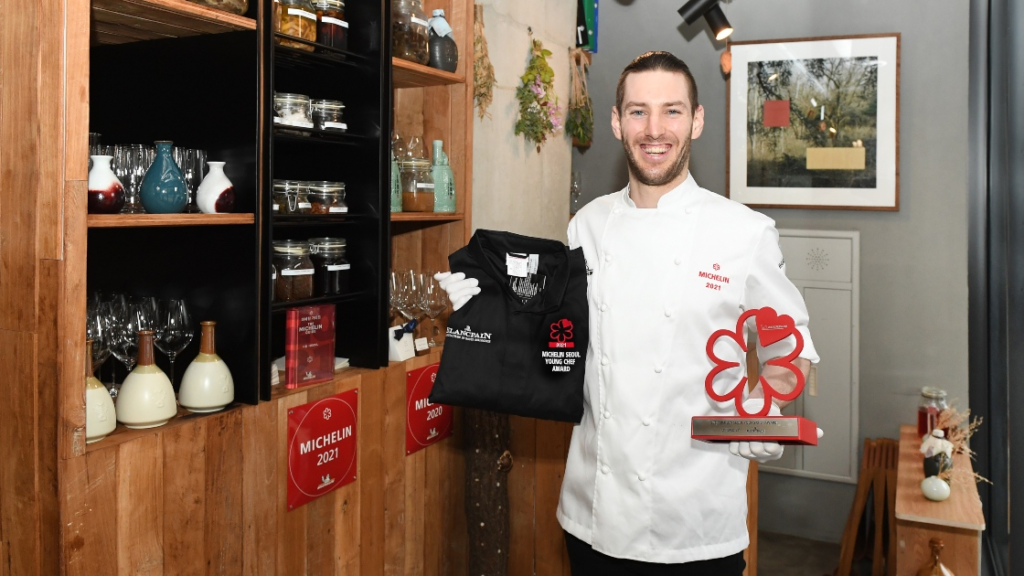
Joseph Lidgerwood has built a reputation as one of the most innovative Australian chefs working overseas, earning international recognition for his creative approach to fine dining in South Korea. The Tasmanian-born chef transformed his Seoul restaurant, Evett, into one of the country’s most celebrated culinary destinations, eventually securing two Michelin stars and appearing on Netflix’s Culinary Class Wars in 2024.
However, the acclaimed chef is now making headlines for reasons unrelated to his cooking achievements. South Korean prosecutors have accused Lidgerwood of illegally importing and serving ants as part of a dessert course at his Michelin-starred restaurant, a practice that authorities claim violated the country’s food safety regulations. The case has sparked widespread discussion about culinary experimentation, food laws, and the challenges international chefs can face when navigating local regulations.
Joseph Lidgerwood’s Rise from Tasmania to Michelin-Starred Success
Joseph Lidgerwood’s journey to becoming one of South Korea’s most recognized chefs began in Tasmania, Australia. Over the years, he developed a reputation for pushing culinary boundaries and embracing unusual ingredients, eventually taking his talents overseas. In 2019, he opened Evett in Seoul, introducing diners to a tasting menu inspired by modern techniques while celebrating Korean ingredients and flavors through a contemporary lens.
The restaurant quickly established itself as one of Seoul’s premier fine dining destinations. Its carefully curated tasting menus, attention to detail, and creative presentation earned praise from critics and food enthusiasts alike. Lidgerwood became known for designing dishes that combined visual artistry with carefully balanced flavors, often incorporating fermentation, native ingredients, and unexpected textures into his menus.
His growing popularity extended beyond the restaurant industry. In 2024, Lidgerwood appeared on Netflix’s Culinary Class Wars, a cooking competition that introduced him to a much wider international audience. The appearance further cemented his reputation as one of Australia’s most successful chefs working abroad and showcased his innovative culinary philosophy.
Recognition continued to grow when Evett received its second Michelin star in 2025, an achievement that placed the restaurant among South Korea’s elite dining establishments. Receiving two Michelin stars is considered one of the highest honors in the restaurant industry, reflecting exceptional cooking, consistency, and overall dining experience. The milestone represented years of dedication and positioned Lidgerwood among the country’s leading chefs.
Throughout his career, Lidgerwood has embraced experimentation rather than traditional approaches. His tasting menus often featured ingredients that challenged diners’ expectations while remaining rooted in carefully developed flavor combinations. This willingness to innovate became one of the defining characteristics of Evett and helped distinguish it from many other fine dining restaurants in Seoul. Ironically, the same experimental mindset that contributed to the restaurant’s success has now become central to the legal case that threatens both Lidgerwood’s reputation and his future in South Korea.
Why South Korean Authorities Took Action Over the Restaurant’s Ant Dessert
According to South Korean prosecutors, Joseph Lidgerwood and Evett’s parent company illegally imported and served more than 49,000 ants obtained from the United States and Thailand between 2021 and 2025. Authorities allege that the insects were incorporated into a sorbet-like dessert served as part of the restaurant’s tasting menu. The ants were reportedly used as a garnish designed to add what Lidgerwood previously described as a “little sour punch” to the palate cleanser. The chef publicly referenced the ingredient on Instagram in 2022 while sharing an image of the dessert, explaining that the ants enhanced the frozen fermented rice course with additional acidity.
For many diners, the unusual garnish became one of the restaurant’s most memorable dishes. Photographs of the dessert circulated widely on social media, attracting curiosity because of the visible ants placed on top of the frozen dish. According to reports, those social media posts eventually brought the practice to the attention of South Korean authorities, leading to an official investigation.
Read : 69-Year-Old Donald Gene Mastbergen Accused of Planting Hidden Camera in Neighbor’s Bedroom
While insects are consumed in many parts of the world, South Korea regulates which species may legally be used in food. Current regulations approve only ten insect species for human consumption. Those approved insects include grasshoppers, silkworm pupae, locusts, and two-spotted crickets, among others. Ants, however, are not included on that approved list. Prosecutors argue that ants were excluded because they may contain significantly higher concentrations of heavy metals compared to commonly approved edible insects.
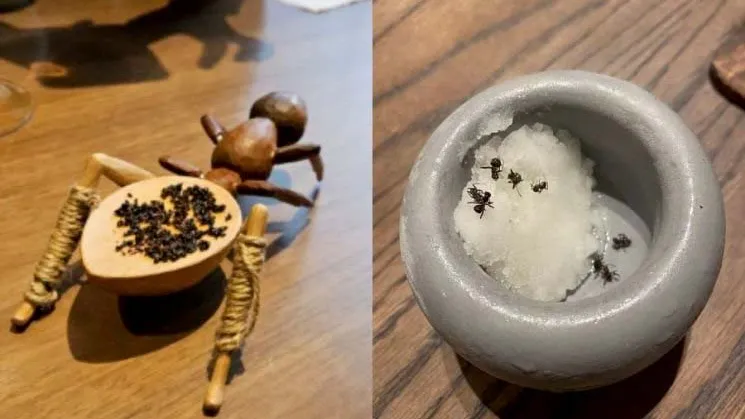
Authorities reportedly claimed that ants can contain up to 55 times more heavy metals than typical edible insect species, making them unsuitable for legal consumption under existing food regulations. Because ants are not approved as edible ingredients under South Korean law, prosecutors allege that importing and serving them constituted a violation regardless of the restaurant’s intentions or the small quantities used in each dessert.
The legal case has now expanded beyond the chef himself. Prosecutors are reportedly seeking a fine of ₩20 million against Evett’s parent company while also pursuing criminal penalties against Lidgerwood. If convicted, the Australian chef could face up to one year in prison under South Korean law. The allegations have generated significant public attention because they involve a Michelin-starred restaurant rather than a small or obscure establishment. Fine dining often celebrates creativity and rare ingredients, but this case highlights how innovation must still operate within the boundaries established by local food safety laws.
Restaurant Defends the Chef as Legal Battle Heads Toward Sentencing
Despite acknowledging that ants were served as part of one dessert course, Evett has challenged several aspects of the prosecution’s case. The restaurant maintains that the controversial ingredient represented only a very small portion of its extensive 15-course tasting menu rather than a defining feature of the dining experience. According to the restaurant, diners were never required to eat the ants. Guests were informed that they could decline the garnish if they preferred and instead receive an alternative topping consisting of fermented vinegar and edible flowers.
Evett stated that approximately 60 percent of customers chose to experience the dessert with the ant garnish, while others selected the substitute option. The restaurant has also argued that Joseph Lidgerwood did not knowingly violate South Korean food laws. Because he is an Australian chef rather than a South Korean national, the company contends that he was unaware the specific insect species fell outside the country’s approved food regulations.
Another point of disagreement concerns the financial benefits allegedly obtained from the dessert. Prosecutors reportedly claimed the restaurant generated approximately ₩120 million in revenue connected to the dish featuring ants. Evett disputes that figure and has rejected suggestions that the restaurant significantly profited from the controversial ingredient.
Supporters of experimental cuisine have pointed out that edible insects are increasingly explored by chefs around the world as sustainable protein sources and unique flavor components. However, food regulations differ substantially between countries, and ingredients considered acceptable in one jurisdiction may be prohibited in another. The case therefore illustrates the importance of complying with local regulatory frameworks, even within highly creative culinary environments.
The legal proceedings have also reignited broader discussions about the balance between innovation and regulation in fine dining. Michelin-starred restaurants frequently seek to surprise guests through uncommon ingredients, scientific techniques, and unconventional presentations. Yet even the most prestigious establishments remain subject to national food safety laws, regardless of their international reputation.
For Lidgerwood, the stakes extend far beyond a single dessert. His restaurant’s two Michelin stars, his growing global profile following Culinary Class Wars, and years spent building Evett into one of Seoul’s leading restaurants now exist alongside a criminal case that has attracted international media attention. The sentencing hearing is currently scheduled for September 2, when the court is expected to determine whether the allegations warrant criminal penalties against the Australian chef. Until then, the case remains one of the most closely watched legal disputes involving the international restaurant industry in South Korea.
Regardless of the outcome, the controversy has become a reminder that culinary creativity often intersects with legal and regulatory boundaries. Ingredients that chefs view as opportunities for innovation may be interpreted differently under national food laws, particularly when those ingredients are not officially approved for consumption. For Joseph Lidgerwood, whose career has been built on originality and experimentation, the coming court decision will likely have a significant impact on both his professional future and the reputation of one of South Korea’s most acclaimed restaurants.
Really impressed with the loyalty program here. The perks are awesome and the gaming experience is just buttery smooth. Join the club at 50jilivip.
Magnificent goods from you, man. I have be mindful your stuff prior to and you
are just too magnificent. I really like what you have received here, certainly like what you are stating and the way during which you
assert it. You are making it enjoyable and you still take care of to stay it sensible.
I cant wait to read much more from you. This is really a great site.
xnxx