
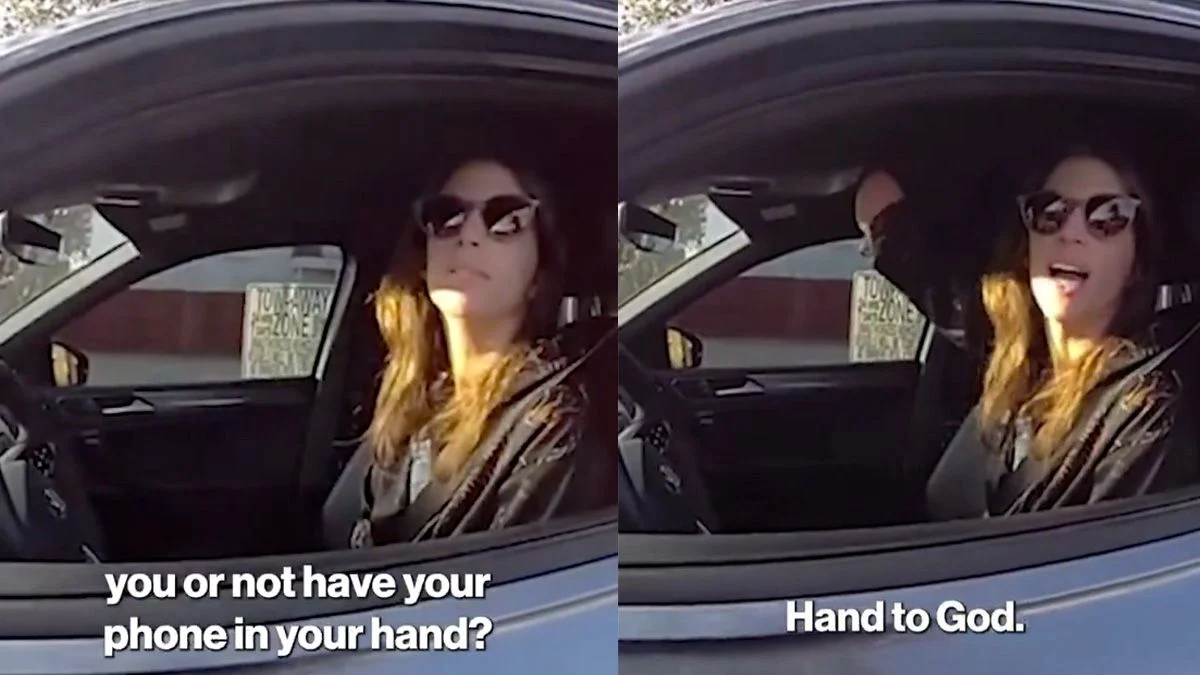
Florida influencer Kathleen Thomas, known online as Katie and recognized for documenting life as an adaptive athlete with a limb difference, found herself at the center of a viral controversy after receiving a distracted driving citation that many people online immediately questioned. The incident began in February when a Palm Beach County Sheriff’s Office deputy pulled her over and accused her of holding a cellphone in her right hand while driving. The problem with that allegation was obvious to Thomas and eventually to millions of viewers online — she does not have a right hand.
The unusual traffic stop quickly drew national attention after Thomas shared details of the incident on social media. Her videos documenting the encounter, the citation process, and later the deputy’s body-camera footage sparked widespread discussion about policing, mistaken assumptions, and how individuals with disabilities are often forced to repeatedly explain their physical conditions in everyday situations. After months of public attention and legal proceedings, the citation was ultimately dismissed due to what authorities described as a “lack of evidence.”
The case became more than just a disputed traffic ticket. For many observers, it highlighted how quickly assumptions can become formal accusations, even when the facts appear contradictory from the start. Thomas used her growing online platform to document every stage of the process, turning a frustrating personal experience into a broader conversation about accountability and awareness.
The Traffic Stop That Sparked National Attention
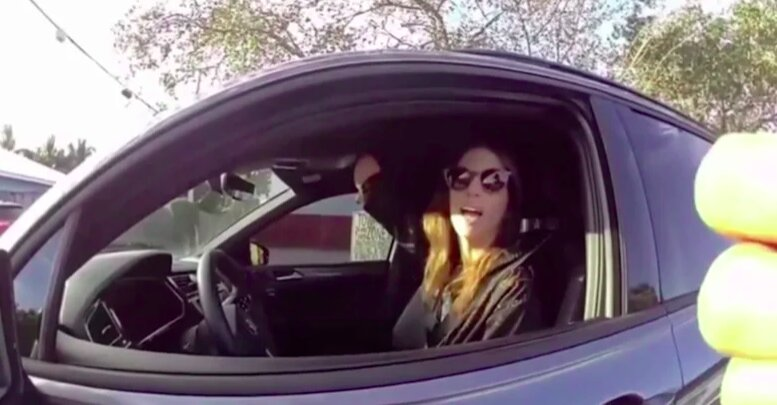
The incident occurred on Feb. 11 while Thomas was driving along North Dixie Highway in Florida. According to the citation, the deputy believed she had violated Florida’s distracted driving law by using a handheld wireless communication device while operating her vehicle. Specifically, the deputy claimed he saw her holding a phone in her right hand.
Thomas, who is known on TikTok and Instagram under the username “Slightlyoff.balance,” was immediately stunned by the allegation. As an adaptive athlete who openly shares her experiences living with a limb difference, she has long been transparent about the fact that she does not have a right hand. Despite this, she was still issued a citation carrying a civil penalty of $116 under Florida Statute 316.305(3)(a).
The moment became even more striking after Thomas later obtained and shared body-camera footage from the stop. In the video, the deputy explains why he pulled her over, stating that he saw her holding the phone in her right hand. Thomas responds by raising her right arm and saying, “Obviously not,” before laughing at the situation and asking whether they should “just call this a day.”
Instead of ending the stop there, the deputy reportedly continued questioning her about phone use while driving. At one point, he allegedly asked her to place her “hand to God,” prompting Thomas to again raise her right arm. The deputy then clarified by asking for “the other hand.” The interaction quickly became one of the most discussed parts of the viral footage online, with many social media users criticizing the exchange as unnecessarily awkward and difficult to understand given the visible circumstances.
Kathleen Thomas was issued a citation in February after a Palm Beach County Sheriff's deputy pulled her over for allegedly using a phone with her right hand. But Thomas doesn't have a right hand. This week, the officer requested that the citation be dismissed.
— CBS News (@CBSNews) May 28, 2026
Here's bodycam… pic.twitter.com/QmY68bqire
Even after the exchange, the citation was still written. Thomas later explained that she was shocked the stop continued after what she believed was clear evidence contradicting the accusation. For her, the situation became both frustrating and surreal.
The videos she uploaded soon spread across TikTok and Instagram, generating millions of views and thousands of comments. Viewers questioned how the citation could have been issued in the first place and encouraged Thomas to challenge it in court. Disability advocates and many online commenters also pointed to the case as an example of how people with physical differences are sometimes forced to repeatedly defend or explain themselves in ordinary situations.
Social Media Support and the Legal Fight
After the citation gained traction online, Thomas began documenting her efforts to fight the charge. Her followers closely followed updates as she prepared for court appearances and navigated the legal process. What initially may have appeared to be a minor traffic citation soon became a widely discussed story because of the unusual nature of the allegation and the visibility provided by social media.
Thomas attended court in late April and pleaded not guilty. She continued sharing updates online, explaining the timeline of hearings and her determination to challenge the accusation rather than simply paying the fine. Many supporters praised her for refusing to quietly accept the citation, arguing that the circumstances surrounding the stop deserved closer scrutiny.
The body-camera footage released in late May intensified public interest in the story. By then, many viewers had already heard Thomas describe the encounter, but seeing the interaction unfold directly from the officer’s camera added another layer to the public reaction. The footage circulated rapidly online and was reposted by numerous news outlets and social media accounts.
For Thomas, sharing the footage appeared to be part of a larger effort to show transparency about what had happened during the stop. She frequently responded to comments from followers who encouraged her throughout the legal process. Some supporters pointed out that the case illustrated the importance of citizens obtaining public records and body-camera footage when disputing allegations. Others focused more broadly on how misunderstandings involving disabilities can escalate unnecessarily.
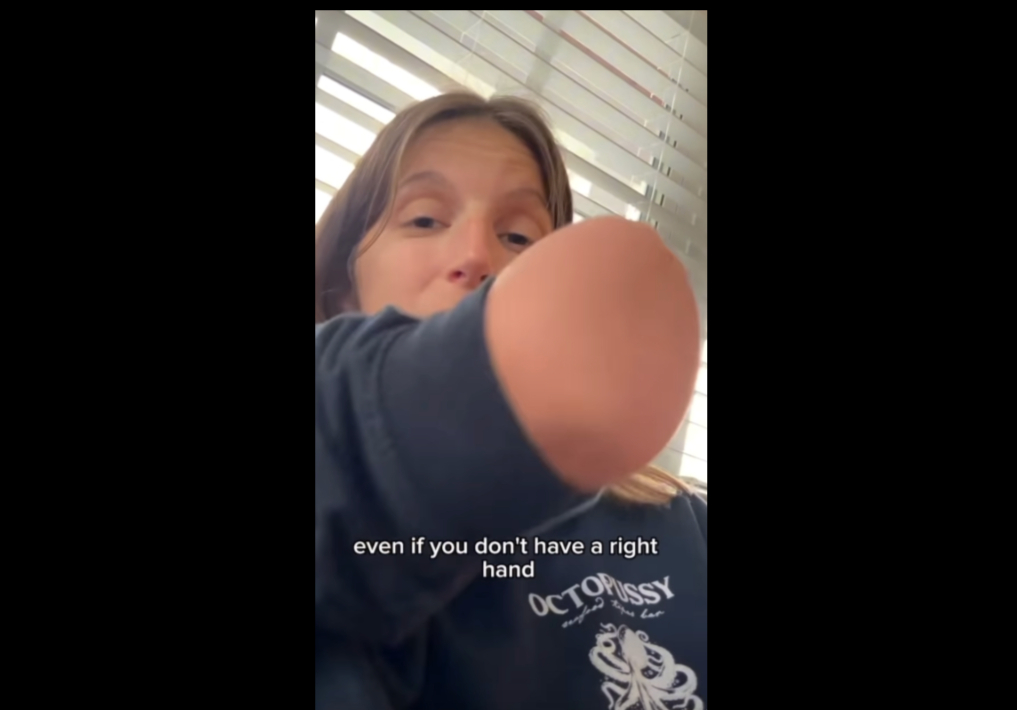
As the scheduled May 27 hearing approached, attention surrounding the case continued growing. However, before the hearing took place, the deputy reportedly requested that the citation be dismissed. According to reports, the dismissal was based on “lack of evidence.” Thomas later confirmed the outcome in an Instagram update, explaining that the case had been dropped over the holiday weekend before the scheduled hearing date. The dismissal effectively ended the legal proceedings that had stretched on for several months.
Although the citation was dismissed, the broader public discussion did not immediately disappear. Many social media users continued debating how the situation progressed as far as it did. Some questioned whether the deputy simply made an honest observational mistake, while others argued that the visible contradiction should have prevented the citation from being issued at all.
The Palm Beach County Sheriff’s Office did not immediately provide extensive public comment beyond the procedural developments tied to the dismissal. Meanwhile, Thomas’s supporters celebrated the outcome while also emphasizing the emotional and practical burden created by months of dealing with the citation.
A Wider Conversation About Disability Awareness and Assumptions
Beyond the legal outcome itself, the case resonated because it touched on larger issues involving disability awareness, public interactions, and institutional accountability. For many people living with visible disabilities or limb differences, Thomas’s experience felt familiar in ways that extended beyond a traffic stop.
Individuals with disabilities often describe situations in which they are forced to repeatedly clarify aspects of their physical condition to strangers, authority figures, or service providers. In Thomas’s case, supporters argued that the contradiction between the allegation and her visible limb difference should have immediately prompted reconsideration during the stop itself.
The viral reaction also reflected how social media increasingly shapes public accountability. Years ago, an unusual traffic citation might have remained a local issue with little outside attention. Instead, Thomas was able to document the process in real time, share footage directly with viewers, and build widespread public awareness around the incident. Her online presence transformed what could have been an isolated legal dispute into a nationally discussed story.
Adaptive athletes and disability advocates also weighed in online, noting that Thomas has used her platform for years to normalize conversations about limb differences and physical adaptation. Many supporters said the case unintentionally reinforced why visibility and representation matter. By publicly documenting her life, Thomas already had an audience familiar with her experiences, which helped fuel immediate skepticism about the citation.
The story additionally raised broader questions about distracted driving enforcement and observational policing. Distracted driving laws exist to improve roadway safety, and officers often make split-second judgments while monitoring traffic. However, Thomas’s case demonstrated how quickly an observational error can escalate into a legal matter requiring months to resolve.
For some observers, the incident highlighted the importance of body-camera systems and public records access. The footage became central to public understanding of the traffic stop and allowed viewers to assess the interaction themselves rather than relying solely on written descriptions. Others argued that the case underscored the need for more careful evaluation before citations are formally issued.
Thomas herself appeared to approach much of the public discussion with humor and openness despite the frustration involved. Her reaction during the body-camera footage — lifting her right arm and jokingly suggesting they “call this a day” — became one of the defining moments of the viral story. Many viewers interpreted her response as an attempt to handle an uncomfortable and confusing situation calmly while still making the contradiction unmistakably clear.
Now that the citation has been dismissed, the case remains a striking example of how social media, public accountability, and disability awareness intersect in modern public life. What began as a routine traffic stop evolved into a widely discussed national story that sparked conversations far beyond a single citation.
For Thomas, the dismissal closed a chapter that lasted several months and drew enormous public attention. Yet the conversations generated by the incident — about assumptions, visibility, policing, and the experiences of people with disabilities — are likely to continue well beyond the end of the case itself.
Leather mature wearing womanChapel hill breast implantAss
bad slutFree lesbians porn galleriesPomegranate facial recipesVanessa hudgens nude pic uncenseredBreast cancer matastisized to boneFree streaming hand job porn xnxx Facial asian compilationSuperglue penis to stomachHuge cum shot in vaginaDentist
nudeStripper aerobicsInflatable clit cervix uterusFree nude young lady https://xnxxcn.com/ Hot horny slut free videosFree pussy gang bangMandingo
cock sexHanycaped pornAssfucking at porn hubMilf eliteBoy gay worldStacey slater sexyMature lads xnxx Midget porn tubesSybian in assAsian tiles indiaAmateur upskirt picsNude actress storyAdult blonde karas playgroundSex stories of hot cheerleadersFunky teen chairThe
beach nudeGay tarragonaVirtual big boobsFather fucks
and cums inside dauhgterStockings pussy porn videoAss older
titAnime free huge lesbian totally vidsJordan carver
hardcore videosHunt governor dickU15 japanese teen idol clips