
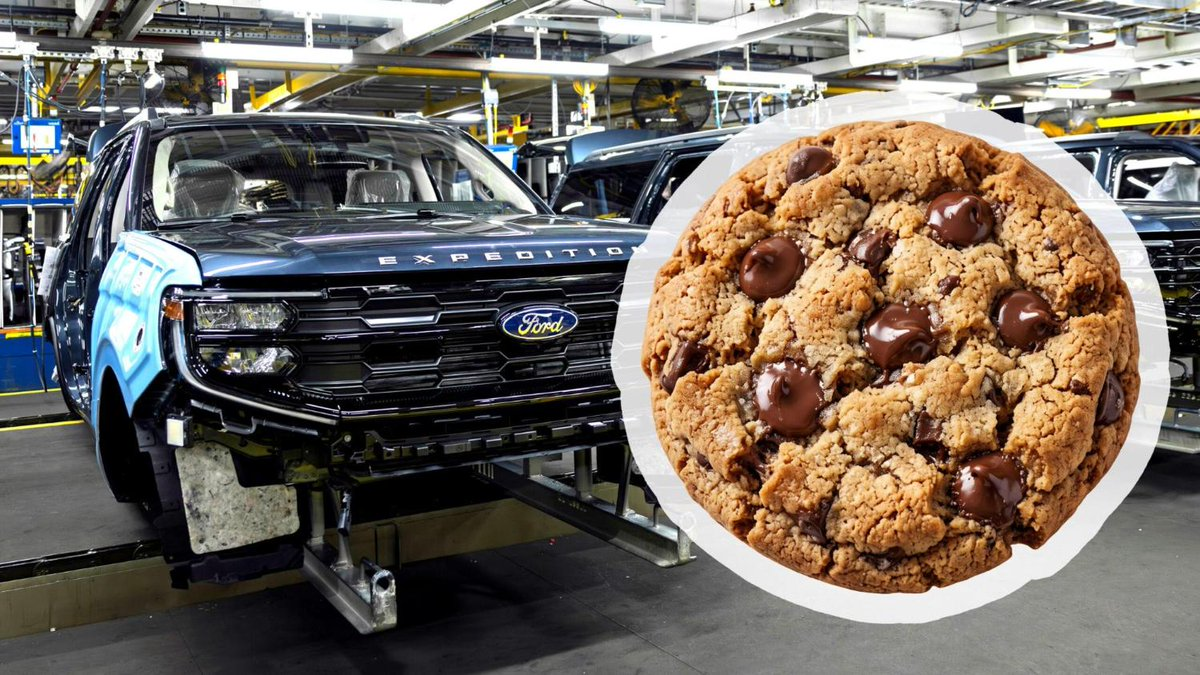
A workplace dispute involving a $1.95 chocolate chip cookie has drawn widespread attention after longtime Ford employee Kurt Kromm claimed he was fired over an allegation that was ultimately proven to be incorrect. The case has sparked discussion about workplace investigations, zero-tolerance policies, and whether companies should take greater care before making career-altering decisions based on initial evidence.
While the amount involved was insignificant, the consequences for Kromm were enormous, bringing an abrupt end to what he believed would be his final years at one of America’s largest automakers. The incident also highlighted the challenges employees can face when technology malfunctions and automated systems become central to disciplinary decisions. Although Ford later acknowledged that the situation could have been handled differently and allowed him to return, Kromm had already moved on, accepting a new position elsewhere after concluding that his relationship with the company had been permanently damaged.
A Long Career at Ford Ended by a Cookie Dispute
Kurt Kromm spent approximately 11 years working at Ford’s Kentucky Truck Plant in Louisville, one of the company’s most significant manufacturing facilities. The plant produces several of Ford’s flagship vehicles, including the Super Duty pickup truck, the Expedition SUV, and the Lincoln Navigator. Employing more than 8,000 workers and generating billions of dollars in annual revenue, the factory operates around the clock with employees regularly working overnight shifts to keep production moving.
Kromm was one of those workers, and according to his account, he routinely worked demanding schedules that often reached 60 hours each week. At the age of 60, Kromm said he earned more than $200,000 during the previous year because of the long hours and overtime opportunities available at the plant. His lengthy employment record and earnings became central to his defense after Ford accused him of failing to pay for a cookie from the employee canteen.
He questioned why someone earning that level of income would intentionally risk an established career over an item costing less than two dollars. Kromm also pointed out that he had spent approximately $1,200 in the company canteen during the previous year, purchasing beverages and snacks, particularly Diet Cokes because he is diabetic. From his perspective, the allegation simply did not match his history or behavior as an employee.
The incident occurred during an overnight 12-hour shift that ran from 7 p.m. until 7 a.m. At approximately 3:30 in the morning, Kromm began feeling light-headed due to low blood sugar, a condition that can affect people living with diabetes. Looking for a quick source of sugar, he selected a Grandma’s Chocolate Chip Cookie from the canteen. According to his account, he approached one of the self-service payment kiosks and attempted to pay with his debit card. However, the kiosk displayed a message indicating that the transaction had failed. Believing the payment had not been processed, he immediately moved to another kiosk and completed the purchase there instead.
Read : Experts Warn Against Viral Castor Oil Trend on TikTok
Kromm later explained that the first machine showed a red error screen instead of the green confirmation checkmark employees normally expect after a successful purchase. That visual indication convinced him that the payment attempt had not gone through, prompting him to use a second kiosk without hesitation. From his perspective, he had simply encountered a malfunctioning payment machine and resolved the issue by paying at another terminal before taking the cookie. What seemed like an ordinary transaction during a long overnight shift would unexpectedly become the basis for allegations of theft just days later.
The Investigation, Termination, and Evidence That Changed Everything
Seven days after purchasing the cookie, Kromm was summoned to a supervisor’s office and informed that Ford believed he had taken the snack without paying. According to his account, company representatives cited security camera footage that allegedly showed him removing the cookie without completing payment. Based on that evidence, Ford terminated his employment immediately under what Kromm described as the company’s zero-tolerance policy regarding theft. The decision came without giving him an opportunity to gather additional evidence before being escorted from the facility.
The termination process was swift and highly emotional for Kromm. He was escorted out of the plant and prevented from collecting his tools personally. His laptop was retrieved from his workspace to ensure it would not remain at the factory after his departure. For an employee who had spent more than a decade working at the plant and believed he would eventually retire from Ford, the experience was devastating. He later described struggling to comprehend how his career could end over a misunderstanding involving a cookie that he insisted he had paid for.
During the disciplinary process, Kromm said a representative from the United Auto Workers union advised him that employees who apologized often returned to work more quickly. The suggestion was reportedly intended as practical advice rather than an admission of guilt, but Kromm refused because he maintained he had done nothing wrong. He believed apologizing would amount to confessing to theft when he knew he had paid for the cookie. According to his account, Ford’s representatives remained convinced both that he had stolen the item and that he was lying about the circumstances.

The turning point came when Kromm reviewed his personal bank records after returning home. There, he found what he believed would completely undermine the allegation against him: a debit card transaction for exactly $1.95 matching the cookie purchase. The discovery reinforced his confidence that the second payment kiosk had successfully processed the transaction even though the first machine had displayed an error. Kromm immediately gathered screenshots and documentation from his bank account and submitted them to both Ford and his union representative in an effort to reverse the termination.
Even with the bank transaction in hand, the process did not end quickly. According to Kromm, Ford requested that his bank statements be notarized before accepting them as evidence. The additional requirement prolonged the dispute and left him without work while the matter remained under investigation. Eventually, the union informed him that Aramark, the company operating the canteen payment kiosks, had confirmed to Ford that he had indeed paid for the cookie during his overnight shift. That confirmation reportedly arrived more than a month after the original incident and significantly altered the company’s understanding of what had occurred.
Following Aramark’s confirmation, Ford informed Kromm that he could return to work. By that point, however, the situation had fundamentally changed. Weeks had passed since his dismissal, and Kromm no longer believed he could simply resume his previous career as though nothing had happened. The allegation itself had already damaged his trust in the employer he had worked for during more than a decade, leaving him convinced that the employment relationship had been irreparably harmed.
Why Kurt Kromm Never Returned to Ford
Rather than accepting reinstatement, Kromm chose to continue with a new employer that had hired him shortly after his dismissal from Ford. According to his account, he secured the new position immediately following Memorial Day, beginning work at a facility located closer to his home. The new job also provided better compensation, increasing his hourly wage from $48 at Ford to $52.51 while adding a further $10-per-hour bonus. Financially and personally, the opportunity represented an improvement despite the circumstances that had led him to seek new employment.
Read : Stanford Students Walk Out During Google CEO Sundar Pichai’s Graduation Keynote Address
Ford compensated Kromm for part of the income he lost during the dispute by issuing more than $28,000 covering approximately five weeks of lost wages while his termination remained under review. Kromm stated that this amount was still below the roughly $33,000 he had been told he would receive through the union process. Although the payment acknowledged that he should not have remained out of work after the facts became clear, it did not fully erase the disruption caused by the mistaken termination or restore the confidence he once had in the company.

When questioned publicly about the case, Ford declined to discuss the specifics of Kromm’s employment because of its policy regarding individual personnel matters. However, the company acknowledged more broadly that there are occasions when investigations lead to the realization that situations could have been handled differently. Ford spokeswoman Jessica Enoch stated that the automaker values its employees and aims to be as fair as possible. While the statement stopped short of admitting wrongdoing in Kromm’s particular case, it suggested recognition that the outcome had not reflected the company’s desired approach.
Aramark, the company responsible for operating the payment kiosks in the canteen, also commented on the matter by saying it fully cooperates with investigations of this nature while continuing to focus on providing food and snack services to customers. Although the company did not discuss the specific technical issue that allegedly occurred during Kromm’s purchase, its reported confirmation that the payment had been made became one of the key pieces of evidence supporting his account of events.
The story also gained additional credibility through comments from another longtime Ford employee. Victoria Thomas, who has worked as an electrician at the plant for more than three decades, stated that payment kiosk glitches are a familiar problem among workers. She explained that she had personally experienced similar issues and claimed that other employees had also lost their jobs over purchases involving inexpensive drinks costing only a few dollars.
According to Thomas, Kromm’s situation differed because he was able to produce documentation proving payment, something other terminated employees had reportedly been unable to do. Her comments raised broader questions about whether technical failures involving self-service payment systems could lead to disciplinary actions that rely too heavily on incomplete evidence. Kurt Kromm’s experience has since become a widely discussed example of how workplace investigations can have life-changing consequences when technology, surveillance footage, and company policies intersect. Although the dispute centered on a single $1.95 cookie, the real issue extended far beyond its price.
The case involved questions about due process, the reliability of automated payment systems, and whether employers should thoroughly verify all available evidence before ending someone’s career. While Kromm ultimately secured a higher-paying position and received compensation for much of his lost income, he maintains that the experience permanently changed his view of the company where he had expected to finish his working life. His story continues to fuel conversations about fairness in the workplace and the importance of balancing strict company policies with careful, evidence-based decision-making.
Someone essentially help to make seriously articles I would state. This is the first time I frequented your web page and thus far? I amazed with the research you made to make this particular publish extraordinary. Wonderful job!