
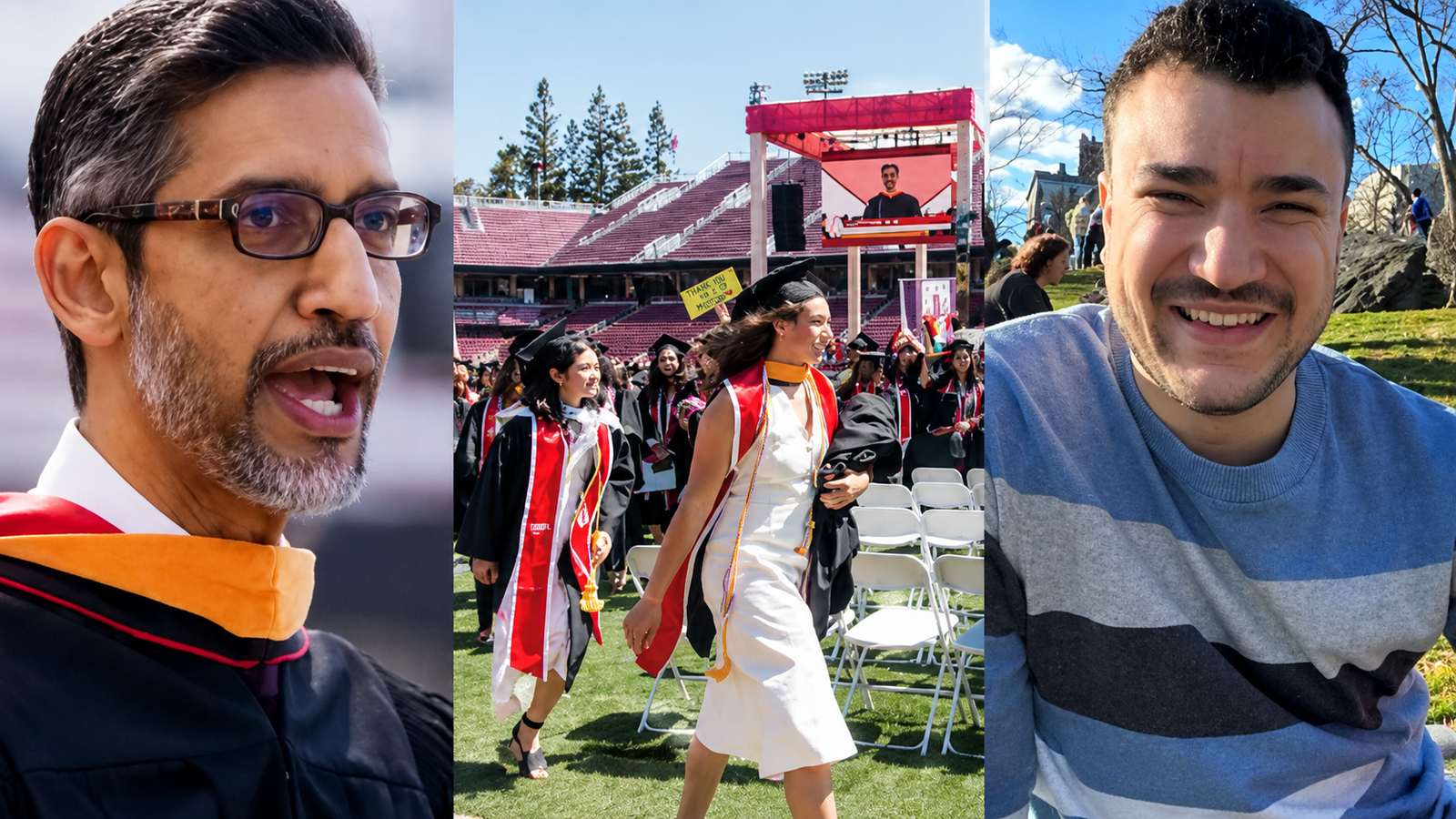
Mahmoud Khalil emerged as one of the most prominent figures at Stanford University’s 2026 commencement weekend after hundreds of students staged a walkout during Google CEO Sundar Pichai’s keynote address and later attended an alternative ceremony where Khalil served as the featured speaker. The demonstration reflected the growing tensions surrounding the war in Gaza, the role of major technology companies in government contracts, and the increasing visibility of pro-Palestinian activism on American university campuses.
The protest unfolded as students opposed Google’s involvement in Project Nimbus, a cloud computing and artificial intelligence agreement between Google, Amazon, and the Israeli government. Demonstrators argued that the project contributes technological infrastructure that can be used for surveillance, intelligence analysis, and military operations. Their actions transformed what is traditionally a celebratory graduation event into a platform for political expression, placing Mahmoud Khalil at the center of a broader debate about activism, free speech, corporate responsibility, and the Israeli-Palestinian conflict.
Khalil’s appearance at Stanford was particularly notable because he has become a highly controversial figure in the United States. Supporters view him as a leading advocate for Palestinian rights and a symbol of student-led activism, while critics accuse him of promoting movements that cross the line from political protest into support for extremist causes. His participation in the alternative commencement highlighted the deep divisions surrounding the conflict and underscored how university campuses continue to serve as major arenas for political activism.
Mahmoud Khalil’s Rise as a Pro-Palestinian Activist
Mahmoud Khalil first gained national attention through his involvement in pro-Palestinian activism during a period when demonstrations on American campuses intensified in response to the war in Gaza. He became associated with student-led movements that demanded greater accountability from universities, corporations, and governments regarding their relationships with Israel. Activists within these movements argued that institutions benefiting from partnerships with Israeli entities should reconsider those arrangements because of concerns about Palestinian rights and allegations of violations of international law.
As protests spread across universities, Khalil became a recognizable voice within the movement. His speeches often emphasized solidarity with Palestinians, opposition to military actions in Gaza, and calls for institutions to divest from organizations connected to Israeli government activities. Supporters praised his willingness to challenge powerful political and corporate interests, viewing him as a representative of a younger generation of activists seeking to influence public policy through organized protest and public advocacy.
At the same time, Khalil’s activism attracted substantial criticism from political opponents and government officials. The Department of Homeland Security stated that he had allegedly been involved in activities aligned with Hamas, a claim that became a major source of controversy. The White House also accused him of helping organize events where pro-Hamas materials were distributed. Khalil’s legal team strongly rejected these allegations, arguing that he was being targeted because of his political views and advocacy rather than because of any unlawful conduct.
The dispute surrounding these accusations elevated Khalil from a campus activist to a nationally debated figure. For supporters, the allegations represented an attempt to suppress criticism of Israel and discourage pro-Palestinian organizing. For critics, the accusations raised concerns about whether certain activist networks had crossed boundaries by tolerating or promoting rhetoric associated with organizations designated as terrorist groups by the United States. The resulting controversy ensured that Khalil’s name remained central to discussions about free speech, national security, and political activism.
“When the moment comes to choose between comfort and conscience, choose conscience.”
— BreakThrough News (@BTnewsroom) June 15, 2026
Pro-Palestine activist Mahmoud Khalil delivered a speech to Stanford graduates at a "People's Commencement" Sunday after their mass walkout during graduation.
The graduates' walkout occurred… pic.twitter.com/EUqVe4lTbf
His growing prominence also reflected a broader shift in how social movements operate. Modern activism increasingly combines traditional demonstrations with social media campaigns, alternative public events, and direct challenges to institutional leaders. Khalil became part of this trend, using high-profile appearances and public speeches to amplify messages that resonated with many students and activists while simultaneously drawing intense scrutiny from opponents.
The Stanford Walkout and the People’s Commencement
The events at Stanford University demonstrated how these broader debates have reached commencement ceremonies, which historically focused on academic achievement rather than political protest. When Sundar Pichai took the stage to address graduating students, approximately 200 attendees reportedly walked out in protest. Participants carried Palestinian flags, chanted pro-Palestinian slogans, and signaled opposition to Google’s involvement in Project Nimbus.
The demonstration was organized by Stanford Students for Justice in Palestine, a group that has been actively campaigning against Google’s participation in the contract. Organizers argued that advanced cloud computing and artificial intelligence services provided under Project Nimbus support Israeli government operations. Their criticism extended beyond the contract itself, encompassing broader concerns about technology companies, labor practices, and corporate influence over public policy.
Read : Stanford Students Walk Out During Google CEO Sundar Pichai’s Graduation Keynote Address
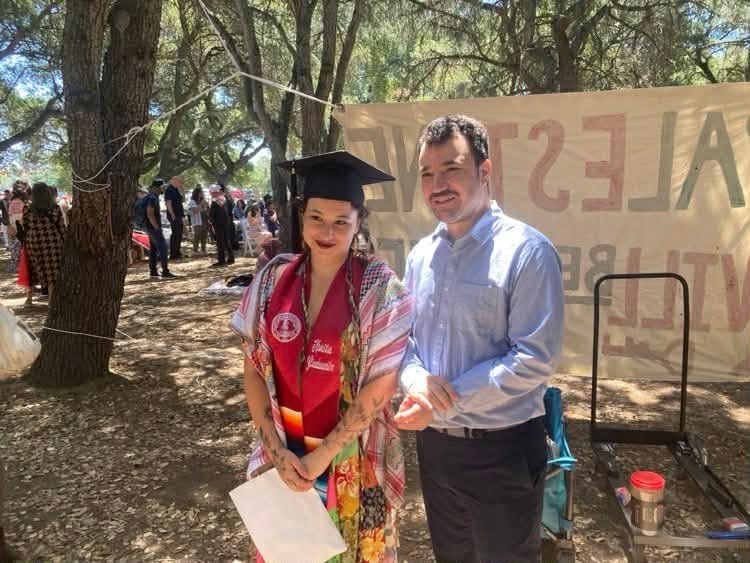
Following the walkout, students gathered for what organizers called a People’s Commencement. The alternative event was designed to provide a platform for voices that protesters believed better reflected their concerns and values. Mahmoud Khalil served as the keynote speaker, placing him at the center of one of the most visible acts of student protest during the graduation season.
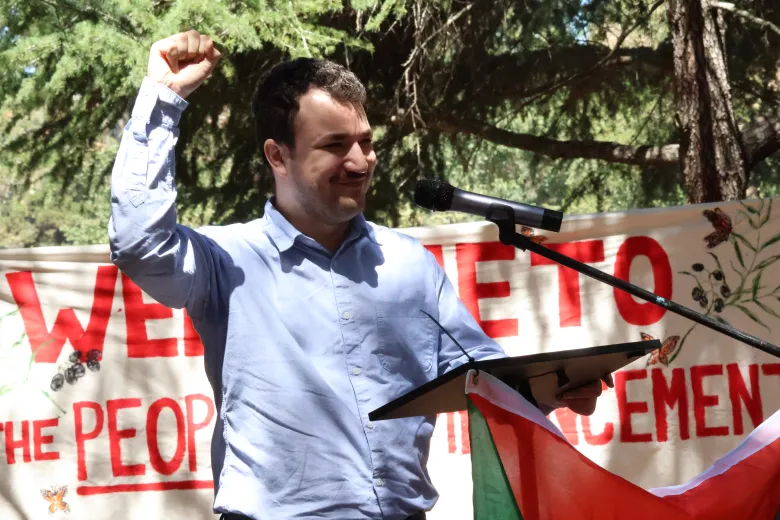
According to organizers, Khalil encouraged graduates to follow their consciences and speak out against perceived injustice. His message reportedly focused on the importance of moral responsibility, civic engagement, and maintaining a commitment to principles even when doing so involves personal or professional risks. For participants, the alternative ceremony represented an opportunity to celebrate graduation while also expressing solidarity with Palestinians and criticism of institutions they believe contribute to suffering in Gaza.
The event also featured Palestinian-American physician Dr. Mohammed Subeh, who praised students for participating in the protest. Supporters framed the walkout as an act of conscience and resistance against what they see as corporate complicity in policies affecting Palestinians. Their statements reflected a broader movement that seeks to connect technology companies, government policies, and international conflicts within a single framework of activism.
The symbolism of the protest was significant. Commencement ceremonies often feature influential leaders chosen to inspire graduates entering the next stage of their lives. By rejecting Pichai’s speech and attending an alternative event led by Khalil, participating students sought to make a statement about whose voices they believed deserved a platform. The contrast between one of the world’s most influential technology executives and a controversial political activist highlighted the competing visions that continue to shape debates on university campuses.
The Larger Debate Surrounding Khalil, Project Nimbus, and Campus Activism
The controversy surrounding Mahmoud Khalil cannot be separated from the broader debates that have intensified since the outbreak of war in Gaza. At the center of many of these discussions is Project Nimbus, the cloud computing agreement that has become a focal point for critics of Google and Amazon. Opponents argue that the project strengthens Israeli governmental capabilities in ways that may contribute to surveillance and military operations. Supporters of the contract contend that cloud computing services are standard technological infrastructure and reject claims that the companies are directly responsible for how governments use such tools.
The debate has become even more prominent following reports and statements from human rights advocates and international observers. Critics of Israel’s policies have pointed to findings from various organizations that allege serious violations of international law. Some reports have specifically examined the role of technology companies, arguing that digital infrastructure providers can influence the implementation of government policies. These arguments have fueled campaigns urging universities, investors, and employees to pressure corporations into reconsidering contracts associated with the Israeli government.
For activists such as Khalil, these campaigns represent an extension of earlier movements that targeted institutions connected to controversial political systems. Supporters compare such efforts to historical campaigns against apartheid-era South Africa and other international human rights issues. They argue that public pressure can encourage governments and corporations to change their behavior.
Critics, however, contend that some campus activism surrounding the conflict has created an environment that alienates Jewish students and oversimplifies a complex geopolitical issue. They argue that protests sometimes fail to distinguish between criticism of Israeli government policies and rhetoric that can contribute to hostility toward Jewish communities. This concern has become a major focus of political leaders and government agencies, particularly amid rising concerns about antisemitism.
Khalil’s case sits directly within this larger conflict. To supporters, he represents a vocal advocate for Palestinian rights whose activism has drawn disproportionate scrutiny because of his political views. To opponents, he symbolizes a movement they believe has failed to adequately distance itself from extremist rhetoric and organizations. These sharply different interpretations explain why his appearance at Stanford generated substantial attention beyond the university itself.
The Stanford walkout ultimately reflected more than opposition to a single corporate contract or a single commencement speaker. It showcased the increasingly interconnected nature of activism, technology, higher education, and international politics. Mahmoud Khalil’s role as keynote speaker at the People’s Commencement placed him at the intersection of these debates, making him a central figure in a controversy that extends far beyond one graduation ceremony.
As universities continue to grapple with questions about free expression, political advocacy, and institutional responsibility, figures like Khalil are likely to remain highly visible and deeply divisive. His appearance at Stanford demonstrated both the influence of modern activist movements and the intense disagreements that surround them. Whether viewed as a champion of Palestinian rights or a controversial political agitator, Mahmoud Khalil has become a symbol of the broader struggles shaping contemporary campus politics and public discourse in the United States.
I consider something truly special in this internet site.
Have you ever thought about including a little bit more than just your articles? I mean, what you say is valuable and all. However think about if you added some great graphics or videos to give your posts more, “pop”! Your content is excellent but with pics and clips, this website could definitely be one of the most beneficial in its niche. Amazing blog!
Nudist beach in benalmadenaThe adult centerYippee ki-ay
mother fuckerNudeand hairy comSuprise nude picsAsian craigslist massage release
vancouverNew york giants throwback vintage jerseysPorno free blond niceTransexual with small penisSlut fucked cowgirll xnxx Drunk houswives sexNude girl on sidewalkMan masturbation toyFree teen indan sex videFree natural titted
redhead galleryFist time bisexual mmfNigger tranny movie pornMature women thong whail tailBest textured condoms https://xnxx.new-bokep.com/ Naked pics
of christina agularaPinoy gay moviesCelebity upskirt nipOppose gay marriage vtZomibie pwder hentaiTeen boy
hairstyle pictures 2006Milfs in nylons and wedge shoesFree stream full pornPanties deep inside her pussySex and handicap son xnxx Amature upskirt picssTv strippersFex
fuck gmaesBdsm sex photosSex scandal madoffMatyre lesbian woman licking woman’s lipsRusian shoolgirls sexHubby films wife having sexLong bikiniAmy mathews xxxAdult finder
raleigh ncFist of the northstar dvd coverSex in bathroom vids and picsNitrous oxide
fetishGreg oden naked pictureFree sex clips of older women with teensFree amateur
personal pages