
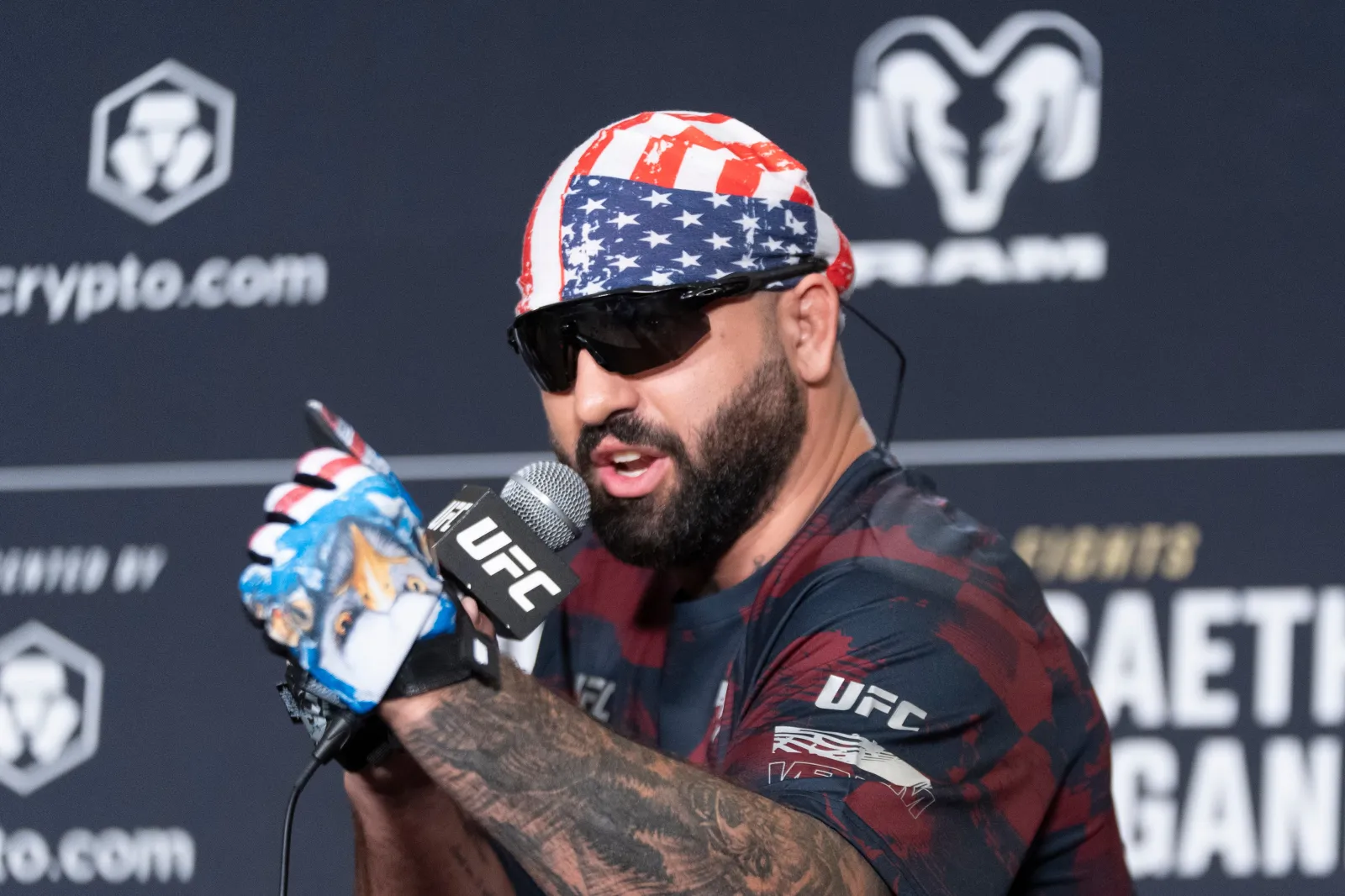
Josh Hokit has quickly emerged as one of the most talked-about personalities in the UFC, but not always because of his performances inside the octagon. The heavyweight fighter found himself at the center of controversy following a post-fight interview at UFC Freedom 250, a historic event held on the South Lawn of the White House. While the event was expected to be remembered for its dramatic finishes and unique setting, much of the discussion afterward shifted toward comments made by Hokit following his victory over Derrick Lewis.
After securing a knockout win, Hokit delivered a post-fight speech that immediately generated backlash. Known for his unpredictable interviews and attempts to entertain audiences through provocative remarks, the fighter ended his appearance by stating, “Lastly, Michelle Obama is a man. Am I right, America?” The comment sparked criticism from fans, media outlets, and observers who viewed it as offensive and baseless. UFC president Dana White later distanced himself from the statement, making it clear that he did not support attacks on public figures’ families.
The incident placed Hokit under a national spotlight and raised questions about who he is, how he rose through the ranks of mixed martial arts, and why he has become one of the sport’s most polarizing figures. While many fans know him for his growing success in the heavyweight division, his journey to becoming a UFC headline-maker began long before the controversy at the White House event.
From Multi-Sport Athlete to UFC Heavyweight Prospect
Before making a name for himself in mixed martial arts, Josh Hokit built a reputation as an accomplished athlete with experience in multiple sports. His athletic background played a major role in shaping the physical tools that later helped him transition into professional fighting. Possessing a combination of size, strength, and explosiveness, Hokit stood out among heavyweight competitors from the beginning of his MMA career.
Unlike many fighters who focus exclusively on combat sports from a young age, Hokit’s path was less conventional. His early athletic experiences helped develop the discipline and competitiveness that would later become valuable assets inside the cage. Coaches and analysts often pointed to his work ethic and natural athleticism as reasons for his rapid development in mixed martial arts.
As he progressed through regional promotions, Hokit gained attention for his aggressive fighting style. Heavyweights are often known for their knockout power, but Hokit distinguished himself by constantly pushing the pace and seeking finishes. Fans were drawn to his willingness to engage in action-packed contests rather than tactical, low-risk fights. That approach helped him build momentum and eventually earn opportunities on larger stages.
Once he reached the UFC, Hokit continued to attract attention through both his performances and his personality. Victories over established opponents helped elevate his profile, but it was often his behavior outside of actual competition that generated headlines. He embraced a larger-than-life persona, frequently delivering unusual comments during media appearances and promotional events.
Read : Jay Shetty Strikes Netflix and Spotify Deal Worth Up to $100 Million
Supporters viewed his antics as an effort to entertain audiences and bring excitement to the sport. Critics, however, argued that some of his behavior crossed the line between promotion and unnecessary provocation. Regardless of opinion, Hokit succeeded in achieving something many fighters struggle to accomplish: making himself impossible to ignore.
Read : 13 Scientific Mysteries on Earth That Remain Unsolved
His knockout victory over Derrick Lewis at UFC Freedom 250 represented one of the biggest wins of his career. Lewis, long regarded as one of the most dangerous punchers in heavyweight history, presented a major test. By stopping such a respected opponent, Hokit demonstrated that his rise through the division was backed by legitimate fighting ability rather than publicity alone. Unfortunately for the UFC, much of the conversation after the fight focused less on the impressive knockout and more on the remarks that followed.
The White House Controversy and Public Reaction
UFC Freedom 250 was already a landmark event before the first punch was thrown. Staged on the White House South Lawn, the card attracted significant media attention and represented one of the most unusual settings in combat sports history. Seven fights ended in finishes, creating a memorable night for fans and organizers alike.
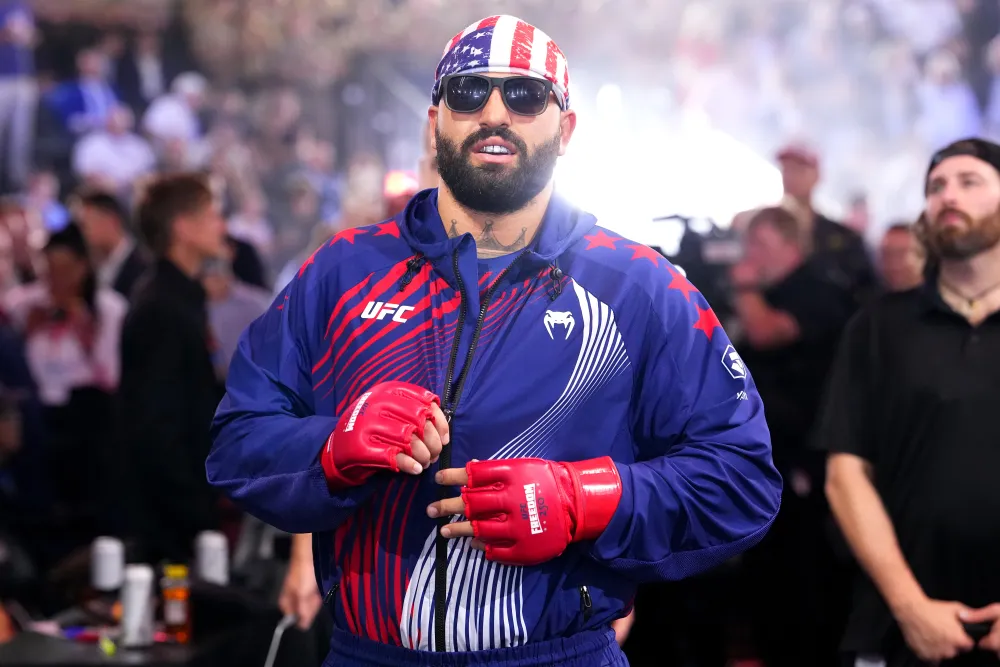
Yet one of the most enduring images from the event became Hokit’s post-fight interview. Immediately after defeating Derrick Lewis, Hokit addressed the crowd and cameras in a manner that reflected the unpredictable style fans had come to expect from him. While some of his previous comments had been viewed as harmless attempts at humor, this particular statement generated a far different reaction.
The claim regarding Michelle Obama echoed a long-debunked conspiracy theory that has circulated online for years. Critics argued that repeating such a statement on a major broadcast platform served no purpose other than provoking controversy. Social media platforms quickly filled with reactions ranging from anger and disappointment to ridicule. Some supporters defended Hokit by pointing to his history of making outrageous remarks and performing comedic characters. They argued that the fighter was attempting to generate attention rather than make a serious political statement.
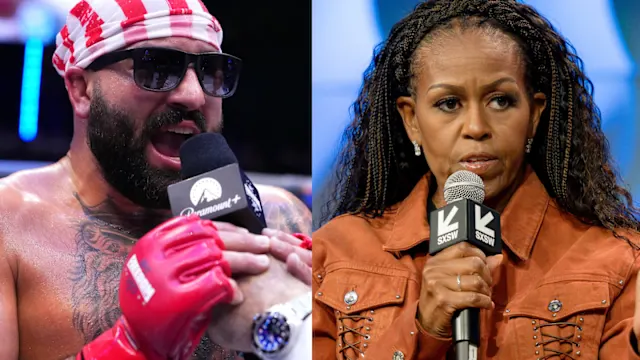
Others countered that intent did not excuse spreading false and insulting claims about an individual. The mixed reaction from the live audience reflected the broader response across the country. Some spectators laughed, while others appeared visibly uncomfortable. The moment quickly spread online, overshadowing many of the event’s athletic achievements.
Dana White soon addressed the situation. Although the UFC president has frequently defended fighters’ rights to express themselves, he made it clear that he did not appreciate Hokit’s comments. White emphasized that while public figures often face criticism, family members should not become targets of false attacks. His remarks represented an effort to separate the promotion from the controversy while reaffirming his broader support for free expression.
The incident also highlighted a recurring challenge in modern sports. Athletes increasingly build personal brands through social media, interviews, and public appearances. While strong personalities can help attract fans and generate interest, controversial statements can sometimes overshadow athletic accomplishments and create unwanted distractions.
For the UFC, the timing was particularly unfortunate. The organization had successfully staged an ambitious event that many observers initially doubted could be executed smoothly. Instead of focusing entirely on the historic nature of the card and the exciting fights that took place, media coverage became divided between celebrating the event and discussing Hokit’s remarks.
A Rising Star Balancing Success and Controversy
The controversy surrounding UFC Freedom 250 illustrates the complex position Josh Hokit now occupies within the sport. On one hand, he is undeniably a rising heavyweight contender whose performances continue to attract attention. On the other, his tendency to generate headlines through provocative comments creates risks for both his personal reputation and the promotion that employs him.
In combat sports, controversial personalities are nothing new. Some of the biggest stars in UFC history built their careers on bold statements and confrontational behavior. Trash talk, confidence, and self-promotion have long been considered part of the business. Fighters who can entertain audiences often receive more attention than equally talented competitors who remain quiet.
However, there is an important distinction between promoting a fight and making comments that many people perceive as offensive or misleading. The backlash against Hokit suggests that some fans believe he crossed that line at UFC Freedom 250. Rather than discussing his knockout victory, many conversations centered on the appropriateness of his remarks and the impact they might have on public discourse.
For Hokit, the challenge moving forward will be determining how he wants to define his career. His fighting skills have already proven capable of generating excitement on their own. Victories against respected opponents can elevate him toward championship contention and establish him as one of the division’s leading figures. Yet repeated controversies risk creating a situation in which his achievements inside the cage become secondary to the headlines he generates outside it.
Athletes often face a delicate balance between authenticity and responsibility. Fans appreciate individuality and strong personalities, but public figures also operate under increased scrutiny. Every statement can be amplified through social media and interpreted by audiences far beyond the immediate crowd in attendance. Whether Hokit chooses to adjust his approach remains to be seen. What is clear is that he has become one of the most discussed fighters in the UFC. His combination of knockout power, confidence, and unpredictability ensures that future appearances will attract significant attention.
The aftermath of UFC Freedom 250 demonstrates how quickly a single moment can reshape public conversation. What could have been remembered primarily as a breakthrough performance against Derrick Lewis instead became a broader debate about athlete conduct, free speech, and the responsibilities that come with fame. As Josh Hokit continues his climb through the heavyweight ranks, fans and critics alike will be watching closely. His future success will depend not only on what happens when the cage door closes, but also on how he manages the spotlight that now follows him wherever he goes.
An interesting discussion is worth comment. I think that you should write more on this topic, it might not be a taboo subject but generally people are not enough to speak on such topics. To the next. Cheers