
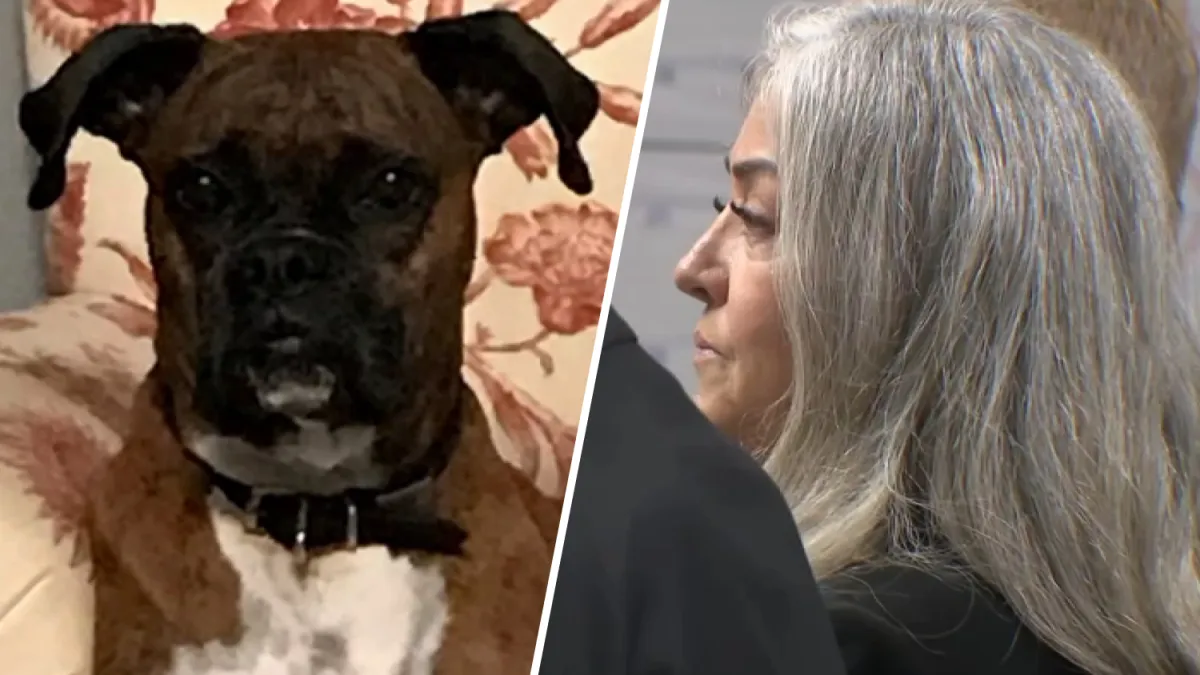
Laura Lee Yourex, a 64-year-old woman from Costa Mesa, California, became the center of an unusual election fraud case after authorities discovered that she had registered her pet dog, Maya Jean Yourex, as a voter and submitted mail-in ballots in the animal’s name. What might sound like an unbelievable story quickly developed into a criminal investigation, multiple felony charges, a guilty plea, and an unusual agreement requiring Yourex to help fund a public campaign against voter fraud.
Prosecutors announced that the case had been dismissed after she fulfilled the conditions of her plea agreement, including paying $1,500 toward four anti-voter fraud billboards displaying a photograph of her dog. The case attracted attention not only because a dog had been registered to vote but also because the animal had reportedly received ballots in more than one election, with one of those ballots being counted. The incident raised questions about election registration procedures, the consequences of knowingly submitting false voter information, and whether an unusual attempt to expose weaknesses in a public system can justify breaking the law.
Who Is Laura Lee Yourex and How Did Her Dog Become a Registered Voter?
Laura Lee Yourex is a Costa Mesa resident who came to public attention because of her decision to register her dog as a voter in California. Although little biographical information about her personal life has been made public in connection with the case, court records and statements from prosecutors provide a detailed account of how the incident unfolded. According to the Orange County District Attorney’s Office, Yourex registered her dog, Maya Jean Yourex, in May 2020, despite knowing that an animal was not legally eligible to register as a voter. Her written plea filing acknowledged that she had knowingly caused a dog to be registered as a voter and had mailed or delivered the registration affidavit to a county elections official.
The admission became a central part of the criminal case, establishing that the registration was not simply an administrative mistake or an accidental submission of incorrect information. The story became even more unusual because Yourex did not stop at registering Maya Jean. According to prosecutors, mail-in ballots were subsequently submitted in the dog’s name during California’s 2021 gubernatorial recall election and the 2022 primary election. The two ballots did not receive the same treatment.
Officials said the ballot submitted in the dog’s name during the 2021 recall election was counted, while the ballot associated with the 2022 primary election was rejected because the required proof of residency and registration documentation for a first-time federal election voter had not been provided. The difference between the two outcomes became an important element of the public discussion surrounding the case. The fact that one ballot was counted demonstrated why accurate registration information and verification procedures matter, while the rejection of the other illustrated that election safeguards can prevent some questionable submissions from being accepted.
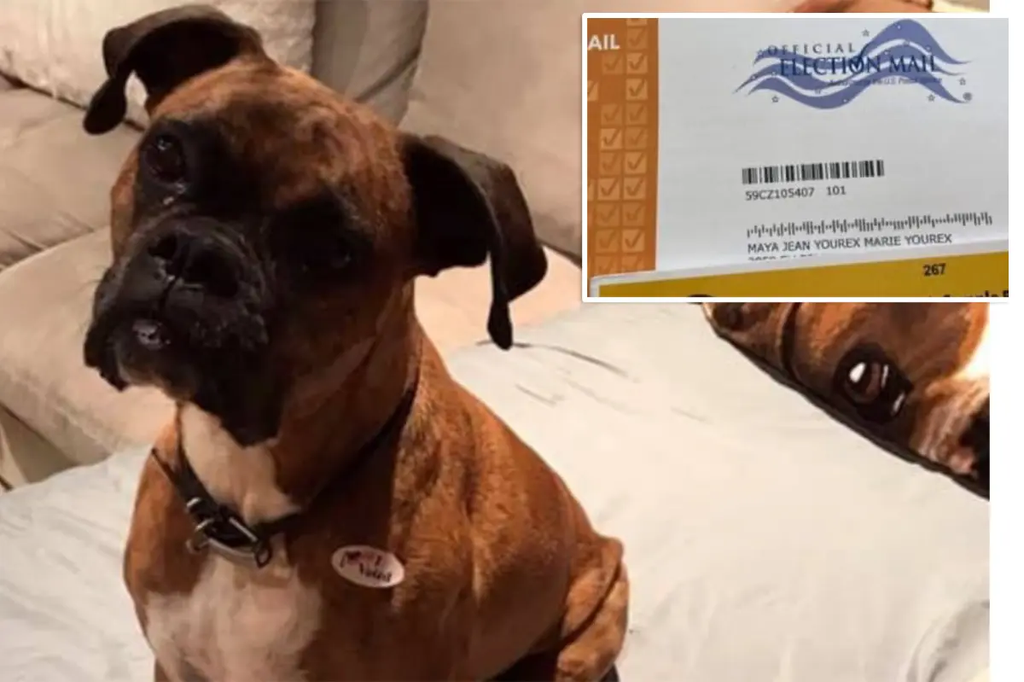
Yourex’s actions also became publicly visible through photographs shared on social media. In January 2022, she reportedly posted a photograph of Maya Jean wearing an “I voted” sticker, presenting the dog as though it had participated in the electoral process. The image was unusual enough to attract attention, but it later became relevant to the investigation because it documented the connection between the dog and the voting claims.
Read : 9-Year-Old Australian Girl Hania Ahmed Shot Dead by Police in Pakistan During Family Holiday
In October 2024, Yourex uploaded another photograph showing the dog’s identification tag beside a vote-by-mail ballot, accompanied by the caption, “Maya is still getting her ballot.” By that time, the dog had reportedly died, making the post even more striking. The photograph and caption became part of a wider story about how the registration had occurred and how the ballot process had continued to be associated with the animal.
Despite the attention surrounding the photographs, the most significant issue was not the unusual appearance of a dog with an “I voted” sticker. It was the legal question of knowingly registering an ineligible individual and submitting ballots in that name. Election registration systems depend on accurate information about eligible voters, and a registration submitted under false circumstances can trigger an investigation even when the person responsible claims to have a broader purpose. In Yourex’s case, prosecutors treated the matter as a criminal offense rather than merely a humorous social media stunt. Her eventual guilty plea to a misdemeanor confirmed that the conduct had legal consequences, regardless of the explanation offered for it.
Why Was Laura Lee Yourex Charged and How Was Her Case Dismissed?
The investigation into Yourex did not begin immediately after the original registration or the social media photographs. According to officials, the Orange County Registrar of Voters contacted the District Attorney’s Office in October 2024 after learning that a resident had disclosed registering her dog and voting in the animal’s name. Orange County Registrar of Voters Bob Page later explained that former Huntington Beach City Attorney Michael Gates had contacted him after speaking with a voter who shared information about the dog receiving a ballot. Page said he referred the matter to prosecutors for investigation. That referral brought the unusual incident into the formal criminal justice process and allowed authorities to examine the registration and ballot submissions.
In September 2025, Yourex was indicted on five felony counts connected to the case. The charges reflected the seriousness with which prosecutors viewed the alleged conduct, particularly the registration of an ineligible voter and the submission of ballots under the dog’s name. The indictment meant that the matter had moved beyond public speculation and into a formal legal proceeding. However, the case did not ultimately end with convictions on all five felony counts. Instead, Yourex entered into a plea agreement that substantially reduced her criminal exposure while requiring her to accept responsibility for the underlying conduct and complete specific conditions.
Read : Who Is Richardson Noel, the HVAC Technician Arrested After Kicking Customer’s Dog?
On April 10, Yourex pleaded guilty to a misdemeanor charge of knowingly registering a nonexistent individual to vote. Under the agreement, prosecutors dropped four felony charges and reduced the remaining felony count to a misdemeanor. The agreement also required her to contribute $1,500 toward four billboards warning the public about voter fraud. Prosecutors subsequently announced that the criminal case had been dismissed after she completed the conditions of the agreement. The dismissal was therefore not an indication that the original conduct had been declared lawful or that the case had disappeared without any admission of wrongdoing. Yourex had already entered a guilty plea to the misdemeanor offense, and the dismissal followed the completion of the negotiated requirements.
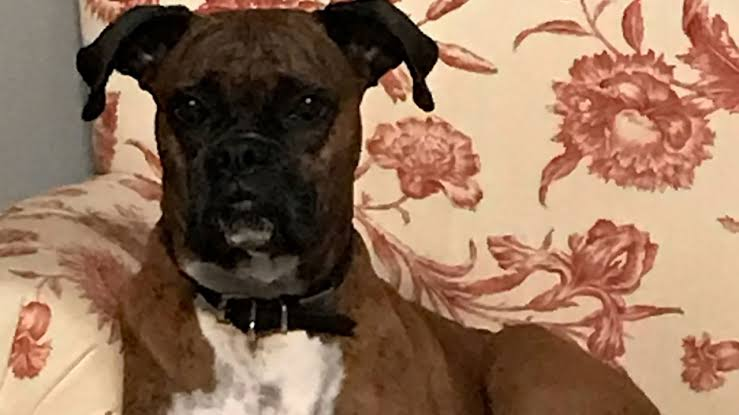
The billboard condition made the resolution particularly unusual. Rather than ending with a conventional financial penalty alone, the agreement required Yourex to contribute toward a public message warning people against the very type of conduct involved in her case. Her dog, Maya Jean, would become the central image in that message. The photograph that had once shown the animal posing with an “I voted” sticker was repurposed for an educational campaign intended to discourage voter fraud. The arrangement transformed an unusual piece of evidence and social media content into a public warning about election laws.
The case also highlighted the difference between an explanation for an action and a legal defense that eliminates responsibility. When Yourex was indicted in September 2025, her defense attorney, Jaime Coulter, said she had intended to demonstrate weaknesses in California’s voter registration system. According to the statement, Yourex regretted what her lawyer described as an unwise attempt to expose flaws in the system, explaining that she wanted to show that even a dog could be registered to vote. Her attorney also emphasized that she had not concealed her conduct and had reported the matter to the Orange County Registrar of Voters because she wanted officials to investigate and improve the registration process.
That explanation offered insight into how the defense characterized Yourex’s motivation, but it did not erase the legal consequences. Public systems can be tested through authorized audits, official complaints, and other lawful procedures. Knowingly submitting false information, however, can create separate legal problems even when the person responsible claims to be pursuing a public-interest objective. Yourex’s guilty plea and the conditions of her agreement reflected that distinction. Her case ended after she completed the negotiated requirements, but the resolution still included an admission that her conduct violated the law.
What the Anti-Fraud Billboards Reveal About Election Security
The four billboards funded through Yourex’s plea agreement became the most memorable feature of the case because they used humor and an identifiable photograph to deliver a serious legal warning. Positioned along the Costa Mesa (55) and Garden Grove (22) freeways, the signs featured Maya Jean Yourex posing with a mail-in ballot and an “I voted” sticker. Their message was direct: “Don’t be a dog. Voter Fraud is a Crime. If you can’t legally vote, don’t vote.” The signs also warned that the Orange County District Attorney’s Office would prosecute voter fraud and included the office’s election fraud hotline, 714-721-7578. Prosecutors said the billboards were scheduled to remain in place through the November 3 general election.
The campaign’s use of the dog’s photograph created an unusual reversal. Maya Jean had previously appeared in images associated with the disputed voting activity, but the same photograph was now being used to explain why voter eligibility rules must be followed. The message was designed to be memorable without requiring a lengthy explanation of election law. By featuring a dog alongside a warning about voter fraud, the campaign connected the unusual circumstances of Yourex’s case to a broader reminder that voting is a legal right reserved for eligible individuals. The billboards also made the consequences of the case visible to the public, ensuring that the resolution involved more than a court filing or a private agreement.
The case prompted wider discussion about the effectiveness of election safeguards. If a ballot submitted in a dog’s name was counted in one election, it was reasonable for the public to ask how the registration and verification processes had handled the information. At the same time, one unusual case cannot establish that widespread voter fraud is occurring or that an entire election system is unreliable. A single incident must be considered in its proper context, including the procedures that allowed a ballot to be accepted, the safeguards that led another ballot to be rejected, and the investigation that eventually followed.
Chapman University law professor Nahal Kazemi previously argued that the case illustrated how election security mechanisms can work. Kazemi noted that voter fraud is not widespread and that systems have checks intended to identify unusual activity. When something anomalous occurs, those checks can make it possible to detect and investigate the problem. Her comments also raised a broader point about public perceptions of election integrity: an unusual case can attract substantial attention, but the existence of an individual violation should not automatically be treated as evidence that the entire electoral process is compromised.
The investigation itself demonstrated the importance of reporting suspected irregularities. According to Registrar of Voters Bob Page, the case reached the District Attorney’s Office after information was shared with election officials. The subsequent investigation led to an indictment, a plea agreement, and a public anti-fraud campaign. These events showed how information reported to the appropriate authorities can result in a formal review rather than remaining a matter of online speculation. The hotline displayed on the billboards was intended to provide another channel for people with information about suspected election violations to contact prosecutors.
For voters, the broader lesson is that election laws apply even when someone believes an unusual act will expose a weakness in the system. Registering an animal is not a legitimate way to test election security, and knowingly submitting false information can result in criminal charges. Anyone who believes a registration process has a vulnerability can raise the issue with election officials through appropriate channels without creating a false voter registration or submitting an ineligible ballot.
Laura Lee Yourex’s case ultimately combined an unusual personal story with a serious legal issue. Her dog, Maya Jean, became the focus of a criminal investigation after being registered as a voter and associated with mail-in ballots in two elections. Yourex pleaded guilty to a misdemeanor, saw the felony charges reduced or dismissed under the agreement, and paid $1,500 toward four billboards warning against voter fraud. Once she fulfilled the conditions, prosecutors announced that the criminal case had been dismissed. The outcome brought the legal proceedings to a close while leaving behind a public reminder about voter eligibility, accountability, and the importance of safeguards in democratic elections.