
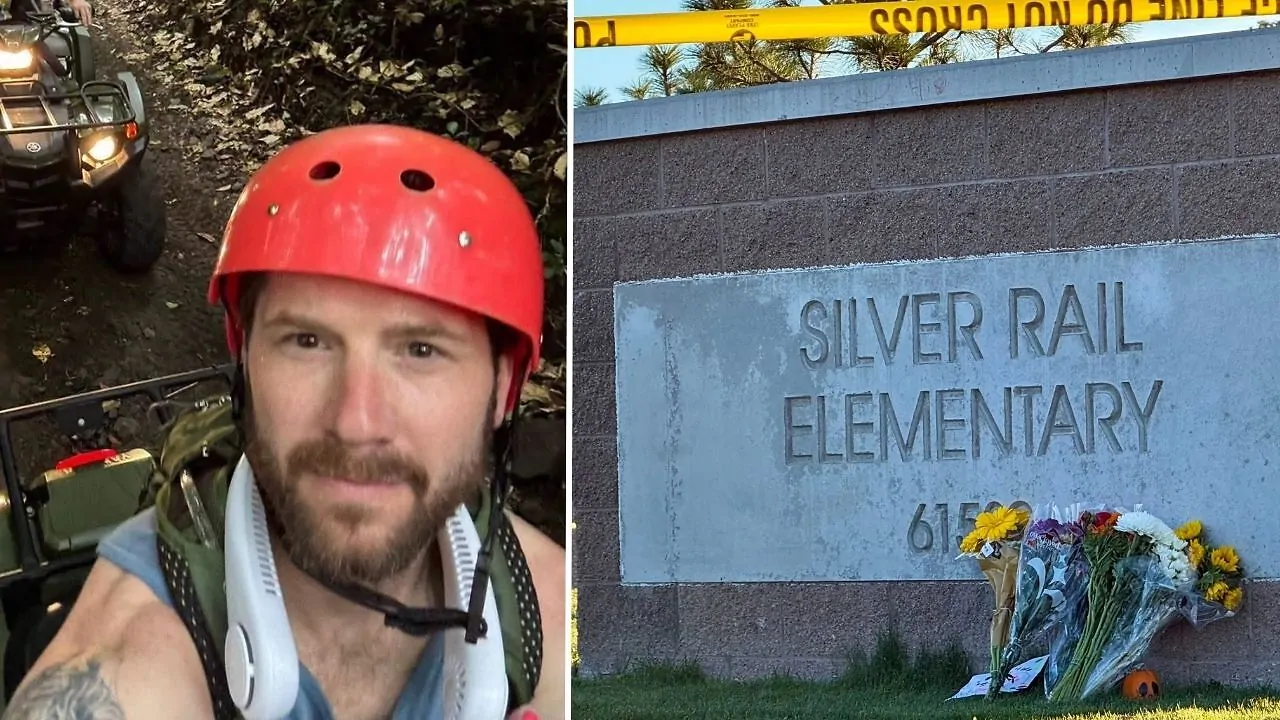
The name Kaylub Giamanco has emerged as a central part of the tragic shooting at Silver Rail Elementary School in Bend, Oregon, after his actions helped bring a deadly attack to an end. Giamanco, a lifelong resident of Bend and the father of two daughters who attend the elementary school, was reportedly driving home when he heard gunshots and realized that something terrible was happening nearby. Rather than continuing on his way, he stopped, armed himself with a legally carried pistol, and followed the gunman into the school.
According to police, Giamanco fired at the attacker, killing the 16-year-old suspect and preventing the rampage from continuing. The incident left the community grieving the deaths of three children and a teacher, while several others were injured. As details about the shooting began to emerge, Giamanco’s family confirmed his role in stopping the attacker but made it clear that he was not seeking public attention. For a father whose own children attend the school, the incident carries a deeply personal dimension, transforming an ordinary journey into an extraordinary and traumatic confrontation. His family’s statement has offered the public a glimpse into the man behind the headlines, describing someone who appreciates the community’s support but wants privacy during an exceptionally difficult time.
Who Is Kaylub Giamanco and What Is Known About His Family?
Kaylub Giamanco is a lifelong resident of Bend, Oregon, whose name became widely known after his intervention during the shooting at Silver Rail Elementary School. Although police initially declined to identify the person who shot the gunman, Giamanco’s family confirmed his identity in a statement released on Friday. The statement provided some of the first public details about the man whose actions helped end the attack, while emphasizing that the family was not prepared to speak extensively with journalists.
Giamanco is the father of two daughters who attend Silver Rail Elementary, the same school where the shooting unfolded. That connection makes the events particularly distressing because the danger was not unfolding at an unfamiliar location but at a school attended by his own children. The available information does not establish every detail of where his daughters were during the attack, so it would be inappropriate to speculate about their individual experiences. What is clear, however, is that the tragedy affected Giamanco both as a member of the wider Bend community and as a parent whose family is directly connected to the school.
His family described the shooting as a devastating event for the community and expressed gratitude for the support they had received in its aftermath. Their statement also made a point of explaining that Giamanco was not interested in becoming a public figure because of what happened. Instead, he wanted to acknowledge the efforts of emergency responders, school personnel, and community members who had offered assistance and compassion following the tragedy. The family’s request for privacy reflects the emotional weight of the incident and the need for those involved to process what happened away from public scrutiny.
A sudden confrontation involving an armed attacker, injured children, and a deadly outcome is not an ordinary experience that can be easily understood or discussed immediately afterward. For Giamanco, the events may also carry the added strain of knowing that the victims were members of a school community connected to his own family. His relatives have not shared further personal details, and there is no confirmed information about his occupation, broader personal history, or private life beyond what they have disclosed. Consequently, the most reliable account of who he is remains grounded in the available facts: he is a local father, a longtime Bend resident, and the man whose intervention brought the shooting to an end.
The family’s response also illustrates the difference between public recognition and personal recovery. News of Giamanco’s actions spread quickly, and many people viewed his decision to intervene as heroic. Yet his relatives were careful not to encourage media attention or provide a detailed personal account for public consumption. His mother briefly addressed reporters on Friday, reading the family’s statement from her phone and reiterating that her son appreciated the support but wished to remain private.
Read : Spider-Man of Yemen’ Al-Qaqa Ibn Antar Dies After Falling Into Volcanic Crater During Free Climb
His sister, Kameron Giamanco, also addressed the situation in a public Facebook post, confirming that her brother had shot the attacker and describing him as a hero. She likewise asked people to respect the family’s decision not to speak to the media at that time. These statements offered confirmation without turning a deeply painful event into an extended public interview. They also made clear that, despite the attention surrounding the incident, the family was still dealing with the immediate aftermath of a tragedy that had shaken their community. Giamanco’s identity has therefore become public through an extraordinary event, but his family’s message remains consistent: recognition is not what he is seeking, and privacy matters as they begin to cope with what happened.
How Kaylub Giamanco Stopped the Silver Rail Elementary School Shooter
Police provided an account of Giamanco’s intervention during a news conference on Friday, outlining how an ordinary drive turned into a confrontation with an armed attacker. According to authorities, Giamanco was driving past Silver Rail Elementary School when he heard gunfire and saw the gunman entering the building. He was carrying a .40-caliber pistol that he was licensed to carry.
After realizing that a shooting was taking place, he pulled over, followed the attacker into the school, and encountered a rapidly unfolding emergency. Police said Giamanco witnessed the gunman struggling with a teacher before firing his weapon and killing the suspect. That intervention brought the attack to an end, although it could not undo the terrible losses that had already occurred. Authorities have not publicly described every moment of the confrontation, and the information released so far does not establish all the decisions Giamanco made as events unfolded. Nevertheless, the official account identifies his actions as the decisive intervention that stopped the attacker inside the school.
The circumstances are especially striking because Giamanco was not identified as a school employee or an emergency responder who had been assigned to deal with a threat. According to the available account, he was passing by when he heard the gunfire. His decision to stop and enter the building placed him in a dangerous situation involving an armed suspect. The police account establishes that he intervened, but the emotional experience of making that decision cannot be fully understood from a brief public description.
There is also an important distinction between recognizing what he did and presenting his actions as a course of action that everyone should imitate. Confrontations involving firearms are unpredictable, and intervention can expose people to serious danger. In this particular case, police confirmed that Giamanco’s actions ended the attack, but that outcome does not make similar confrontations safe or predictable in other circumstances. What can be said with confidence is that he acted during an unfolding emergency and that his intervention prevented the gunman from continuing the rampage.
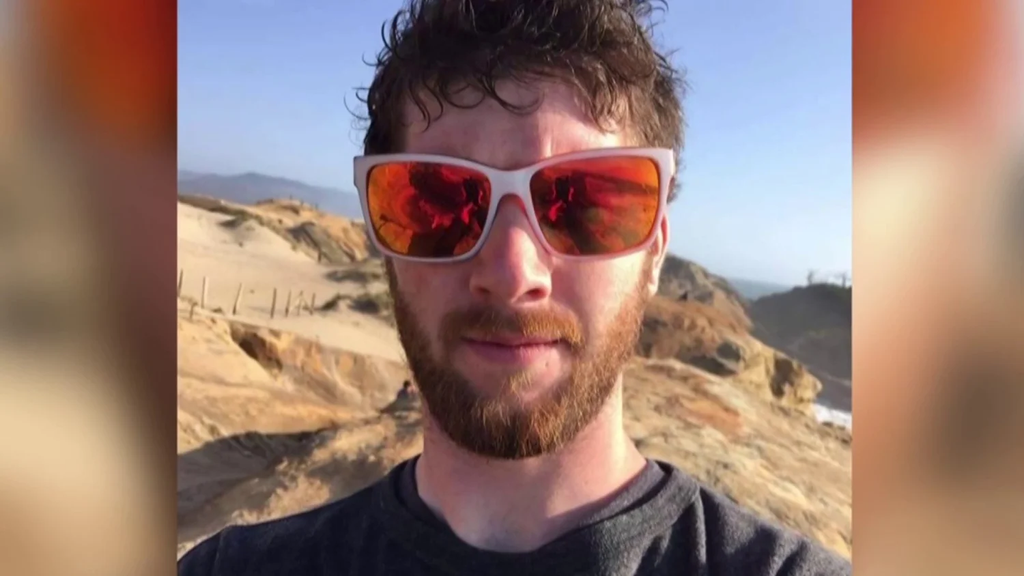
The suspect was identified by authorities as 16-year-old Griffin J. John II, a former student at Silver Rail Elementary School. According to the information provided by police and reported by news organizations, the teenager used a pump-action shotgun that had been purchased by his mother. The reported circumstances have raised questions about how a teenager obtained access to the weapon and what events preceded the attack. However, investigators have not released a confirmed motive, and the information available does not provide a complete explanation for why the shooting occurred.
The fact that the suspect had previously attended the school is one detail in the investigation, but it does not, by itself, explain his actions. Authorities will need to establish the relevant circumstances through evidence, interviews, and further investigative work. Police Chief Mike Krantz emphasized that the case would require a lengthy investigation, warning that many questions remained unanswered. Officials also said that a significant police presence would remain at the school for several days as investigators continued their work and the community began to confront the aftermath.
Giamanco’s intervention occurred during a moment when a teacher was reportedly attempting to confront the attacker. That detail highlights the efforts of school personnel who were caught in an emergency and tried to protect those around them. The teacher’s actions, Giamanco’s intervention, and the response of emergency personnel all form part of the wider account of what happened inside and around the school.
The available reporting does not provide enough information to reconstruct every movement or identify all the people involved in each moment, and it is important not to fill those gaps with invented details. What is known is that the attacker was stopped, but the consequences of the shooting were already devastating. Three children, aged five, eight, and 11, and a teacher were killed, according to the supplied account. A seven-year-old child and another teacher were injured. Those losses explain why the incident has remained a tragedy even as Giamanco’s intervention has received widespread attention. His actions ended the immediate threat, but they could not spare every person in the building from the consequences of the attack.
The Bend Community Reacts as Investigators Search for Answers
The shooting at Silver Rail Elementary School has deeply affected Bend, a community now facing the loss of young children and a teacher alongside the trauma experienced by survivors, families, and school personnel. In the aftermath, attention has focused not only on the suspect and the circumstances that led to the attack but also on the people who responded when the danger became apparent. Oregon Governor Tina Kotek praised the community member who intervened during a news conference on Thursday, expressing concern for the emotional burden he might carry after stopping the shooter.
Although she did not publicly identify Giamanco in those remarks, her statement acknowledged the significance of the intervention and the possibility that the experience would have lasting emotional consequences. Her comments also recognized a reality often overlooked when an emergency ends: the people who step in during a crisis may continue to struggle with its impact long after the immediate danger has passed. A person can be regarded as having acted heroically while still needing time, support, and privacy to process a traumatic event.
Read : Who Was Megan Lambert, the 25-Year-Old Teacher Killed in Silver Rail Elementary School Shooting?
Giamanco’s family echoed the governor’s emphasis on gratitude and community support. In their statement, relatives thanked first responders, school personnel, and the people who had reached out with messages of concern and encouragement. Their response did not attempt to provide a detailed account of his thoughts or feelings, nor did it explain how the family planned to move forward. Instead, they made a straightforward request for privacy and confirmed that Giamanco was not seeking recognition.

His sister’s public message reinforced that request, while his mother repeated it when speaking briefly with reporters. These statements suggest that the family wants to avoid turning the immediate aftermath into a prolonged media event. Their position deserves consideration, particularly because the incident involved the death of children and a teacher, injuries to others, and a frightening experience for families connected to the school. Public interest in Giamanco is understandable, but the family’s request makes clear that he does not wish to become the focus of continuing interviews at this time.
Meanwhile, investigators face the difficult task of establishing what led the 16-year-old suspect to carry out the attack. Police have not released a confirmed motive, and the available information does not establish whether there were warning signs or other circumstances that might explain the violence. Chief Mike Krantz described the investigation as a lengthy process and said that police would maintain a substantial presence at the school for the following days.
That continued presence reflects the scale of the incident and the work required to investigate a shooting at an elementary school. Authorities must establish the sequence of events, assess the available evidence, and determine what can be reliably concluded about the suspect’s actions. Questions surrounding the shotgun reportedly purchased by the suspect’s mother may also draw attention as investigators examine how the weapon came into his possession and was used. Until officials release additional verified findings, claims about the motive or the events leading up to the attack should be treated cautiously.
For the families who lost children, the injured survivors, and the school community, the most important consequences of the shooting extend far beyond the immediate news coverage. The deaths of children aged five, eight, and 11 represent an immense loss for their loved ones, while the death of a teacher adds another painful dimension to a tragedy that unfolded in a place intended for learning and care.
The injured child and teacher, along with other people affected by the incident, must also be considered as the community works through what happened. Giamanco’s intervention is an important part of the story because police say it stopped the attacker, but it does not diminish the lives lost or the grief experienced by those families. Remembering the response to the attack should go hand in hand with acknowledging the victims and respecting the privacy of those directly affected.
Kaylub Giamanco has become known as the father who stopped the Oregon school shooter, but his family’s statements show that he does not want the incident to become a personal publicity campaign. He is a longtime Bend resident whose two daughters attend Silver Rail Elementary, and he reportedly intervened after hearing gunfire while driving past the school. Police confirmed that he shot and killed the 16-year-old suspect after following him into the building and witnessing a struggle with a teacher.
His relatives have praised the support offered by the community while asking for privacy, and the governor has acknowledged the emotional burden carried by the person who intervened. As investigators continue examining the attack, many questions remain unanswered, including the suspect’s motive. For now, Giamanco’s role is best understood through the confirmed details rather than speculation: he intervened during a deadly emergency, helped bring the shooting to an end, and has chosen to remain out of the spotlight while his family and community face the aftermath of a devastating tragedy.