
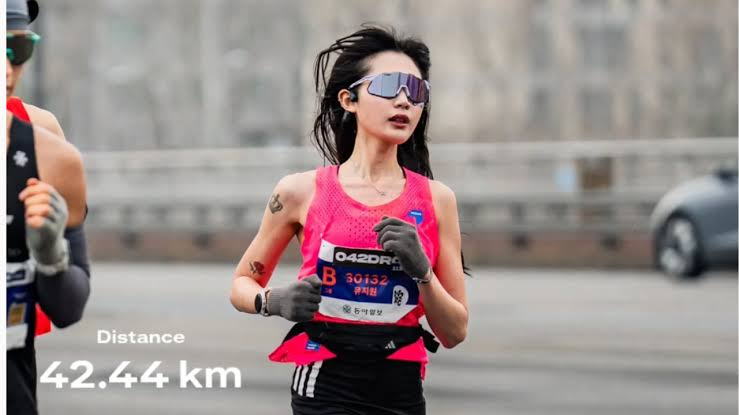
The sudden death of Yoo Ji-won, a South Korean athlete and running influencer, has left the amateur running community mourning the loss of a passionate runner who collapsed just a short distance from completing a half marathon in Seoul. Yoo reportedly became unconscious near the 20.6-kilometre mark of the Seoul Race on Sunday, October 11, when she was less than a kilometre away from the finish line of the 21-kilometre event. Despite receiving emergency medical attention and being transported to a hospital, she could not be revived.
News of her death shocked fellow participants, friends and followers who had watched her document her running journey on social media. Known for sharing her training experiences and athletic milestones, Yoo had attracted an audience of more than 9,000 followers on Instagram. Beyond her growing presence in the running community, she had also achieved an impressive academic background, earning a master’s degree in artificial intelligence semiconductors from the Korea Advanced Institute of Science and Technology and a bachelor’s degree in electrical and electronic engineering from Ewha Womans University.
Her death has drawn attention to the unpredictable medical emergencies that can occur during endurance events and has prompted an outpouring of condolences from people who admired her dedication to running. Although she was close to completing the race, the circumstances surrounding her collapse turned what should have been another athletic milestone into a heartbreaking loss.
What Happened to Yoo Ji-won During the Seoul Race Half Marathon?
The Seoul Race half marathon took place on Sunday, October 11, bringing together runners who had prepared to cover the demanding 21-kilometre course through South Korea’s capital. For participants, the event represented an opportunity to challenge their endurance, measure their progress and celebrate their commitment to running. Among those taking part was Yoo Ji-won, a South Korean athlete and social media creator who had developed a following by sharing her experiences in the running community.
However, the race took a tragic turn when Yoo collapsed at approximately 8:49 a.m., near the 20.6-kilometre mark, according to a statement released by the event organisers. At that point, she had already covered almost the entire half-marathon distance and was less than 500 metres from the finish line. Her sudden collapse prompted an immediate emergency response, with a race official discovering her unconscious on a street near the finish area and contacting emergency services. What began as a competitive sporting event quickly became a desperate effort to provide medical assistance to a participant in critical condition.
According to the Seoul Race organisers, first aid was administered at the scene before Yoo was transported by ambulance to a medical facility for further treatment. She reportedly received cardiopulmonary resuscitation, commonly known as CPR, as emergency personnel attempted to save her life. Despite these efforts, she never regained consciousness and was subsequently pronounced dead.
The organisers later confirmed her passing in an Instagram statement, expressing their condolences to her family and to the other participants who had been deeply affected by the news. The statement explained that the runner had collapsed during the half-marathon course, received treatment after being transported to a medical facility and ultimately died despite the medical team’s efforts. The announcement offered little public information about the precise medical circumstances that led to the collapse, and no specific cause of death was established in the information available in the original report.
Consequently, it would be inaccurate to attribute her death to a particular medical condition, the weather, exhaustion or any other factor without confirmed findings. What is known is that she experienced a medical emergency near the end of the race and that emergency responders attempted to save her. The timing of the incident made the news especially difficult for people who understood the effort involved in preparing for a half marathon. Covering 21 kilometres requires sustained physical exertion, training and careful management of pace and endurance. Reaching the final kilometre often brings a sense of relief and anticipation, as runners begin to imagine crossing the finish line after hours of preparation.
Yoo had already completed the overwhelming majority of the course when she collapsed, leaving only a short distance between her and the finish. However, her proximity to the end of the race could not protect her from the medical emergency that occurred. For fellow runners, the incident was a sobering reminder that sporting achievements can be interrupted by unexpected circumstances, even when an athlete appears close to reaching a goal. The tragedy also highlighted the importance of having emergency response arrangements available at large sporting events, where medical teams may need to respond rapidly when a participant becomes unwell. While the available account confirms that Yoo received first aid, ambulance transport and hospital treatment, it does not establish whether any particular change in race procedures would have altered the outcome.
Following the announcement, the Seoul Race organising committee expressed its deepest condolences to Yoo’s bereaved family and acknowledged the emotional impact of the incident on other participants. The committee said it was closely monitoring the situation and would take the necessary follow-up measures. Such statements reflect the difficult responsibility organisers face when a participant dies during an event intended to celebrate health, endurance and athletic achievement. Races require coordination among officials, volunteers, medical personnel and emergency services, and the response to a serious incident can affect everyone involved.
For runners who were present that morning, the news may have transformed memories of the race, replacing the excitement of completing the course with the knowledge that another participant had lost her life. The incident also affected people who were not physically present but had followed Yoo’s activities online. Her social media audience had come to know her through her running-related content, making the news particularly painful for followers who had admired her dedication and progress. As tributes emerged, attention shifted from the race itself to the person behind the running achievements and the life she had built beyond the sporting community.
Who Was Yoo Ji-won? Her Education, Career and Passion for Running
Yoo Ji-won was a South Korean athlete and running influencer whose online presence reflected her enthusiasm for endurance sports. Through Instagram, she shared aspects of her running journey, including training programmes and athletic milestones, allowing followers to see the effort that went into developing her abilities. Her audience had grown to more than 9,000 followers, giving her a recognised place within the amateur running community.
Although this following was modest compared with that of major international sports celebrities, it represented a community of people interested in her experiences and inspired by her commitment to the sport. Running influencers often connect with their audiences by documenting the ordinary realities of training alongside the excitement of races, including the preparation, discipline and persistence required to improve over time. Yoo’s profile, as described in the original report, reflected this combination of athletic enthusiasm and personal achievement. Her death has therefore resonated with people who saw her not simply as a participant in a single competition but as someone whose ongoing journey had become part of their online running experience.
One of the most notable aspects of Yoo’s background was her academic achievement in science and engineering. According to the information in her Instagram bio cited in the report, she earned a Master of Science degree in Artificial Intelligence Semiconductors from the Korea Advanced Institute of Science and Technology, widely known as KAIST. The institution is recognised for its emphasis on science, engineering and technological research, making the qualification a significant part of her educational background. Before completing her master’s degree, Yoo had earned a Bachelor of Science degree in Electrical and Electronic Engineering from Ewha Womans University.
Read : Who Was César Gastélum, the TikTok Influencer Shot Dead While Livestreaming Outside KFC?
These qualifications indicate that she had pursued a demanding academic path in technical fields while also cultivating a strong interest in running. Her educational background offered another dimension to her public identity, demonstrating that her interests extended beyond athletics and social media. However, the available information does not establish the details of her employment, professional projects or future career plans, so it would be inappropriate to make assumptions about the specific work she pursued after completing her studies.

The contrast between Yoo’s academic accomplishments and her passion for running illustrates how sporting interests can become an important part of a person’s life regardless of their educational or professional direction. Running can provide a structured way to pursue personal goals, develop endurance and connect with people who share similar interests. For some participants, races become milestones in a longer journey, offering opportunities to test their progress and celebrate the results of consistent preparation.
Sharing those experiences online can also create a sense of community, particularly for amateur runners who may not compete professionally but still dedicate considerable time and effort to their sport. Through her Instagram content, Yoo had built a following around her training and achievements, giving people an opportunity to follow her development as a runner. Her audience was not simply a numerical measure of popularity; it also represented the people who had chosen to engage with the experiences she shared. Following her death, those connections became an important part of the public response, as fellow runners and followers reflected on the loss of someone whose enthusiasm had been visible through her online activity.
Yoo’s story also demonstrates the increasingly prominent role social media plays in the amateur sports world. In previous generations, the experiences of local and recreational runners were often shared mainly among friends, training partners and participants at sporting events. Today, platforms such as Instagram allow athletes to document their progress for audiences that extend far beyond their immediate circles. Training updates, race photographs and personal milestones can help runners connect with others who understand the challenges and rewards of endurance sports.
Influencers within these communities do not necessarily need professional contracts or enormous audiences to make an impact. Their appeal often comes from the familiarity of their experiences and the sense that their achievements are attainable through dedication and practice. Yoo’s following of more than 9,000 people placed her within this wider online culture. The news of her death consequently travelled through a network of people connected by their shared interest in running, even if many of them had never met her personally. Her passing highlighted how a person can become meaningful to a community through the interests and experiences they choose to share.
Although Yoo’s academic qualifications and growing social media presence were notable achievements, the available information offers only a limited picture of her private life. Details about her family, childhood, personal relationships and wider professional activities were not established in the original account. Respecting those boundaries is particularly important following a sudden death, when public curiosity can grow rapidly and unverified details may circulate online.
What can be stated with confidence from the information provided is that Yoo had studied electrical and electronic engineering, pursued postgraduate education in artificial intelligence semiconductors, and developed a substantial interest in running. These elements formed the public profile through which many followers came to know her. Her participation in the Seoul Race was another part of that athletic journey, although it became the setting for the tragic event that brought her story to wider attention. Rather than reducing her life to the circumstances of her death, her academic accomplishments and enthusiasm for running offer a more complete understanding of the interests and pursuits that defined her public identity.
Friend’s Emotional Tribute and the Questions Raised by Her Death
Among the most moving responses to Yoo Ji-won’s death came from Bummy, a friend and fellow running content creator who remembered the moments after completing his own race. His account described the confusion he experienced when he noticed a large crowd gathering near the finish-line area. At first, he believed that someone might have been injured and looked towards the awards podium in search of Yoo after crossing the finish line himself. The situation became more distressing when he received the news that she had collapsed.
In his Instagram tribute, he recalled the unsettling realisation that the incident involved someone he knew and expressed his difficulty in accepting what had happened. His account conveyed the shock of moving from the ordinary excitement of a race to the sudden knowledge that a friend was experiencing a medical emergency. For someone who had expected to celebrate the event alongside fellow runners, the discovery must have been deeply upsetting. His words also revealed the uncertainty that can surround a medical emergency when people at the scene do not immediately know the identity of the person who has collapsed or the seriousness of the situation.
Bummy also wrote that he rushed to the hospital after learning about Yoo’s condition, hoping to see her one last time. However, he expressed regret that he could not remain by her side until the end. His message reflected the helplessness that friends can experience when an emergency unfolds unexpectedly and there is little they can do beyond seeking information and hoping for a positive outcome. The fact that he had been nearby, participating in the same race, made the experience especially difficult.
Both had been connected through running, a shared interest that brought them into the same sporting environment that morning. His tribute transformed the story from a brief report about a fatal incident into a personal account of grief, emphasising the human relationships affected by the loss. For followers who read his message, the account also provided a glimpse of the emotional impact on the people who had known Yoo beyond her public profile. While the details of the incident were already heartbreaking, the friend’s recollection underscored how suddenly ordinary plans can change when a serious medical emergency occurs.
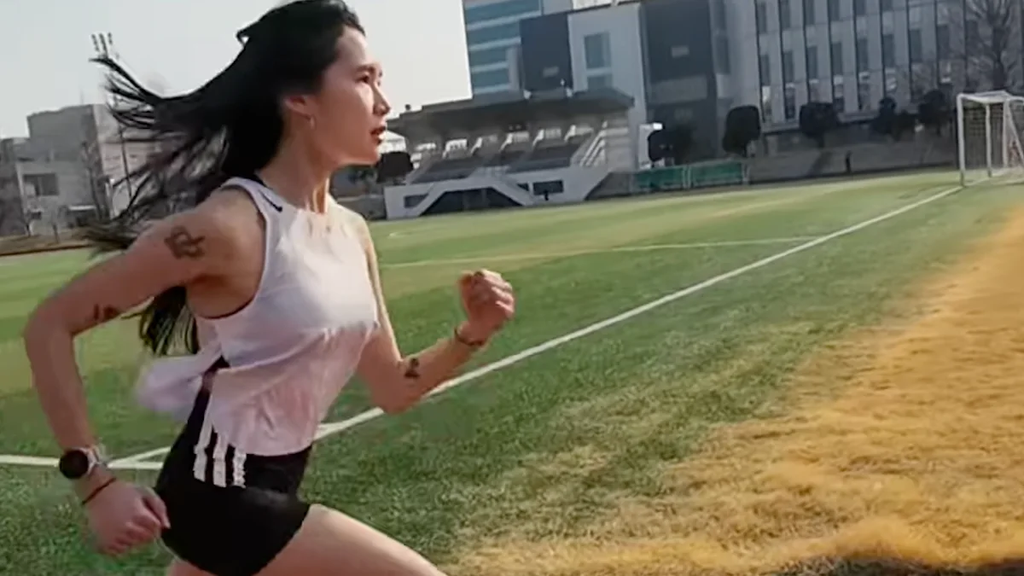
The tragedy has also renewed attention to the medical risks associated with endurance exercise. Half marathons are widely undertaken by recreational athletes, but they still require sustained exertion over a considerable distance. Preparation commonly involves gradually increasing running distances, balancing training with recovery and paying attention to hydration and nutrition. Participants are also encouraged to consider their individual health circumstances when deciding how to train and compete. Nevertheless, even athletes who prepare carefully can experience unexpected medical problems, and a collapse during a race does not, by itself, reveal what caused the emergency.
Without confirmed medical findings, there is no reliable basis for concluding that Yoo’s death resulted from overexertion, an underlying condition, dehydration or any other specific cause. Her case should therefore not be used to promote speculation about her health or training habits. Instead, it serves as a reminder of the importance of recognising serious symptoms during exercise and seeking immediate medical assistance when a runner collapses or becomes unresponsive. Organised sporting events also depend on effective emergency planning, accessible medical personnel and clear procedures for responding to incidents along the course.
For the wider running community, Yoo’s death is a painful reminder that sporting events bring together people whose lives extend far beyond the kilometres they run. Each participant arrives with individual ambitions, personal histories and reasons for taking part. Some may be pursuing a personal best, others may be completing their first half marathon, and some may simply enjoy the shared experience of running alongside thousands of people.
Yoo had her own combination of academic accomplishments, athletic interests and online connections, and she was close to completing the 21-kilometre course when her life was cut short. Her death also illustrates the importance of remembering the people behind social media profiles. Followers may initially encounter an athlete through photographs, training updates and race results, but those posts represent only a portion of a much larger life. The tributes from her friend and the race organisers reflected the grief felt by people who had encountered different parts of that life, whether through personal friendship, shared sporting experiences or online engagement.
As the Seoul Race community continues to process the news, the confirmed details remain stark: Yoo Ji-won collapsed at approximately the 20.6-kilometre mark on October 11, received emergency assistance and was transported to a medical facility, where she was pronounced dead after failing to regain consciousness. The organisers expressed condolences and said they would take necessary follow-up measures, while her friend shared an emotional account of learning about the incident and rushing to the hospital.
Her academic background and growing audience as a running influencer provide further context for the person whose death has drawn widespread attention. The precise cause of the collapse was not established in the information provided, and any conclusions beyond those reported would be speculation. What remains clear is that Yoo’s death has left friends, fellow runners and followers mourning someone who had pursued both academic achievement and a passion for running. Her story is a reminder of the unpredictability of life and of the importance of responding seriously to medical emergencies during physical activity, while treating those affected by sudden loss with compassion and respect.
This article explains the topic in a straightforward way.
Helpful reminder that supplements are not a substitute for diagnosis.
This post provides helpful background information.
Helpful explanation of why symptoms may feel worse at night.
Clear information about the range of possible neuropathy symptoms.
Useful information presented in a reader-friendly way.
I learned something new from this post.
kadıköy petek temizleme firması Kadıköy’de güvenilir bir petek temizleme hizmeti arıyorsanız tavsiye ederim. Memnun kaldık. https://tar.ts-cloud-engineering.de/?p=5174