
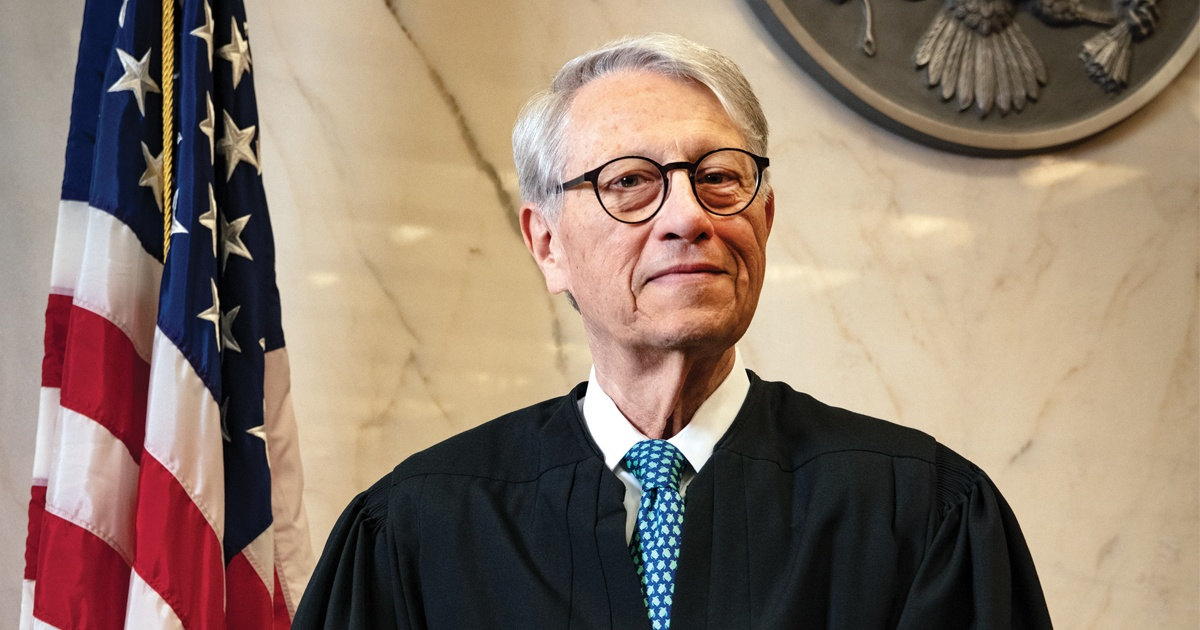
US District Judge Nicholas Garaufis has drawn international attention after dismissing the criminal charges brought against Indian billionaire Gautam Adani in a high-profile fraud and bribery case. The decision came after the US Department of Justice said it no longer wanted to pursue the prosecution, but Garaufis did not immediately accept the government’s request. Instead, the Brooklyn-based federal judge questioned prosecutors about why they wanted to abandon the case and sought clarification about whether anything had been promised or exchanged in connection with the dismissal.
His involvement has placed him at the center of a case that had attracted significant attention in both the United States and India because of Adani’s position as one of India’s most prominent business figures and the allegations involving a major international energy project. Garaufis ultimately approved the Justice Department’s request and formally dismissed the charges, but his handling of the proceedings showed that he was not prepared to simply rubber-stamp the government’s decision.
The judge sought additional explanations after describing the Justice Department’s initial justification as “bland and conclusory” and asked questions about Adani’s previously announced plans to invest billions of dollars in the United States. The circumstances surrounding the dismissal have therefore made Nicholas Garaufis an important figure in understanding what happened to the prosecution against Adani and why the case was brought to an end.
Nicholas Garaufis and His Role as a Federal Judge
Nicholas Garaufis is a federal judge serving on the United States District Court for the Eastern District of New York, the federal court district that includes Brooklyn. His position places him within the federal judiciary, where judges preside over criminal and civil cases involving federal law. Unlike state judges, federal district judges deal with cases prosecuted under US federal statutes and operate within the federal court system. Garaufis’s courtroom in Brooklyn became the setting for the legal proceedings surrounding Gautam Adani after prosecutors brought charges against the Indian billionaire and several other individuals in connection with an alleged bribery and securities-related scheme.
As a federal district judge, Garaufis has authority over proceedings in his courtroom, including decisions concerning indictments, motions, evidence, sentencing and other matters arising during federal criminal cases. However, the US justice system gives prosecutors substantial authority over whether and how criminal cases are pursued. When the government decides that it no longer wishes to continue a prosecution, a judge generally has limited ability to force prosecutors to keep pursuing the case.
The situation involving Adani demonstrated this balance between prosecutorial authority and judicial oversight. Although the Justice Department announced that it wanted to abandon the prosecution, the charges could not simply disappear without the court formally approving their dismissal. Garaufis’s response was notable because he requested more information before granting the government’s request.
The Justice Department had announced on 18 May that it would no longer pursue the prosecution. Federal prosecutors described the case as primarily foreign in nature, difficult to prove and inconsistent with the department’s current priorities. Those explanations were important because the case involved alleged conduct in India, international financial interests and an Indian company seeking to develop a major solar energy project. Prosecutors ultimately argued that continuing the case was not consistent with the priorities of the department under the current administration.
Garaufis, however, wanted a more detailed explanation. The judge questioned the government’s reasoning and sought information about the circumstances behind the decision to abandon the case. His questions were particularly significant because the prosecution involved Gautam Adani, one of India’s most powerful business figures, and because Adani had previously announced plans to invest $10 billion in the United States. The judge specifically wanted to know whether there had been any agreement involving that investment and the dismissal of the criminal charges.
That question placed the judge in a position of examining not only the legal basis for dismissal but also the circumstances surrounding the government’s decision. Garaufis asked Adani whether he was aware of any agreement that exchanged something for the dismissal of the indictment. In a sworn declaration filed in court on 15 July, Adani said he was not aware of such an agreement.
Read : Spider-Man of Yemen’ Al-Qaqa Ibn Antar Dies After Falling Into Volcanic Crater During Free Climb
He acknowledged that he had previously promised to invest $10 billion in the United States, but said his lawyers had informed the Justice Department during meetings that the investment pledge “might be part of a resolution of these matters.” Adani’s lawyer, Robert Giuffra, separately told the court that the Justice Department had said it would not consider the Adani Group’s willingness to invest in the United States as part of any resolution.
Read : Alaska Wildlife Agents Allowed to Shoot Bears from Helicopters to Protect Caribou, Judge Rules
The judge’s questions therefore became an important part of the final stage of the case. Rather than allowing the prosecution to end without examination, Garaufis sought assurances about whether the dismissal was connected to an outside commitment. His actions highlighted the role of a federal judge in ensuring that court proceedings are handled according to legal standards even when both the prosecution and defense may favor the termination of a case.
Why Did Judge Garaufis Drop the Charges Against Gautam Adani?
The decision to dismiss the charges did not amount to a judicial finding that Gautam Adani was innocent of the allegations. Instead, the dismissal followed the Justice Department’s decision that it no longer wanted to pursue the criminal prosecution. Adani and the Adani Group had consistently denied wrongdoing throughout the case. Adani himself had not appeared in a US courtroom to answer the charges, and the case ended after prosecutors formally sought to abandon it.
The original allegations were serious. In 2024, US prosecutors accused Adani of agreeing to bribe Indian government officials in order to help an Adani Group subsidiary obtain approval for a solar energy project. Prosecutors also alleged that investors in the United States were misled through reassuring statements about the company’s anti-corruption practices. The allegations placed one of India’s largest business groups at the center of a major international criminal investigation and raised questions about corporate conduct, overseas investment and the application of US law to alleged activity taking place outside the country.
The charges were brought before they were unsealed in November 2024, and the case quickly attracted international attention. Adani, who has built a vast business empire covering areas including energy, infrastructure, ports and other industries, rejected the allegations. The Adani Group maintained that there had been no wrongdoing. The case nevertheless continued through the US federal court system until the Justice Department later decided that it no longer wanted to pursue the prosecution.
The government’s decision to abandon the case came during Donald Trump’s second term in the White House and represented another example of federal prosecutors seeking to end a high-profile white-collar criminal prosecution. According to the Justice Department filing submitted in July, the prosecution was considered primarily foreign, difficult to prove and inconsistent with the department’s current priorities. Those arguments provided the official legal and administrative explanation for the government’s decision.

Garaufis initially considered that explanation insufficient. The judge described the government’s announcement as “bland and conclusory,” indicating that he wanted more than a short statement before approving the dismissal. His concern was particularly important because the case involved allegations of bribery and fraud against an internationally prominent businessman. The judge therefore asked the Justice Department to provide a stronger explanation for why prosecutors had suddenly decided to abandon a case that had previously been considered serious enough to bring federal criminal charges.
One of the most sensitive issues was Adani’s $10 billion investment pledge in the United States. The timing of that pledge and the later decision to abandon the criminal case prompted questions about whether the two matters were connected. Garaufis specifically asked whether Adani knew of any agreement exchanging something for the dismissal of the indictment. Adani’s sworn response was that he was not aware of such an arrangement. He acknowledged the investment pledge and said his attorneys had discussed with Justice Department officials the possibility that the pledge might form part of a resolution, but Adani denied knowledge of any agreement linking the investment to dismissal.
The Justice Department also rejected suggestions that the investment promise influenced its decision. Trent McCotter, a senior Justice Department official, stated in a 4 July filing that media reports suggesting he sought dismissal partly because of Adani’s investment promise were false. Adani’s lawyer likewise stated that the department had told him it would not consider the Adani Group’s willingness to invest in the United States as part of a resolution.
After examining these issues, Garaufis approved the government’s request to dismiss the charges. His decision illustrates an important feature of the American federal justice system: prosecutors generally have broad discretion over whether to continue criminal cases, but their decisions still pass through the court when formal dismissal is required. The judge’s role was not to replace the prosecutors’ judgment with his own, but to determine whether the requested dismissal could properly be entered on the court record.
What Garaufis’s Decision Means for the Adani Case and His Judicial Reputation
Nicholas Garaufis’s handling of the Adani case is likely to be remembered less simply as a judge “dropping charges” and more as an example of judicial scrutiny of a prosecutorial decision to abandon a major federal prosecution. The distinction is important because Garaufis did not initiate the dismissal and did not determine that the original allegations were false. The Justice Department made the decision to stop pursuing the prosecution, while the judge was responsible for considering whether the requested dismissal should be formally approved.
The circumstances also demonstrate why federal judges can become highly visible in cases involving powerful individuals and international business interests. Gautam Adani is one of India’s best-known billionaires, and the allegations against him involved an energy project, alleged government bribery and representations to investors. Because of the international dimensions of the case, the proceedings attracted attention far beyond Brooklyn. Garaufis’s questions about the circumstances of the dismissal consequently became an important part of the public understanding of how the case ended.
Read : Judge Michael Fanning Charged With Assaulting Wife and 30-Year-Old Daughter
For Garaufis, the episode also demonstrated the limits and responsibilities of a federal judge. Prosecutors have considerable discretion in deciding which cases to pursue, particularly when they believe a prosecution is difficult to prove or no longer fits departmental priorities. At the same time, judges are responsible for ensuring that proceedings before their courts are conducted properly. Garaufis’s decision to seek additional information before approving the dismissal showed that he wanted the government to explain its reasoning rather than simply accept a brief request without scrutiny.
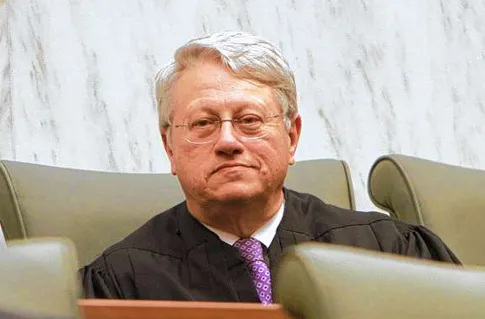
The case also underscores the difference between dismissal and acquittal. An acquittal generally follows a determination that the prosecution has failed to establish guilt under the required legal standard. The Adani case ended differently. The Justice Department decided not to continue the prosecution, and the judge ultimately granted the government’s request to dismiss the indictment. Consequently, the dismissal should not be described as a court ruling that Adani had been proven innocent of every allegation. At the same time, the charges were no longer being pursued by US federal prosecutors after the dismissal.
For the Adani Group, the conclusion of the case removes the immediate threat posed by the US criminal prosecution. The company had consistently denied wrongdoing, and the dismissal means the federal charges brought in 2024 will no longer proceed in the form originally presented. The circumstances surrounding the case, however, remain significant because the allegations had raised questions about corporate governance, international bribery laws and the reach of US prosecutors into transactions involving companies and conduct outside the United States.
Nicholas Garaufis’s role in the episode is therefore significant because he occupied the position between prosecutorial discretion and judicial oversight. The Justice Department wanted the case dismissed, while the judge first demanded greater clarity about why prosecutors had changed course. His questions concerning Adani’s proposed $10 billion US investment were particularly important because they addressed the possibility of an improper exchange, an issue that could have had serious implications for the credibility of the dismissal. Both the Justice Department and Adani rejected the suggestion that the investment pledge was exchanged for the termination of the case.
Ultimately, Garaufis granted the dismissal after reviewing the government’s explanation and the information provided about the circumstances surrounding the decision. His involvement did not turn him into the prosecutor or defender in the case. Instead, it reflected the role of a federal judge overseeing a significant criminal proceeding and ensuring that the formal end of that proceeding was properly considered by the court.
For Gautam Adani, the dismissal brings an end to a major legal challenge in the United States. For Nicholas Garaufis, the case provides another example of the complex responsibilities that come with serving on a federal district court, particularly when prosecutors seek to abandon a case involving a globally recognized businessman. The judge’s decision ultimately allowed the prosecution to end, but his questions before granting that request ensured that the circumstances behind the dismissal received judicial examination rather than passing through the court without scrutiny.
Greetings! Very helpful advice on this article! It is the little changes that make the biggest changes. Thanks a lot for sharing!
I’m not that much of a online reader to be honest but your sites really nice, keep it up! I’ll go ahead and bookmark your site to come back down the road. All the best
Finally found a safe link to get the app running on my phone. Installation was a breeze and it works perfectly. Highly recommend lucky33download for everyone.
Finally found a site that doesn’t lag during peak hours. The login process is seamless and the game variety is top notch. Highly recommended for local players. Visit phskycomlogin now.
Wow! This could be one particular of the most beneficial blogs We’ve ever arrive across on this subject. Basically Great. I’m also a specialist in this topic so I can understand your effort.
Finally found a platform that doesn’t lag during peak hours. The interface is super smooth and easy to navigate. Highly recommend krikialogin to everyone.