
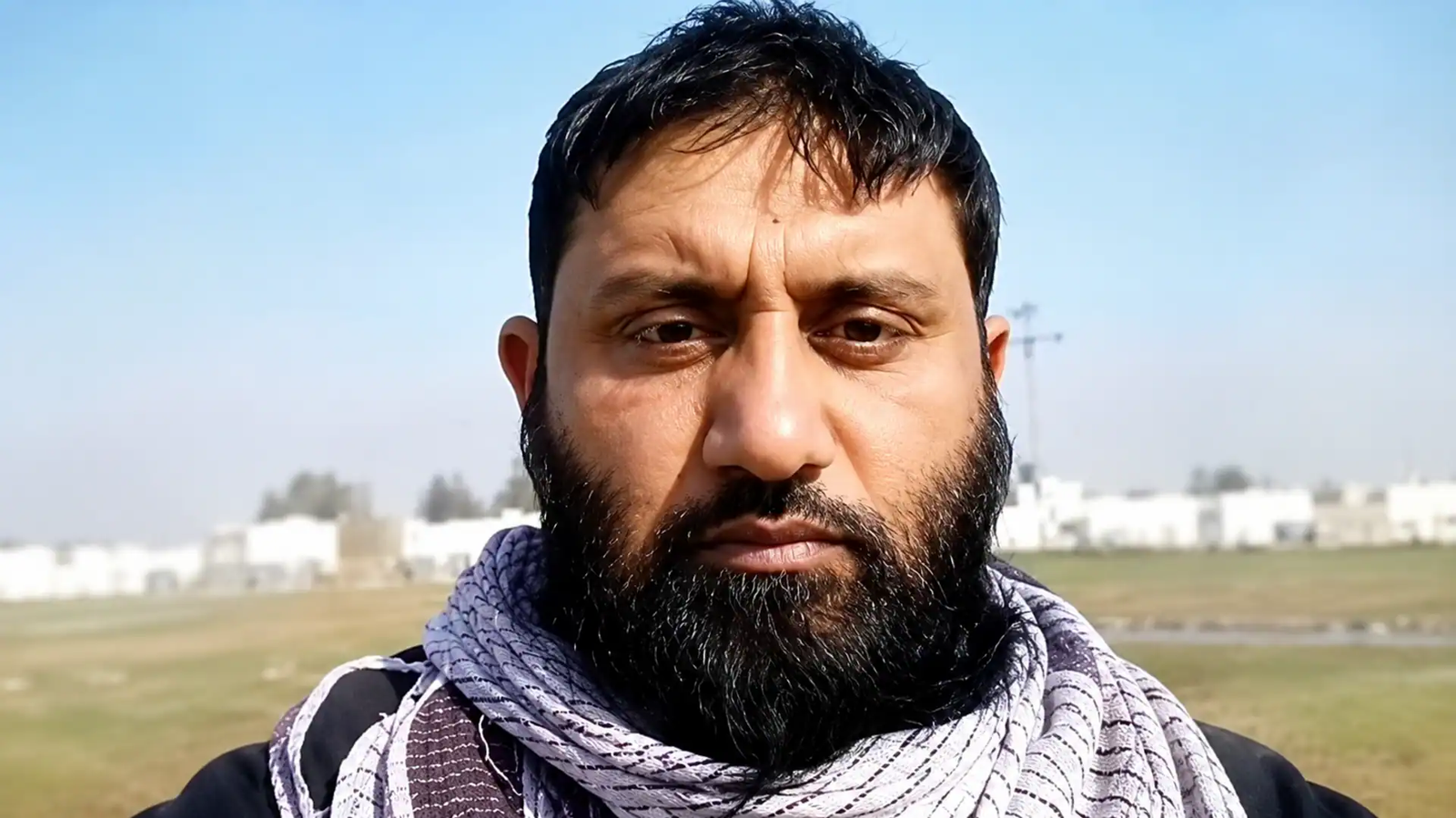
Qari Saeed Abdul Aziz, a senior commander of the Pakistan-based terrorist organisation Lashkar-e-Taiba (LeT), has died under mysterious circumstances after reportedly falling ill and collapsing at Quba Mosque in Islamabad. According to reports based on local accounts and CCTV footage, Aziz had eaten at an unfamiliar restaurant shortly before travelling to the mosque to offer prayers. He reportedly performed ablution and then collapsed near the entrance of the mosque, with people present attempting to revive him before he was taken to a hospital, where he was pronounced dead.
The precise cause of his death has not been established publicly, and there has been no confirmed official finding indicating whether he died from a natural medical emergency, poisoning or another cause. The circumstances surrounding Aziz’s death have attracted particular attention because of his position within Lashkar-e-Taiba and the timing of the incident. He was reportedly involved in the group’s Shoaba-e-Warasa-e-Shuhada department, an organisation responsible for providing financial and other assistance to the families of LeT members killed during encounters in Jammu and Kashmir.
His reported death also comes shortly after a video surfaced in which Rizwan Hanif, another senior LeT-linked operative, claimed that more than 30 members of the organisation had been killed by unidentified gunmen in different parts of Pakistan and Pakistan-occupied Jammu and Kashmir over the past several years. While there is no evidence publicly linking Aziz’s death to those incidents, the combination of events has generated considerable speculation about the circumstances facing the militant organisation.
Qari Saeed Abdul Aziz and His Role in Lashkar-e-Taiba
Qari Saeed Abdul Aziz was reportedly a longstanding member of Lashkar-e-Taiba’s organisational network and held a position that went beyond that of an ordinary field operative. Intelligence-based accounts have described him as the head of the South Punjab unit of the group’s Shoaba-e-Warasa-e-Shuhada department, which deals with the welfare and financial support of families of LeT members killed during operations in Jammu and Kashmir. Such a role would have placed him within an important part of the organisation’s internal support structure, particularly because militant groups depend not only on fighters and recruiters but also on systems that maintain relationships with the families of members who are killed.
Reports have also claimed that Aziz had been associated with the network surrounding LeT chief Hafiz Saeed since around 1990. Over the years, he was allegedly involved in recruitment and other organisational activities. His reported connection to the group’s recruitment structure is significant because Lashkar-e-Taiba has historically maintained a broad organisational network involving religious outreach, recruitment, fundraising and logistical support alongside its militant activities.
The organisation is internationally designated as a terrorist group and has been linked to numerous attacks, most notably the November 2008 Mumbai attacks in which 166 people were killed. The United Nations designated Lashkar-e-Taiba because of its links to Al-Qaeda and the Taliban, among other terrorist activities. The Shoaba-e-Warasa-e-Shuhada department, in which Aziz reportedly held a leadership role, is particularly relevant to understanding how militant organisations maintain loyalty among their members.
Providing financial assistance or pensions to the families of dead operatives can serve as a mechanism for maintaining support within the organisation and reassuring recruits that their families will not be abandoned if they are killed. According to reports, Aziz’s responsibilities involved supporting families connected to LeT members who died in encounters in Jammu and Kashmir. This placed him within a structure that connected the organisation’s militant activities with its internal welfare network.
His reported death therefore represents the loss of an individual who allegedly occupied an important position within the group’s organisational machinery. However, the available information does not establish the extent of his current operational responsibilities or whether he was directly involved in recent militant activities. Many details about his activities remain based on intelligence assessments and local reporting rather than publicly released official records.
That distinction is important because much of the information surrounding militant figures operating clandestinely in Pakistan is difficult to independently verify. The unusual circumstances of his final hours have nevertheless drawn attention. According to reports, Aziz ate at a restaurant that was unfamiliar to him on or around August 8, 2026, before travelling to Quba Mosque in Islamabad.
After arriving at the mosque, he reportedly performed ablution before suddenly becoming unwell. Some accounts state that he collapsed at the entrance, while others describe him falling while removing his footwear before entering the prayer area. People nearby reportedly attempted CPR before he was transported to a hospital, where he was declared dead. The sequence has led to speculation that something may have happened after his meal, but there is currently no publicly available toxicology report or autopsy finding establishing poisoning.
What Happened at the Islamabad Mosque?
The circumstances surrounding Aziz’s death remain unclear because there has been no detailed public explanation from Pakistani authorities establishing the medical cause. The available accounts generally agree on the broad sequence: he ate at an unfamiliar establishment, travelled to Quba Mosque, became unwell and collapsed, and was subsequently taken to a hospital. The disagreement or uncertainty concerns the precise location and moment of his collapse, as well as what caused his sudden deterioration.
According to reports citing local sources and CCTV footage, Aziz arrived at the mosque after eating and carried out ablution before entering for prayers. He then collapsed near the mosque’s entrance. Other people at the scene reportedly attempted to provide emergency assistance, including CPR, but were unable to revive him. He was taken to a hospital, where doctors pronounced him dead. There have been no publicly released findings that conclusively identify a heart attack, stroke, poisoning or another medical condition as the cause.
The reference to an unfamiliar restaurant has become one of the most discussed elements of the incident. Because Aziz reportedly became seriously ill relatively soon after eating, speculation about poisoning has emerged. However, the timing alone cannot establish that the meal caused his death. Food poisoning, a sudden medical emergency, an underlying health condition or deliberate poisoning could potentially produce a similar sequence of events, and distinguishing between those possibilities requires medical and forensic evidence. At present, publicly available information does not provide that evidence.
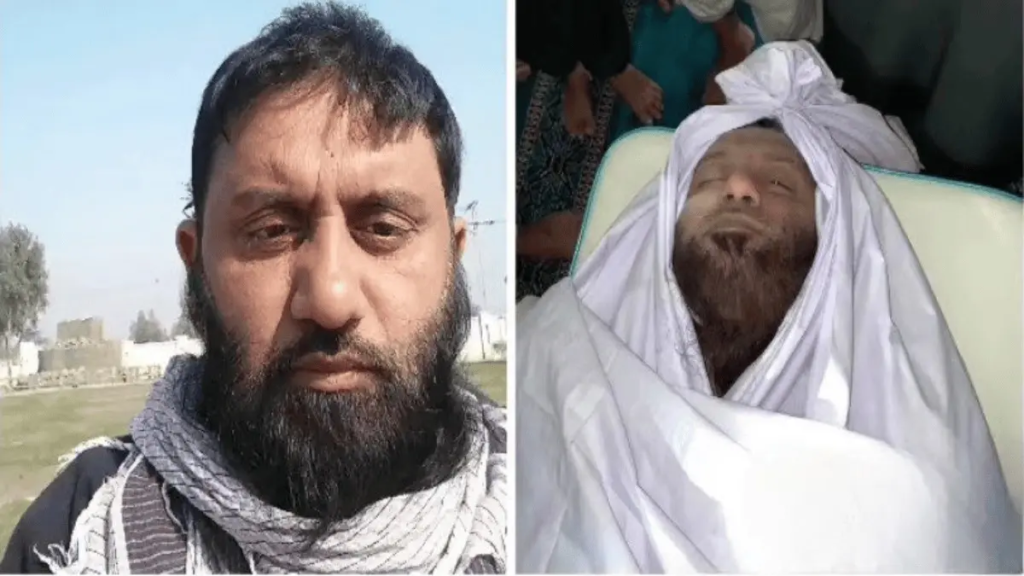
The absence of an official explanation has created an environment in which rumours can spread quickly, particularly because Aziz was a senior member of a terrorist organisation whose operatives have reportedly faced a series of unexplained deaths in Pakistan and Pakistan-occupied Jammu and Kashmir. It is therefore important to separate confirmed information from claims and speculation. Aziz’s death is confirmed in the accounts cited, but the cause and circumstances behind it remain unresolved.
The timing has also attracted attention because of a recent video involving Rizwan Hanif, a senior LeT-linked operative reportedly associated with recruitment and infiltration activities. In the video, Hanif claimed that more than 30 members of Lashkar-e-Taiba had been killed by unidentified individuals over a period of approximately three to four years. He reportedly mentioned locations including Peshawar, Karachi, Rawalpindi, Muzaffarabad and Rawalakot. Hanif attributed the killings to what he described as an “unknown gunman” model and alleged involvement by Indian intelligence agencies.
Those allegations have not been independently established, and claims made by militant figures should be treated with caution. Nevertheless, the video is significant because it represented an unusually public acknowledgment from someone connected to Lashkar-e-Taiba that the organisation had suffered substantial losses inside Pakistan and Pakistan-occupied Jammu and Kashmir. The claim also reflects the growing attention around unexplained deaths involving individuals associated with militant organisations operating in the region.
Aziz’s death cannot automatically be placed within that pattern. There is no publicly confirmed evidence showing that he was killed by an unknown gunman, a rival organisation, a security agency or any foreign intelligence service. In fact, the reported circumstances are markedly different from cases involving shootings, in which victims are attacked by armed assailants. Aziz reportedly collapsed after arriving at a mosque, and his death may ultimately have a medical explanation. Until forensic or official findings become available, any claim that he was deliberately poisoned or assassinated remains speculation.
The location of the death is also noteworthy. Quba Mosque is not a remote militant hideout but a place where Aziz reportedly went to pray. His sudden collapse in a public religious setting has therefore made the incident particularly striking. The fact that people at the mosque attempted to save him also illustrates how little is known about what happened in the moments immediately before his death. Without a confirmed medical report, the precise sequence of events remains incomplete.
The Wider Mystery Surrounding Lashkar-e-Taiba’s Recent Losses
The death of Qari Saeed Abdul Aziz has taken on greater significance because of the wider reports concerning unexplained deaths among members and associates of Lashkar-e-Taiba. Over the past several years, multiple individuals connected to militant organisations operating in Pakistan and Pakistan-occupied Jammu and Kashmir have reportedly died in shootings or other unexplained circumstances. The latest claims from Rizwan Hanif have brought renewed attention to that pattern, particularly because he publicly acknowledged the loss of more than 30 Lashkar members.
Hanif reportedly identified several locations where members of the organisation were allegedly killed, including Peshawar, Karachi, Rawalpindi, Muzaffarabad and Rawalakot. He attributed the deaths to unidentified gunmen and alleged that Indian intelligence agencies were responsible. Such accusations are part of a wider set of claims made by militant and Pakistani sources about covert operations targeting terrorist figures. India has denied similar allegations in the past, and the available public information does not establish a single actor responsible for all of the deaths mentioned by Hanif.
The significance of Hanif’s remarks lies less in proving the identity of the alleged attackers and more in the fact that a person linked to the organisation publicly acknowledged the scale of its losses. Militant groups generally have strong incentives to conceal internal casualties and organisational weaknesses. A public admission that dozens of members have been killed can therefore reveal concerns within the organisation, particularly if the individuals involved believe they are being targeted inside territory where they have historically operated with considerable freedom.
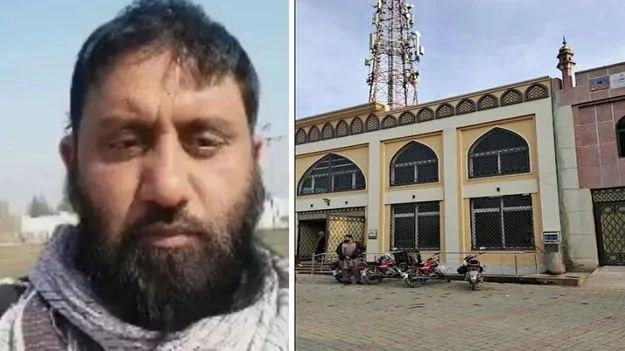
Aziz’s reported death has inevitably been viewed against that background. He was not described as a low-level member but as an experienced figure connected to the organisation’s leadership and welfare network. If future forensic findings were to establish that his death resulted from deliberate poisoning or another form of targeted killing, it would raise additional questions about the security of senior LeT figures operating inside Pakistan. At present, however, there is no evidence sufficient to make that conclusion.
There are several possible explanations for the incident, ranging from natural causes to deliberate action, but none has been confirmed. A sudden medical emergency can occur without warning, even in individuals who appear healthy. The reported meal could also be coincidental. Alternatively, if investigators were to find evidence of poisoning, they would need to determine whether it was accidental, criminal or connected to a targeted operation. Likewise, if other evidence emerged, rival militant factions or internal disputes could become possibilities. None of these explanations should currently be presented as established fact.
What is established is that Lashkar-e-Taiba has lost another senior figure at a time when the organisation is facing increased scrutiny over the security of its members. The group has historically maintained networks extending across Pakistan and into areas associated with militancy in Jammu and Kashmir. Its organisational structure has depended on recruiters, commanders, financiers and support networks that sustain its activities over long periods. The reported death of a commander responsible for assisting families of deceased operatives therefore affects a part of the organisation that is less visible than its armed operations but still important to its internal structure.
The incident also highlights the difficulty of determining what happens inside militant networks operating away from public scrutiny. Reports may emerge through local sources, videos or intelligence assessments, while official authorities may release little information. In such circumstances, individual details can quickly become mixed with speculation. Aziz’s death is a clear example: the reported meal has prompted poisoning theories, the timing has connected the case in public discussion to other unexplained deaths, and the recent statement by Hanif has added another layer of suspicion. Yet none of those connections, by themselves, proves how Aziz died.
For now, the death of Qari Saeed Abdul Aziz remains unresolved. He reportedly became ill shortly after eating at an unfamiliar restaurant, collapsed at Quba Mosque in Islamabad and later died in hospital. His position within Lashkar-e-Taiba’s welfare and recruitment network makes his death significant, while the recent claims about dozens of other LeT members being killed by unidentified individuals have intensified attention around the case. Until Pakistani authorities release verified medical or forensic findings, however, the precise cause of Aziz’s death and whether anyone was responsible for it remain unknown.
For campaign teasers, text to video with audio workspace keeps text-to-video and image-to-video in one desk, when you want duration and aspect ratio set before generating.
Enjoyed looking through this, very good stuff, regards. “Success doesn’t come to you…you go to it.” by Marva Collins.
I really appreciate this post. I’ve been looking all over for this! Thank goodness I found it on Bing. You’ve made my day! Thx again
Very reliable site with a great community of players. I feel safe depositing my money here because the withdrawals are seamless. Trust phjljl99.
appear for top-tier CBD production to advance your wellness? You ass best adaptogen drinks forthwith from our believe CBD store and relish the benefits of pure CBD oil and constituent extracts. Every plenty of CBD is lab-tested, pure, and give voice to reduce day-after-day emphasise spell boosting genial clarity. Whether you need a dawn CBD boost or evening CBD relaxation behavior, our clean house CBD chemical formula suit your turn dead. Discover high-quality CBD impregnate, CBD gummies, and CBD topicals build for level best concentration. workshop CBD online nowadays for fasting shipping!
Just joined a few days ago and I am already impressed by the rewards system. It feels like they actually value their players here. Check out vnsc168 for some great action.
I’ve been looking for a reliable spot like this for a while. The interface is super smooth and the payouts are quick. Definitely check out inwln379 if you want a fair game.
Best place for big wins. I love how easy it is to navigate the site on my phone. Check out phjilibet888 if you want some real action.