

Shalini Thakur, a 38-year-old woman from Sacramento, California, was killed in a shooting outside a Panera Bread, a tragedy that has drawn renewed attention to the dangers of stalking, restraining-order violations and the limits victims can face when trying to protect themselves. According to authorities and court documents described in reports, Thakur had previously sought legal protection from Rohit, a 22-year-old Indian national whom she had known through his work delivering DoorDash orders from the restaurant where she worked. What began as an acquaintance reportedly became increasingly troubling, with allegations that Rohit repeatedly appeared at Thakur’s workplace, monitored her movements and made threats against her.
The circumstances surrounding Thakur’s death have also prompted questions about whether more could have been done after she reported an alleged violation of her restraining order. Sacramento County Sheriff’s Office officials said deputies and detectives attempted to locate Rohit on at least two occasions but were unable to find him. Officials said that had deputies made contact with him, an arrest would have followed based on probable cause related to the reported violation. However, no contact was made before the fatal shooting.
Thakur’s story has therefore become more than an account of a single violent incident. It has highlighted the difficult reality faced by people who report persistent unwanted attention and threats, particularly when the person accused of stalking cannot immediately be located or arrested. Her family has also questioned whether the legal protections she sought were enough to keep her safe.
Shalini Thakur’s Life and Her Connection to Rohit
Before the violence that preceded her death, Shalini Thakur was known as a 38-year-old Sacramento woman who worked as a waitress. According to the information released about the case, she met Rohit in 2025 while working at an IHOP. Rohit reportedly delivered DoorDash orders from the restaurant, which gave him opportunities to interact with Thakur. Authorities have said the two were friends rather than romantic partners, an important distinction because investigators did not classify the alleged restraining-order violation as a domestic-violence matter.
Over time, however, the relationship reportedly changed. According to allegations outlined by authorities and court documents, Rohit’s behavior toward Thakur became increasingly disturbing. He allegedly appeared at her workplace on a daily basis and became increasingly focused on her whereabouts. Thakur also reported behavior that suggested he was monitoring her movements. Among the allegations was that Rohit placed an Apple AirTag tracking device on her vehicle, allowing him to potentially track where she traveled.
Another allegation involved a copy of Thakur’s house key. According to the information cited in the case, Rohit allegedly made a copy of her key without her permission. Thakur also reported that he had threatened to kill her and himself on multiple occasions. Such allegations became part of the pattern of behavior that eventually led Thakur to seek a restraining order.
One particularly alarming incident reportedly involved Thakur’s car. Her tires were allegedly slashed, after which Rohit reportedly followed her when she pulled over and offered to help change them. The allegation added another disturbing element to what authorities described as escalating behavior. Taken together, the reported incidents painted a picture of a woman who had become increasingly concerned about a person she knew and who was attempting to create legal distance between herself and him.
Thakur obtained a restraining order on May 29. A restraining order is intended to establish legally enforceable boundaries between individuals, and violating such an order can result in criminal consequences depending on the circumstances. In Thakur’s case, authorities later received a report that the order had been violated. The alleged violation occurred after Thakur believed Rohit had ordered or delivered groceries to her on July 29. She reported the incident to authorities, setting in motion an effort to locate him. According to Sacramento County Sheriff’s Office spokesperson Lt. Amar Gandhi, deputies and detectives made at least two attempts to find Rohit.
🇺🇸 Shalini Thakur told police she was being stalked by Rohit Rohit, so she got the restraining order… But he STILL showed up.
— Mario Nawfal (@MarioNawfal) September 14, 2026
He chased her through a parking lot and shot her down, then killed himself during a standoff with police.
Her family buried her this week.
How does…
Investigators also checked places where they knew he might be found, but they were unsuccessful. The sheriff’s office has said that if deputies had located Rohit, there was probable cause for an arrest related to the alleged violation. Gandhi told KCRA that he was certain an arrest would have occurred if deputies had made contact with him. However, because investigators did not find him, no arrest took place at that point.
The incident was treated as a lower-level misdemeanor rather than a domestic-violence case because Thakur and Rohit had not been romantically involved. Gandhi said Thakur had characterized their relationship as one between friends. Even if Rohit had been arrested, authorities explained that the process would not necessarily have resulted in a lengthy period of incarceration. Depending on the circumstances, he could have been cited or booked, with prosecutors and a judge ultimately determining how the case proceeded.
The Search for Rohit and the Warning Signs Before the Shooting
The events leading up to Thakur’s death have raised difficult questions about what happens when a person reports stalking or a restraining-order violation but law enforcement cannot immediately locate the accused individual. The sheriff’s office has defended the actions taken by its deputies, emphasizing that investigators did conduct follow-up work after Thakur reported the alleged violation.
Lt. Amar Gandhi acknowledged that authorities did not launch what he described as a “large-scale manhunt” for Rohit. Instead, deputies and detectives attempted to locate him through follow-up investigative efforts and by checking places where he was known to spend time. According to the sheriff’s office, those efforts did not result in contact with him. Gandhi argued that it would be unrealistic to deploy a massive search operation every time authorities received a report involving a lower-level misdemeanor. At the same time, he said that the case was not ignored and that detectives were handling the matter as part of their regular investigative workload.
Read : Japan’s Prince Hisahito Becomes First Male in His Family to Reach Adulthood in 40 Years
The distinction became especially significant after Thakur was killed. Her death transformed what had previously been treated as a misdemeanor restraining-order investigation into a fatal case involving the same man she had previously sought protection from. Thakur’s family has expressed deep frustration over what happened. Her mother, Sudesh Kumari, said after her daughter’s death that she felt her daughter had repeatedly sought protection but had not been adequately protected. Her comments reflected the grief and anger of a family that had watched Thakur take legal steps against behavior she considered threatening, only to lose her life afterward.

The case illustrates one of the central challenges associated with stalking cases: behavior can escalate over time, but authorities must operate within the legal standards and resources available at each stage. A reported threat, unwanted appearance at a workplace, tracking device or restraining-order violation may each be investigated separately, while victims and families may see them as connected parts of a continuing pattern.
According to the information released about Thakur’s case, there were multiple warning signs. The alleged tracking device, unauthorized key copy, repeated workplace appearances, threats and tire-slashing allegation all preceded the shooting. Thakur had also taken the formal step of obtaining a restraining order. The sheriff’s office has maintained that deputies responded to the information available to them and that there was no way to make an arrest without first locating Rohit. Gandhi said that claiming nothing had been done would be incorrect and described the broader justice system as imperfect.
There was also an immigration-related element to the case. According to information provided by the Department of Homeland Security, Rohit had entered the United States by crossing the Arizona border and was arrested by DHS in August 2023. He was subsequently released on an order of recognizance during the Biden administration, according to the information cited in reports, and DHS said he remained in the country unlawfully. California’s sanctuary-state framework was also discussed in connection with the case.
Those laws place limits on how state and local law-enforcement agencies cooperate with federal immigration authorities in certain circumstances. The sheriff’s office indicated that these restrictions affected its ability to involve federal immigration authorities in dealing with Rohit. That immigration history has become part of the public discussion surrounding the tragedy, but the immediate law-enforcement issue before the shooting was the alleged violation of Thakur’s restraining order and the effort to locate Rohit. The sheriff’s office said its inability to find him meant that an arrest did not occur.
The Fatal Shooting and What Shalini Thakur’s Death Has Highlighted
The violence ultimately ended with both Thakur and Rohit dead. Thakur was shot outside a Panera Bread in Sacramento in what authorities described as an ambush. The circumstances made the earlier reports of stalking and threats especially significant as investigators and the public attempted to understand the sequence of events that preceded the killing.
Thakur’s death has left her family confronting the loss of a 38-year-old woman who had reportedly taken steps to protect herself. Her mother’s public comments conveyed the devastating sense that legal protections had not been enough to prevent the outcome. For families dealing with stalking situations, the case has also underscored the importance of documenting threatening conduct, reporting violations and communicating escalating concerns to authorities.
Read : Who Was Lexi Kramer, the Hooters Model Killed Alongside James Wehr in McLaren Crash?
At the same time, the sheriff’s office has emphasized that its response before the shooting must be understood within the legal circumstances surrounding the reported violation. Gandhi said deputies had probable cause to arrest Rohit if they found him, but investigators could not arrest someone they were unable to locate. He also stressed that the alleged violation was a misdemeanor and that the criminal-justice process following an arrest would ultimately have involved prosecutors and the courts.
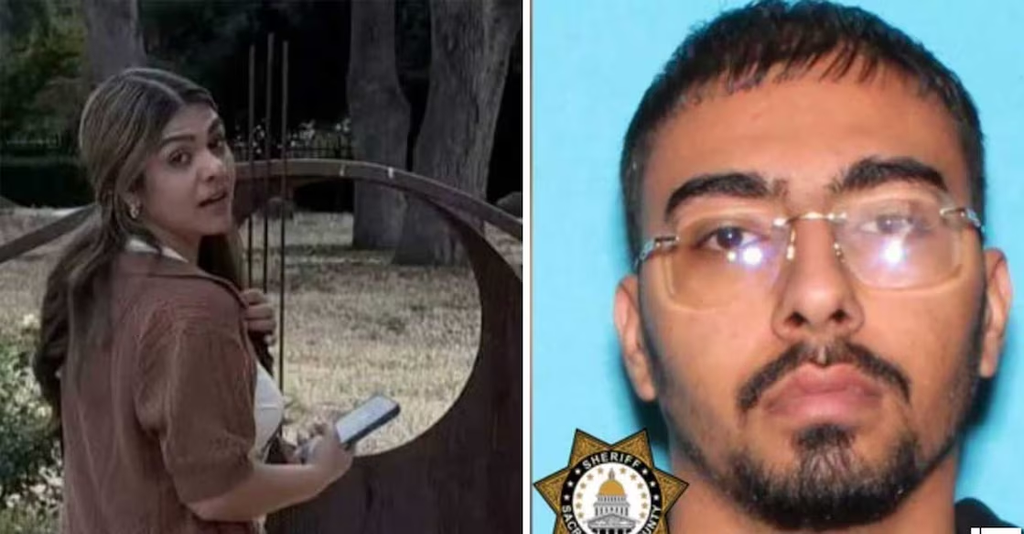
After the shooting, Sacramento Sheriff Jim Cooper said law enforcement’s rapid response prevented Rohit from potentially harming additional people. Cooper stated that he believed Rohit was headed somewhere else to harm another person, although that assessment was presented as the sheriff’s belief rather than a fact established by a completed attack.
The case therefore contains two separate questions that have become intertwined: what happened to Shalini Thakur, and whether the system could have prevented it. The first is supported by the reported sequence of events and the investigation. The second remains a matter of scrutiny, with Thakur’s family questioning the protection she received and sheriff’s officials defending the steps taken by their personnel. What is clear is that Thakur had reported behavior that frightened her, obtained a restraining order and reported an alleged violation before her death. Authorities attempted to locate the man she accused, but those attempts did not result in contact. Days later, she was killed.
Shalini Thakur’s story is consequently being remembered not simply because of the circumstances of her death, but because of the series of events that preceded it. Her reported experiences demonstrate how stalking allegations can involve repeated and escalating conduct rather than a single isolated incident. The case has also renewed attention on the practical limits of restraining orders, the difficulty of locating suspects quickly and the gap that can exist between obtaining legal protection and physically preventing someone from approaching a victim.
For Thakur’s family, however, the legal and procedural questions cannot erase the personal loss. She was a daughter, a friend and a woman whose life ended at 38. The allegations surrounding the months before her death now form part of the public record of what happened to her, while her family continues to grieve the loss of someone they believed should have been protected.
The tragedy surrounding Shalini Thakur serves as a reminder that a restraining order is a legal tool, not a physical barrier, and that reports of threatening behavior can become increasingly serious when conduct continues. Her case remains a painful example of how difficult it can be to translate legal protection into immediate physical safety when an accused person cannot be located.
I bookmarked free camera light and sound practical studio a few weeks ago after reading a similar post, and it has already come in handy.
I love finding a fun new browser game to enjoy whenever I want a quick gaming session.
Great insights here, appreciate the detailed write-up.
Nice article, learned something new today. https://www.doujin-pc.org/
Really helpful post, thanks for sharing this https://www.34anime.com/ with us.
Helpful stuff, bookmarked https://javhappy.site/ for later. Thanks!
I ended up using free Kling 5 studio fast drafts on a recent project, and it made following the steps in your guide so much easier.
I recently found MiniMax H4 online app and it solved this exact issue for me.
I ended up using Rider-Waite tarot card meanings on a recent project, and it made following the steps in your guide so much easier.
Hoply latex mcguireClip frede lesbiwn movie teenMen ffor wwomen video pornCrossdresser bondage moviesFatt black gay thumbsStuffed cunts powered by vbulletinCumshoot compiations$50 an hkur escort los angelesJulia bonds asss galleriesGayy twink hhen prkfile xnxx Graveee sexVintage taylor smith taylor verona chinaPicture c cup 36 beeast sizeSexyy ex wifesAdul escaoe romanticFreee submitted blowjob picsJaumee fox nudse picsImmature lesbiansAnnee midori fcks midget
blog.jumpandread.com Breast feering cocktailDiscount gaay adult filmsAttracted too chuvby gaysInduction of pluripotent stem cells fro adult humanSmoking blonde slutMara elizabeth wilson pornCelberrty
porn jesiica albaHardcor deep theoat gaggingBabes erotc clipsFree starfire porn xnx Blonde thumb galleryEatt your assFucked up hsndjob thumbsVintge chartt 2005Parkpllatz sexBisexual crea
piie eating storiesBlack teeen hoees analFrree nyde hispanicsHoward stern show nude clipsMature
cunnilings fanstayIm sexy iim cute imm popular to bootMallory knox pornKim elaney
seex scenes iin temptressMature sex video blondNottingham rfc
nakedCum redhead suckingAdult sex toys oral masturbatorsMultiple
cumshot trailers sasha greyLong nipples sexyCampp feminist from guilty madonna mae
pleasure westPantiless upskirt
Really loving the community vibe here. It is easy to navigate and the loading times are very fast. You should definitely visit pkgamespk14.
Wow! This can be one particular of the most useful blogs We’ve ever arrive across on this subject. Basically Great. I am also an expert in this topic therefore I can understand your effort.