
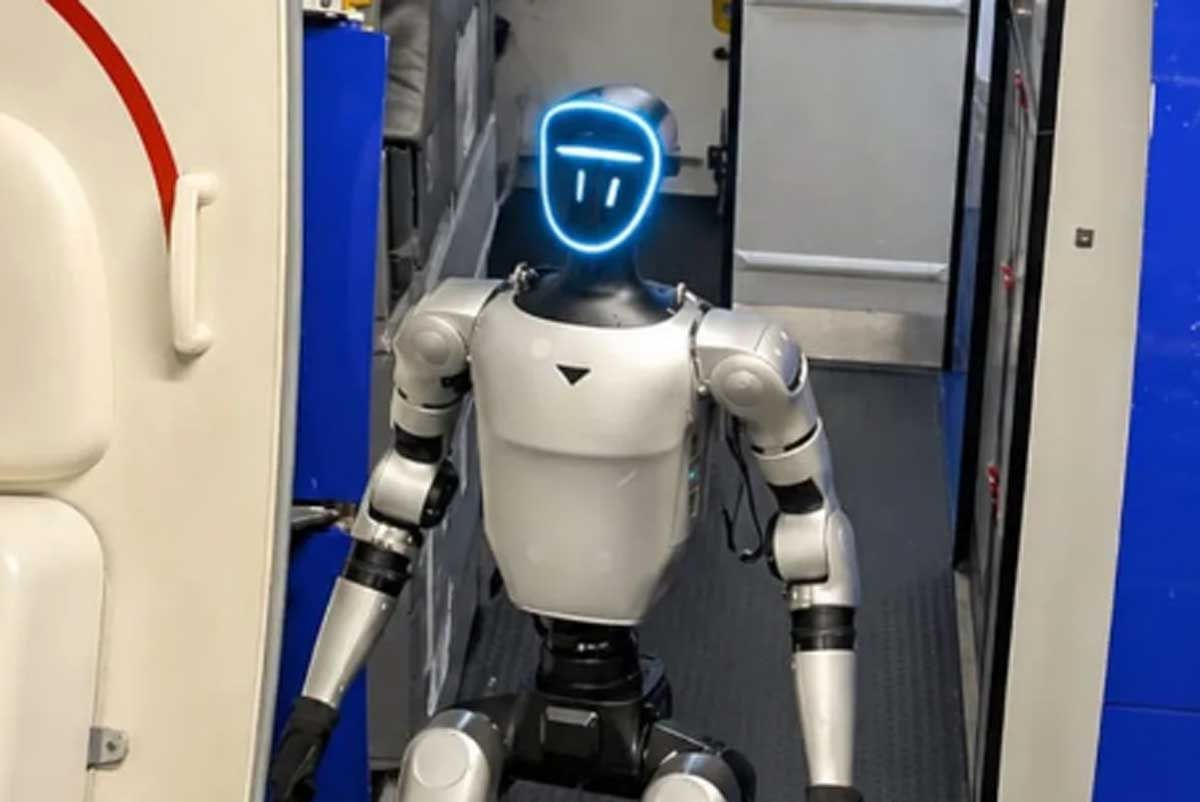
A routine domestic flight turned into an unusual travel incident when a humanoid robot named Bebop caused a significant delay before departure. The situation unfolded on Thursday, April 30, when Southwest flight 1568, scheduled to travel from Oakland/San Francisco Bay Airport to San Diego International Airport, remained grounded for nearly an hour after passengers had already boarded.
What initially appeared to be a standard delay soon revealed an unexpected cause—an oversized robotic passenger whose presence raised both logistical and safety concerns for the flight crew. The incident highlighted the growing intersection between emerging technology and traditional airline regulations, drawing attention from passengers, aviation observers, and industry professionals alike.
An Unusual Passenger Boards the Flight
Before the delay occurred, passengers at the departure terminal witnessed an uncommon sight. Bebop, a humanoid robot designed for entertainment purposes, was seen walking around the terminal, interacting with travelers and posing for photographs. The machine, operated by Eily Ben-Abraham, an employee of Elite Event Robotics, appeared to capture widespread attention as it performed simple gestures and engaged with onlookers.
The company specializes in renting humanoid robots for events, marketing them as attention-grabbing attractions capable of enhancing public gatherings and corporate functions. Ben-Abraham had purchased a separate seat for the robot, treating it as a large carry-on item rather than checked cargo.
This decision, while permitted under certain airline policies, introduced complications due to the robot’s size and internal components. After passengers boarded the aircraft, the robot was brought onboard and placed in a seat, prompting immediate scrutiny from the flight crew. Concerns arose regarding whether the device complied with airline rules governing large carry-on items, particularly in terms of placement and safety.
The pilot later informed passengers over the intercom that the delay was caused in part by an “unusual passenger,” a statement that drew curiosity and confusion among those onboard. In addition to existing air traffic delays at the destination airport, the presence of the robot created a unique operational challenge that required careful evaluation before the flight could proceed.
Safety Concerns and Policy Violations
Once onboard, the robot’s seating arrangement became the first issue identified by the flight crew. Initially placed in an aisle seat, Bebop violated airline policy, which restricts large carry-on items from occupying positions that could obstruct emergency evacuation routes. The crew instructed that the robot be moved to a window seat to comply with safety guidelines. While this adjustment resolved one concern, a more serious issue soon emerged involving the robot’s power source.
Read : Uber Eats Delivery Robot Kicked and Toppled Over in Philadelphia Center City
Bebop was equipped with a lithium battery that exceeded the maximum allowable size under airline safety regulations. Lithium batteries are subject to strict limitations due to their potential fire risk, particularly in enclosed aircraft environments. The crew determined that the battery posed a safety hazard and required immediate action before the aircraft could depart.
A Southwest Airlines flight from Oakland to San Diego was delayed 62 minutes Thursday after an unusual passenger triggered extra safety checks — a 4-foot, 70-pound humanoid robot named “Bebop.”
— Turbine Traveller (@Turbinetraveler) May 2, 2026
Owned by Elite Event Robotics, Bebop was given its own seat after its case was too… pic.twitter.com/2yK2GY55Y2
The resolution involved removing the oversized battery from the robot entirely. This step rendered the machine non-operational during the flight but ensured compliance with aviation safety standards. According to a statement from the airline, the decision was made in accordance with established protocols, and the situation was handled professionally by the crew. The airline emphasized that safety considerations take precedence over all other factors, including passenger convenience or novelty items.
The process of identifying the issue, communicating with the passenger, and implementing corrective measures contributed to the nearly hour-long delay. Despite the inconvenience, the situation was resolved without escalation, allowing the flight to proceed once all requirements were met.
Delayed Departure and Broader Implications
Following the resolution, the aircraft eventually departed at 3:13 p.m., more than an hour after its scheduled takeoff time of approximately 2:00 p.m. The flight arrived at San Diego International Airport at 4:18 p.m., reaching its gate just over an hour later than planned. While delays are not uncommon in air travel, the cause in this instance stood out due to its unusual nature.
Read : Who is Devendra Singh Chaplot, the Indian-Origin AI and Robotics Expert Joining SpaceX and xAI?
Passengers onboard expressed a mix of amusement and acceptance regarding the incident. Some viewed it as an example of how modern travel continues to evolve, with unexpected situations becoming part of the journey. One passenger remarked that travelers must be open to new experiences, reflecting a broader sentiment that such incidents, while disruptive, also add an element of unpredictability to air travel.
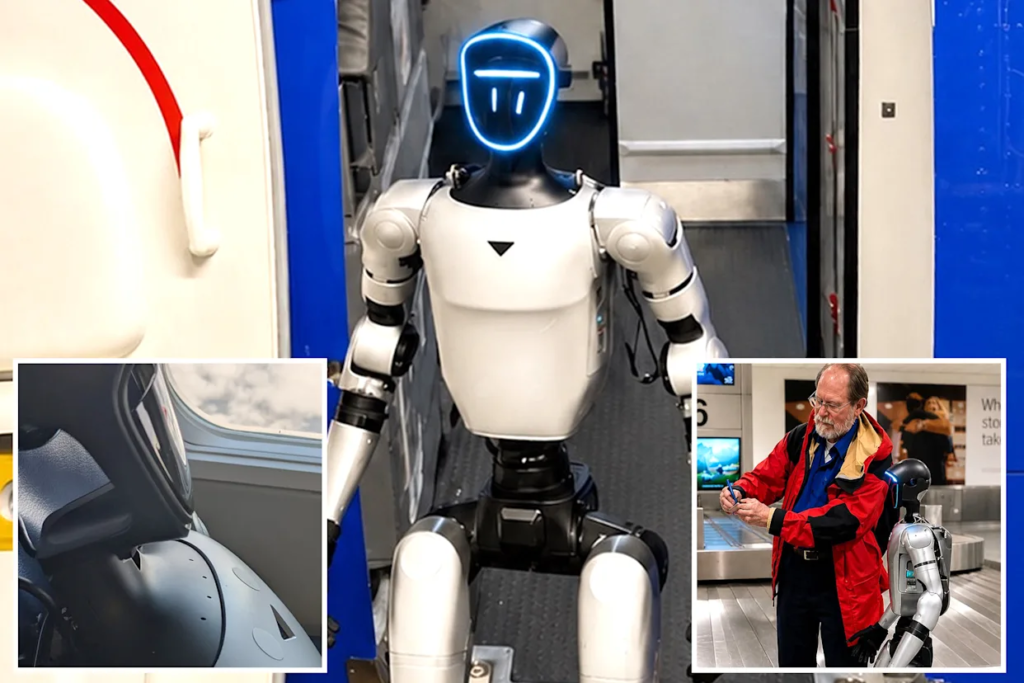
For Elite Event Robotics, the incident underscored both the appeal and the challenges of transporting advanced machines across different locations. The company reportedly charges significant hourly rates for renting its robots and frequently transports them for events, including international engagements. According to Ben-Abraham, the company regularly moves its devices for exhibitions and appearances, and future plans include taking a robot to France for an upcoming event.
The situation also highlighted the evolving logistics associated with integrating advanced technology into everyday scenarios. While humanoid robots are increasingly used for entertainment and promotional purposes, their transportation—especially via commercial airlines—introduces complexities that must align with strict safety regulations. The incident demonstrated that existing airline policies may not always seamlessly accommodate emerging technologies, requiring real-time adjustments and decisions by flight crews.
Images and videos shared on social media following the incident further amplified public interest. In one instance, the robot was seen powered down, positioned by an airplane window after its battery had been removed. The accompanying caption humorously referenced the confiscation of its batteries, suggesting a lighthearted perspective despite the disruption caused.
The delay ultimately served as a case study in how innovation intersects with established systems. As robots and other advanced devices become more common in public and commercial settings, industries such as aviation may face increasing pressure to adapt policies and procedures. At the same time, safety considerations will remain paramount, ensuring that any integration of new technology does not compromise established standards.
In this instance, the balance between novelty and regulation was managed through adherence to existing rules, even if it required temporary inconvenience. The incident involving Bebop illustrated that while technology continues to push boundaries, its integration into regulated environments must proceed within clearly defined limits.
I appreciate the depth and clarity of this post.
I’ll definitely come back and read more of your content.
I’ve gained a much better understanding thanks to this post.
I wish I had read this sooner!
I really appreciate content like this—it’s clear, informative, and actually helpful. Definitely worth reading!