
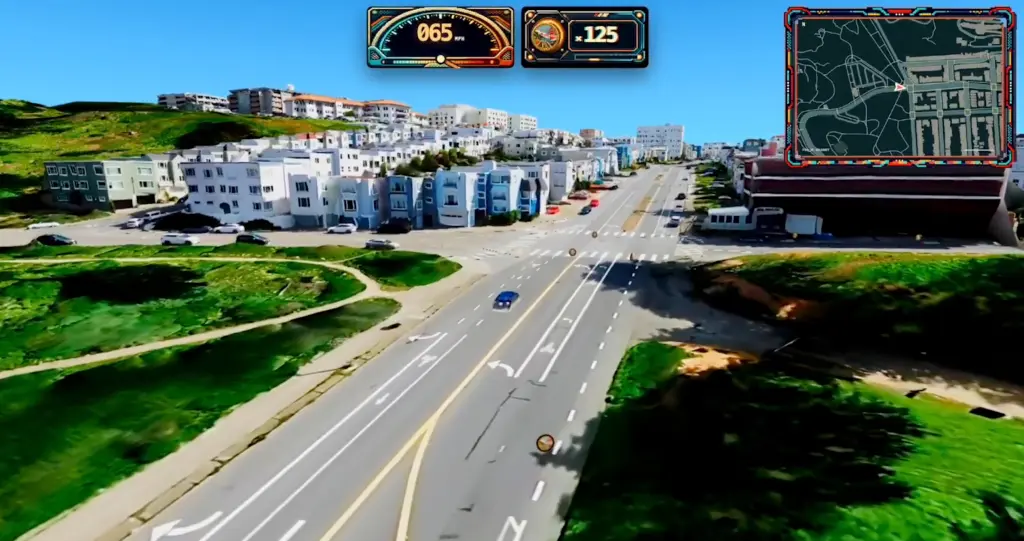
A homemade video game created by Stanford University computer science student Thijs Simonian is attracting widespread attention after giving players the chance to freely explore a digital version of San Francisco. Inspired by the open-world freedom associated with popular games such as Grand Theft Auto, Simonian’s project allows users to drive cars through city streets, climb buildings, travel across different locations and even soar above the city using a hang glider. What makes the project particularly interesting is that it was built using Apple Maps data, transforming real-world geographical information into an interactive virtual environment.
The game quickly gained attention after videos demonstrating its features were shared on social media. Players can move through a recognisable digital recreation of San Francisco, navigating roads and exploring the city in ways that resemble the experience offered by major open-world video games. However, unlike a commercial game developed by a large studio with hundreds of employees, this project was created by a university student experimenting with technology and responding directly to the growing community of people playing his game.
As interest increased, Simonian continued developing the experience by adding new features requested by users. Players can now teleport to different addresses, interact with other users through multiplayer functionality, choose from different avatars and share location links. The rapid growth of the project has turned Simonian into a name of interest among gaming and technology enthusiasts, demonstrating how an individual developer with access to modern mapping data and programming tools can create an experience that attracts players around the world.
Who Is Thijs Simonian?
Thijs Simonian is a computer science student at Stanford University who has recently gained significant attention online for developing an ambitious open-world video game centred on San Francisco. While independent developers have long experimented with creating virtual cities, Simonian’s project stands out because of its use of real-world mapping data and its accessible, interactive approach. His game allows players to experience a digital version of one of America’s most famous cities while enjoying the freedom to explore it in different ways.
Simonian introduced the project through social media, where videos of the game quickly generated curiosity and enthusiasm. In the clips, players can be seen entering vehicles and driving through the streets of the virtual city. The experience also includes the ability to climb buildings and use a hang glider to travel above San Francisco’s skyline, adding a sense of adventure beyond simply walking or driving through the map.
The concept immediately reminded many viewers of Grand Theft Auto because of its open-world design and the freedom it gives players to move around the environment. However, Simonian’s project has its own distinctive identity because the city is based on real-world geographical information. By using Apple Maps data, he created an environment where users can explore locations inspired by the actual layout of San Francisco rather than a completely fictional city designed from scratch.
In one of his posts, Simonian explained the basic idea behind the project, writing that he had used Apple Maps data to create a world where players could climb buildings, “steal” cars and explore virtually anywhere. He also made the game available for others to experience, helping the project grow beyond a personal programming experiment into an online experience shared by a growing number of players.
The popularity of the game demonstrates the changing opportunities available to young developers. In the past, creating a detailed open-world experience required enormous budgets, specialised technology and large development teams. Modern mapping tools, cloud technology and increasingly accessible software development platforms have made it possible for smaller teams and individual creators to experiment with ideas that once seemed possible only for major gaming companies.
i turned the entire actual city of san francisco into a video game!
— thijs (@cdngdev) August 24, 2026
with apple maps data, i made it so you can climb buildings, 'steal' cars, and explore anywhere. and you can play it!! pic.twitter.com/fA8NdTUH1k
For Simonian, the project appears to represent both technical experimentation and a response to public interest. Rather than leaving the game unchanged after its initial release, he continued adding new features as more players began exploring the virtual city. This willingness to adapt the game based on community feedback has become an important part of the project’s growing appeal.
How Apple Maps Data Helped Create a Virtual San Francisco
One of the most fascinating aspects of Simonian’s game is the technology behind its recreation of San Francisco. Instead of designing every street and location manually, the project uses data from Apple Maps to help construct the virtual environment. This approach allows the game to be connected to the real geography of the city, giving players the opportunity to navigate through an environment based on actual locations.
San Francisco is an especially interesting setting for an open-world game because of its distinctive geography, famous streets and recognisable skyline. The city is known for its steep hills, dense neighbourhoods and iconic architecture, making it a visually compelling place to explore digitally. By building a game around the real city, Simonian created an experience that can appeal both to people familiar with San Francisco and those who have never visited it.
Players are not limited to simply viewing the digital city from above. The game gives them different ways to move through the environment. They can walk through locations, get inside vehicles and drive along the roads. They can also climb buildings and take to the skies using a hang glider, creating a much broader sense of exploration. The project also provides an example of how mapping technology can be used beyond traditional navigation. Digital maps are usually associated with finding addresses, planning routes and exploring geographical information.

Simonian’s game shows how this kind of data can also become part of an interactive entertainment experience. As the number of players increased, Simonian expanded the game’s functionality. One of the additions allows users to teleport directly to an address, making it easier to explore different parts of the city without travelling manually across the entire virtual map. Another feature introduced multiplayer functionality, allowing players to share the digital world with others.
Users can also choose between different avatars, giving them more control over how they appear within the game. The addition of location-sharing links has further expanded the social aspect of the experience, making it possible for players to direct others toward specific places within the virtual city. These updates suggest that Simonian has been actively listening to his audience. Many independent projects struggle to maintain attention after their initial launch, but responding to user feedback can help transform a simple experiment into a growing platform. In Simonian’s case, each new feature has made the virtual San Francisco experience more interactive and potentially more appealing to a wider audience.
A Viral Project Growing Through Player Interest and Community Feedback
The growing popularity of Simonian’s game can be seen in the numbers he shared about player activity. According to his update on Monday night, users had collectively spent 884 hours playing the game. He also reported that players had walked an impressive 15,913 miles, or approximately 25,609.49 kilometres, while exploring the digital version of San Francisco. Those figures highlight the level of curiosity surrounding the project. A virtual recreation of a real city can encourage players to explore in a different way from traditional video games.
Read : Audrey Mina Sets World Record by Playing Super Mario Games for Over 60 Hours
Some may simply want to drive through the streets, while others may be interested in discovering familiar locations or experimenting with the game’s unusual movement options. The social media response has also been overwhelmingly enthusiastic. Users commenting on videos of the game praised the project with reactions such as “This is so good,” “This is sick,” and “Thank you for this.” Such responses reflect the excitement surrounding creative independent projects that appear unexpectedly online and demonstrate what a single developer can achieve.
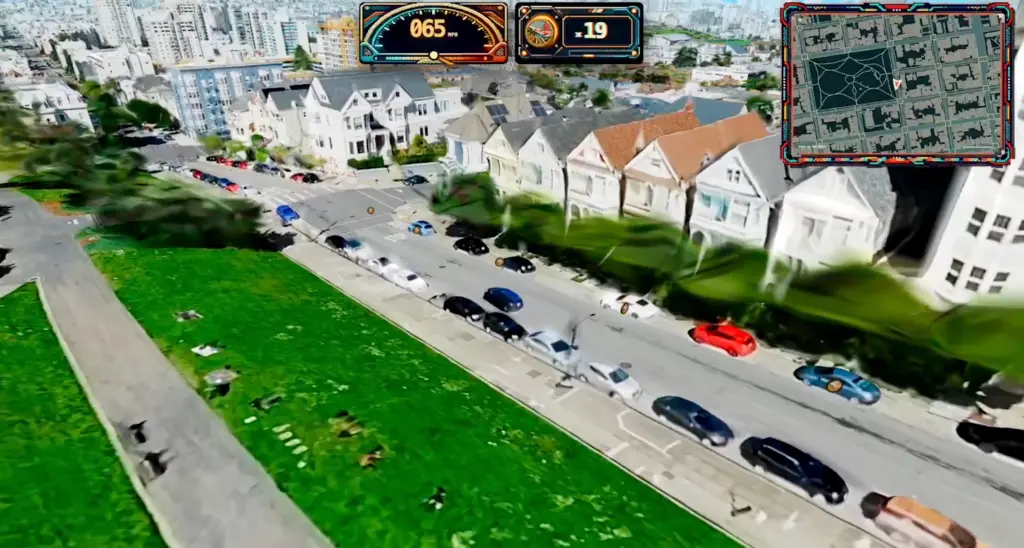
Part of the game’s appeal may come from the contrast between its ambitious concept and its origins. The project was not initially presented as the next major commercial release from a famous gaming company. Instead, it emerged from the work of a Stanford computer science student who used available technology to experiment with a new idea. The success of the project could also inspire other student developers and programmers. Open-world games are often considered among the most complex forms of interactive entertainment because they require large environments, movement systems, vehicles, user interaction and many other technical elements.
Simonian’s work demonstrates that innovative approaches and existing technological resources can make ambitious experiments more achievable. The growing community around the game has become an important part of its development. Features such as multiplayer support, avatar selection, address teleportation and location sharing were added as players expressed interest in expanding the experience. This gives the project a collaborative quality, with the audience helping shape its evolution through feedback and requests.
Thijs Simonian’s viral San Francisco game ultimately represents more than just an experiment inspired by the open-world style of Grand Theft Auto. It demonstrates how mapping technology, computer science and creative game design can come together to produce something unexpected. By allowing players to drive, climb, glide and explore a digital version of a real city, Simonian has created an experience that has captured the imagination of thousands of online users.
As more people discover the game, interest in both the project and its creator is likely to continue growing. For now, Thijs Simonian has shown how a university student’s creative idea can develop into a viral online experience, proving that innovation in gaming does not always have to begin inside a massive studio. Sometimes, it can start with a computer science student, a map of a city and an ambitious idea to let people explore the world in an entirely new way.
This handy free clean paste formatting tool handles pesky nested tags with zero friction.
It is surprisingly quick to free clean ChatGPT text online before pasting it into client emails.
For access to animated television programming, exploring this animated children stream listings delivers a categorized breakdown of public family channels.
Finally found a platform that actually pays out on time. The registration process was a breeze and I was playing within minutes. kr86kr
Such a fun platform with plenty of options to keep you entertained. I spend most of my free time on yoyogame777