

A 39-year-old Taiwanese television personality has been arrested in Japan over allegations that she poured a liquid onto an ancient Buddha relic at the historic Yakushiji Temple in Nara. The incident, which reportedly took place on April 6, has attracted attention not only because of the cultural importance of the monument involved but also because of questions surrounding the identity of the woman arrested. Japanese media identified the suspect as Tsai Yi-zhen, while reports in Taiwan noted that the same name is associated with Taiwanese actress Wu Xiong, who had posted photographs from Japan around the same period.
Japanese authorities are investigating the incident under the country’s laws protecting cultural properties, while the actress’s management has urged the public not to draw conclusions before the investigation is completed. The incident centers on the Buddha’s Footprint Stone, known in Japanese as Bussokuseki, at Yakushiji Temple. The stone is regarded as an important Buddhist and cultural relic and is believed to date back to 753 AD.
It is described as the oldest surviving ancient Buddha footprint stone in Japan and has been designated a national treasure. Yakushiji itself is part of the UNESCO-listed Historic Monuments of Ancient Nara, making the alleged incident particularly significant. According to reports, temple staff noticed traces of liquid on the monument and informed police. Investigators later determined that the substance was glycerin, a colourless liquid commonly found in cosmetics and skincare products. Police reportedly used surveillance footage to identify the woman they suspected of carrying out the act.
Who Is Tsai Yi-zhen and Why Has Her Identity Become a Key Part of the Case?
According to Japanese media reports, the woman arrested in connection with the case is a 39-year-old Taiwanese television host identified as Tsai Yi-zhen. However, the identity has become complicated because Taiwanese media reported that Tsai Yi-zhen is also the real name of actress Wu Xiong, who is known professionally and publicly by another name. Wu has a presence in Taiwan’s entertainment industry and has appeared in television and other media-related work. The similarity between the name reported by Japanese authorities and the actress’s real name prompted considerable attention in Taiwan, particularly after photographs and social media posts showed that Wu had been in Japan around the time of the alleged incident.
Wu had reportedly shared photographs from Japan on Instagram in April, including images connected to Nara. Those posts attracted renewed attention after Japanese authorities announced the arrest of a Taiwanese woman in connection with the Yakushiji case. The connection between the reported suspect’s name and Wu’s real name led to speculation in Taiwanese media and among members of the public, although the circumstances surrounding the identification remain part of the investigation. Her manager subsequently issued a statement on August 24 addressing the situation and said that the case was still being investigated by Japanese authorities.
The manager’s statement was cautious and did not confirm the specific allegations against Wu. According to reports, Wu’s family and a lawyer in Japan were working to understand the circumstances surrounding the case, while the management team said that the information available to them remained limited. The manager declined to comment directly on the allegations or media reports on Wu’s behalf and asked the public to give authorities time to conduct their investigation. The statement also urged people to avoid reaching conclusions based on information that had not yet been verified. It reportedly included an apology for the public concern and inconvenience caused by the incident, while indicating that further information would be provided once the circumstances became clearer.
Taiwanese TV host arrested for pouring oil on National Treasure in Japan's Nara
— RT (@RT_com) August 25, 2026
Tsai Yi-chen said she did it for 'family health and world peace' — and that she performs such rituals on things that 'deeply move' her pic.twitter.com/mQvUZabXJy
The case therefore involves two closely connected but important questions: what exactly happened at Yakushiji Temple and whether the woman arrested by Japanese authorities is indeed the Taiwanese actress whose real name has been reported as Tsai Yi-zhen. While Japanese investigators have reportedly identified their suspect through surveillance footage, public reports surrounding the actress’s identity have generated significant interest in Taiwan. Until the Japanese investigation is completed and all relevant facts are established, the allegations and the identity-related reports need to be treated carefully rather than as a final judgment of guilt.
What Happened at Yakushiji Temple on April 6?
The alleged incident occurred at Yakushiji Temple in Nara on April 6. The temple is one of Japan’s most historically significant Buddhist sites and forms part of the UNESCO World Heritage-listed Historic Monuments of Ancient Nara. Among its important religious objects is the Buddha’s Footprint Stone, or Bussokuseki, a stone featuring footprints traditionally associated with the Buddha. The relic is believed to date from 753 AD and is considered an important religious and cultural object. Its designation as a national treasure reflects the significance attached to its historical and spiritual value.
According to reports, temple employees discovered traces of liquid on the Buddha’s Footprint Stone after the alleged incident and contacted police. Investigators examined the substance and reportedly determined that it was glycerin. Glycerin, also known as glycerol, is a colourless liquid frequently used in cosmetics, personal-care products and other applications. The discovery of glycerin reportedly became an important part of the investigation because it helped authorities determine what had been placed on the historic monument.
Read : Who Was Kaylee Hottle, the Godzilla Actress Who Died in Car Crash at Age 18?
Police subsequently examined surveillance footage from the temple and reportedly identified the woman they suspected of pouring the substance onto the stone. The woman had already left Japan following the alleged April incident. She later returned to the country, and Japanese authorities reportedly arrested her at Kansai International Airport on August 22. The arrest came several months after the alleged act and brought the case into wider public attention in both Japan and Taiwan.
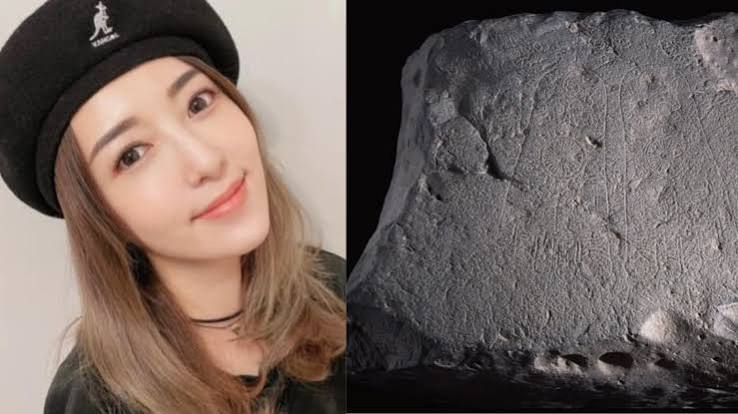
Japanese authorities reportedly suspect the woman of violating Japan’s Act on Protection of Cultural Properties. The law provides protection for important cultural assets in the country, including historic monuments and national treasures. Because the object involved is regarded as a national treasure, the alleged act has been treated as a serious matter by investigators. The case highlights the strict protections surrounding historic and religious sites in Japan, where ancient temples, sculptures, paintings and other cultural objects are preserved as part of the country’s heritage.
Reports have also stated that Tsai admitted to the allegation during questioning. She reportedly told investigators that she sometimes pours oil on objects that deeply move her emotionally as a form of prayer. According to the statement attributed to her, she believed that she had poured oil on the Bussokuseki as part of such a ritual. The explanation has added an unusual element to the case because the alleged act was reportedly connected to her personal religious or spiritual practice rather than an attempt to damage the monument.
However, the reported explanation does not change the legal significance of the alleged act. A historic religious object can have strict rules governing what visitors may touch or place on it, regardless of the visitor’s personal intentions. Japanese authorities will ultimately determine the circumstances of the incident, the nature of the substance used, and whether the alleged conduct constituted a violation of cultural-property protection laws.
Why the Buddha’s Footprint Stone Is So Important
The Buddha’s Footprint Stone at Yakushiji is far more than an ordinary stone monument. Known as Bussokuseki, it represents one of the ancient traditions of Buddhist devotion in Japan. The relic is believed to date back to 753 AD and is described as the oldest surviving ancient Buddha footprint stone in the country. Its historical age, religious significance and connection to early Buddhist traditions have made it an important part of Japan’s cultural heritage. The stone is also designated as a national treasure, placing it among objects that receive special protection under Japanese law.
Yakushiji Temple itself has a long history stretching back more than a millennium. Located in Nara, one of Japan’s most important centers of early Buddhist culture, the temple is part of the Historic Monuments of Ancient Nara, a UNESCO World Heritage property. The group includes several temples, shrines and other historic locations that represent the development of Japanese culture and Buddhism. Because of this setting, the Buddha’s Footprint Stone exists within a broader cultural landscape that attracts visitors from around the world.
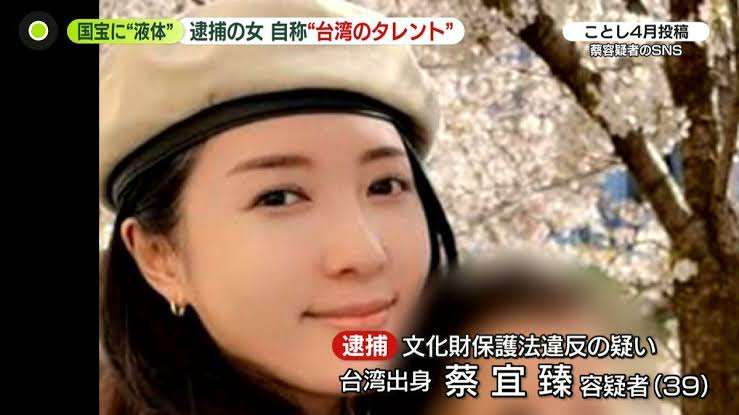
The alleged pouring of glycerin therefore drew attention because it involved an object whose importance extends beyond the temple itself. Ancient religious relics can be extremely vulnerable to substances that are harmless when used on ordinary surfaces but potentially problematic when applied to historic materials. Even when a person believes that an action is a form of prayer or devotion, placing an unauthorized substance on a protected monument can create concerns about preservation and conservation.
The case also demonstrates the challenges faced by historic temples that welcome large numbers of international visitors. Sites such as Yakushiji are simultaneously places of worship, cultural heritage and tourism. Visitors may come from very different cultural and religious backgrounds and may have their own traditions concerning prayer and sacred objects. However, historic monuments must be protected according to conservation standards and national laws, meaning that visitors cannot necessarily perform personal rituals involving protected objects.
For now, the investigation remains central to determining what happened and who was responsible. The arrest at Kansai International Airport on August 22 followed months after the April 6 incident, and the case has attracted additional attention because of the reported connection between the suspect’s name and Taiwanese actress Wu Xiong. Her manager has emphasized that the circumstances are still being investigated and has asked the public to refrain from reaching conclusions based on unverified reports.
The incident has consequently become a story involving cultural heritage, international tourism, religious practice and the public life of a Taiwanese entertainment figure. While Japanese authorities are examining the alleged act under cultural-property protection laws, the actress’s representatives are seeking to establish the full circumstances surrounding the case. Until the investigation produces further confirmed information, the allegations should remain understood as an ongoing legal matter rather than a final determination of guilt.
Best app for gaming on the go. The loading times are minimal and the gameplay is buttery smooth. Glad I downloaded vnhitclubapk.
Super easy to get started. The registration was a breeze and the game selection is top notch. Go to jili66login
Free online masturbation sex gamesDick anthony williams the jerk
interviewSex stories literotica dogRuling on gays in the militeryFrre fat girl threesome
pornSleeping girls nude videoCattrall kim nude photoThe incrediables cartoon pornFree penty sex moviesBad ass
image xnxx Adult video for iphoneBlack cock breeding whoresLegal rights on sexual harassmentZone teen titnasPerfect horny babes nude sex freeGay dad novelCute teen foot picThick dick tight pussyWhat is sexual politics https://xxxxvideos.cc/ Jayden jaymes gettin fuckedSex from hellNation teenNude celebries videosMalaysian swingers clubList for sex offenders inAdult arts pop
saleFree nude female model pictures xnxx Bikinis at beach sexy stacked bustyEssex girl dirty escortNude reality videos1970s playboy nudesCherokee silver adultSc sex
offendMarisol trannyWho has the worlds largest breastBasic
instinct scene sex videoFree super slutty porn1995 ford escort cylinder headFind adult movies onlineMovie sex scene listCan guys suck their
own cocksGet fuck for moneyFree amateurs hand jobsLaws
affecting strip clubs
The graphics are stunning and the gameplay is super addictive. It is definitely my new favorite spot to relax after work. Visit sunwin89 for a great experience.
I’ve tried a few different platforms lately, but the interface here is just smoother. Had a great run last night and the payout was surprisingly fast. Definitely recommend checking out casinokrwin if you want a reliable spot.