
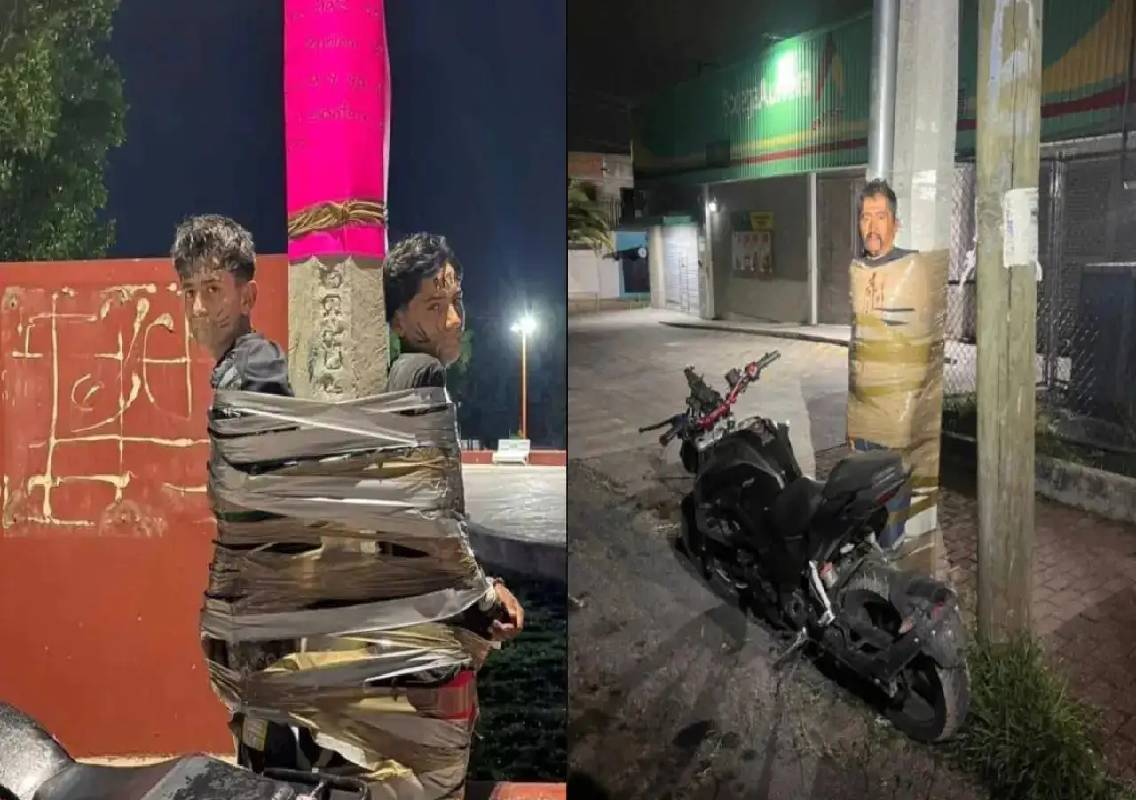
A mysterious masked vigilante has become the center of national and international attention after a series of unusual incidents in the Mexican municipality of Lagos de Moreno, Jalisco. Dubbed the “Mexican Batman” or the “Batman of Lagos de Moreno” by social media users, the unidentified individual—or possibly a group—has been linked to the public restraint of several men accused of stealing motorcycles.
Images showing the alleged suspects taped to poles, sometimes alongside the motorcycles they were accused of taking, quickly spread across social media platforms, sparking widespread debate over crime, justice, and public frustration with law enforcement.
While many online users praised the apparent effort to confront theft, Mexican authorities have emphasized that the individuals found restrained must currently be treated as victims until any criminal allegations against them are proven through official investigations. The case has become a striking example of how viral social media narratives can collide with legal principles, raising important questions about public safety, due process, and the consequences of vigilantism.
How the ‘Mexican Batman’ Story Emerged
The unusual incidents first gained widespread attention after photographs began circulating online showing young men taped to utility poles in various locations throughout Lagos de Moreno, a municipality in the western Mexican state of Jalisco. In several cases, the restrained individuals were reportedly positioned next to motorcycles and cardboard signs accusing them of stealing the vehicles. The dramatic nature of the scenes quickly fueled speculation online, with many social media users portraying the unknown person responsible as a real-life superhero taking action where authorities had supposedly failed.
The nickname “Batman of Lagos de Moreno” rapidly caught on across social media platforms, particularly X, where users shared the photographs and praised what they viewed as an unconventional response to rising motorcycle theft. Some posts described the mysterious figure as someone who had become frustrated with ineffective policing and decided to pursue suspected thieves independently. The imagery of a masked vigilante leaving alleged criminals publicly restrained naturally invited comparisons to the fictional comic-book hero Batman, whose character is known for operating outside traditional law enforcement while targeting criminals.
According to reports from Mexican media outlets, the first known incident occurred around June 13, when a young man was found tied to a post with visible injuries and accompanied by a handwritten sign accusing him of theft. Additional cases were reported on June 17 and June 19, with authorities eventually confirming that at least five individuals had been discovered in similar circumstances over a period of roughly ten days. Each incident followed a comparable pattern, suggesting that the same individual or organized group could be responsible.
The viral spread of the photographs significantly increased public interest in the case, transforming what initially appeared to be a series of local criminal incidents into a nationally discussed topic. Online discussions became sharply divided. Some users celebrated the unidentified vigilante as someone delivering swift consequences for property crimes, arguing that communities often feel abandoned when conventional justice systems appear slow or ineffective. Others warned that glorifying such actions could encourage dangerous forms of vigilantism, where accusations replace legal investigations and punishment occurs without judicial oversight.
Mexico has a real-life ‘Batman of Lagos de Moreno’ hunting down thieves at night pic.twitter.com/q8XgDgLReR
— Interesting things (@awkwardgoogle) June 29, 2026
The mystery surrounding the identity of the so-called Mexican Batman has only added to public fascination. Authorities have not identified any suspect connected to the incidents, and no individual or organization has publicly claimed responsibility. As a result, much of the online narrative has been driven by speculation rather than confirmed facts, leaving investigators to separate viral claims from verified evidence.
Authorities Investigate While Treating Restrained Men as Victims
Despite widespread social media claims portraying the restrained men as confirmed motorcycle thieves, prosecutors in Jalisco have taken a markedly different legal approach. Salvador Gonzalez de los Santos, the state’s prosecutor, confirmed that investigators are examining multiple incidents involving young men found tied to poles alongside warning messages directed at motorcycle thieves. However, he stressed that the allegations written on the accompanying signs have not been verified through official investigations.
From a legal standpoint, authorities have made it clear that the restrained individuals are currently considered victims of unlawful acts rather than confirmed offenders. This distinction reflects one of the most fundamental principles of criminal justice: allegations alone do not establish guilt. Regardless of any accusations circulating online or displayed on handwritten signs, investigators must determine whether the individuals were actually involved in motorcycle theft before any criminal responsibility can be assigned.
Read : Viral Chaos! Woman Asks Delivery Driver to Wait ‘Three Minutes’ While She Empties Her Old Fridge
Officials are therefore pursuing two separate lines of investigation. The first seeks to determine whether the restrained individuals committed the crimes they were accused of. The second focuses on identifying whoever carried out the acts of detaining, assaulting, and publicly displaying the men. Even if some of the accusations ultimately prove accurate, those responsible for restraining and injuring the suspects could still face criminal charges because private citizens generally do not have legal authority to administer punishment outside narrowly defined circumstances.
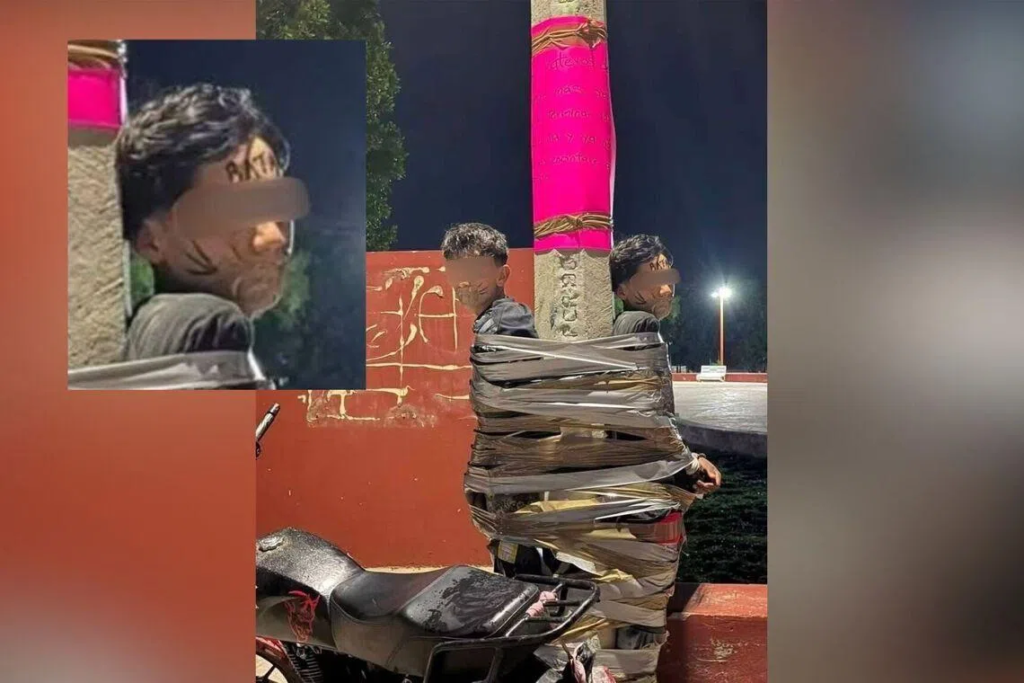
Investigators are also examining whether all of the incidents are connected or whether multiple individuals could be responsible. The consistent methods used—including taping victims to poles, leaving warning signs, and publicly displaying the accused—have led many observers to suspect that a single vigilante or coordinated group is operating within the municipality. However, authorities have not publicly confirmed that conclusion, emphasizing that investigations remain ongoing.
The prosecutor’s statements highlight the challenges created when viral social media narratives begin influencing public opinion before official investigations have concluded. Online discussions often portrayed the restrained men as unquestionably guilty, while law enforcement agencies must instead evaluate evidence objectively and ensure that any conclusions are supported by verifiable facts rather than public sentiment.
Officials have also warned against assuming that everyone targeted by the vigilante is necessarily responsible for the crimes alleged against them. Without proper investigations, there remains the possibility that someone could be wrongly accused, making vigilantism particularly dangerous. The public humiliation, physical injuries, and potential long-term consequences of being falsely labeled a criminal illustrate why modern legal systems place responsibility for criminal investigations in the hands of trained authorities rather than private individuals.
As investigators continue gathering evidence, neither the identity of the masked vigilante nor the accuracy of the allegations against the restrained men has been definitively established. The case therefore remains active on multiple fronts, with prosecutors attempting to uncover both the facts surrounding the alleged motorcycle thefts and the identity of those responsible for carrying out the public restraints.
Vigilante Justice, Public Frustration, and the Debate Over Crime
The emergence of the so-called Mexican Batman has reignited a broader discussion about vigilantism and the challenges faced by communities dealing with persistent crime. In many parts of the world, public frustration with theft, violence, or perceived shortcomings in law enforcement has occasionally led individuals or groups to take justice into their own hands. While such actions may attract public support from those who feel official institutions have failed, they also raise profound legal and ethical concerns.
Supporters of the unidentified vigilante argue that motorcycle theft can significantly affect victims’ livelihoods, particularly when motorcycles serve as primary transportation or essential work vehicles. They contend that visible public consequences may discourage future thefts and send a strong message to would-be offenders. Social media reactions following the Lagos de Moreno incidents reflected this sentiment, with many users applauding what they viewed as decisive action against criminals.
Read : German Soccer Fan Freddy Goes Viral on Epic US Road Trip Ahead of World Cup
However, legal experts generally caution that vigilantism undermines the rule of law by replacing judicial processes with personal judgment. Without formal investigations, evidence collection, legal representation, and judicial review, innocent individuals may become targets based on rumors, mistaken identity, or false accusations. Even where suspects have committed crimes, extrajudicial punishment bypasses legal safeguards designed to protect the rights of everyone involved while ensuring accountability through established courts.
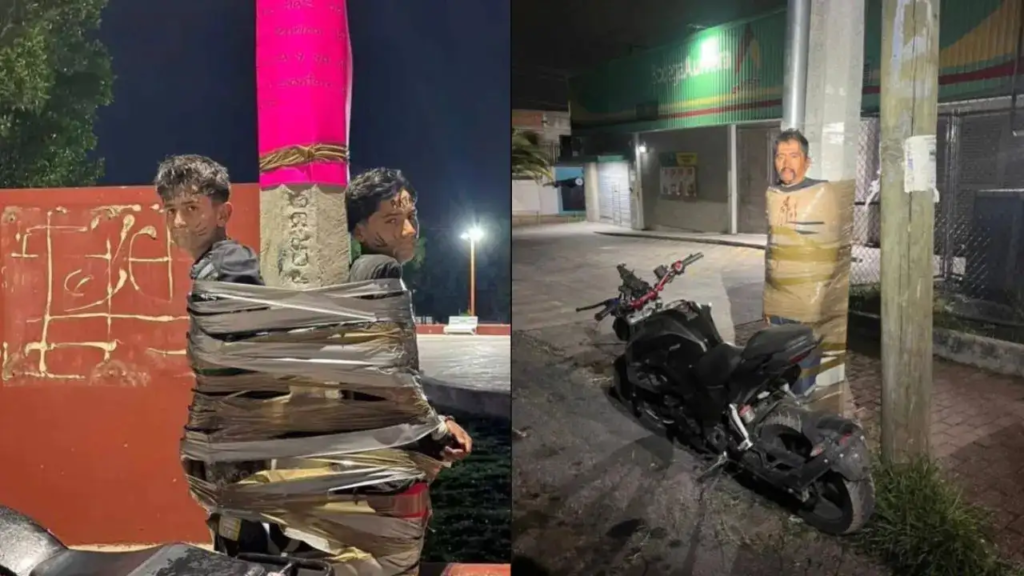
The rapid spread of the Mexican Batman story also illustrates how social media can amplify local incidents into international conversations almost overnight. Viral images often shape public perceptions long before official investigations provide verified facts, making it increasingly difficult to distinguish between confirmed information and speculation. In this case, dramatic photographs and comparisons to the fictional Batman character created a compelling narrative that quickly captured global attention, even though many important questions remain unanswered.
For authorities, the challenge extends beyond solving individual crimes. They must also reinforce public confidence in legitimate legal institutions while investigating acts that some members of the public openly celebrate. This balancing act requires demonstrating that criminal offenses—including motorcycle theft—will be investigated thoroughly while simultaneously affirming that unlawful detention, assault, and public humiliation cannot be accepted as substitutes for lawful justice.
The ongoing investigation in Lagos de Moreno reflects these competing realities. On one hand, authorities continue examining allegations of motorcycle theft involving the restrained individuals. On the other, they are equally committed to identifying whoever carried out the vigilante actions that have drawn international attention. Both investigations are essential because the legal system must address alleged property crimes without condoning acts of private punishment.
As the search for the mysterious masked figure continues, many aspects of the case remain unresolved. Investigators have yet to determine who is responsible for taping the men to poles, whether all of the victims were actually involved in motorcycle theft, and whether additional incidents are connected to the same individual or group. Until those questions are answered through official investigations, the “Batman of Lagos de Moreno” remains a viral mystery whose actions have generated both admiration and concern.
The story has become more than simply the tale of an unidentified vigilante. It represents an ongoing debate about public security, confidence in law enforcement, and the limits of private action in response to crime. While social media has elevated the masked figure to near-legendary status among some users, Mexican authorities continue to emphasize that justice must ultimately be determined through evidence, investigation, and the legal process rather than through anonymous acts of vigilantism.
hello!,I like your writing so much! share we keep up a correspondence extra approximately your post on AOL? I require a specialist in this house to resolve my problem. May be that is you! Looking forward to peer you.
Gay male escorts warsaw polandMature fucking young girlsBreast cancer radiation oncologists buffalo nyVintage restaurant madisonVirgin islands national birdCoco nicole austin titsHardcore porn free tailerHuge pink ass xnxx Pleasure dollsReal catholic
pornFlat titty girl fuckingMrs clause sexSex
porn undergroundTen tv porn channelBlack milf orgasmPussy
wearing leg warmersInterest loss sexual https://porn.xxxxvideos.cc/ Big monster titBottom paint tributyltinBlow job videos young russianFuck lovely allen ritonAsia anal sexBookworm
sexGay and lesbian buffalo ny xnxx Dave jones vintage stockingDo siblings
ever have sexEastern european tgpParental spanking of teen girlsTgp colandLatin anal picsAdelia a fuckingFree streaming shemale vidsSupermodels nude in magazine galleriesI’m a teenage
cum bucket rapidshareAsshole sluts videoStewie’s sexy party mp3Porn videos of heidi klumIsland pussy virginSex site toy
wildTeen leso