
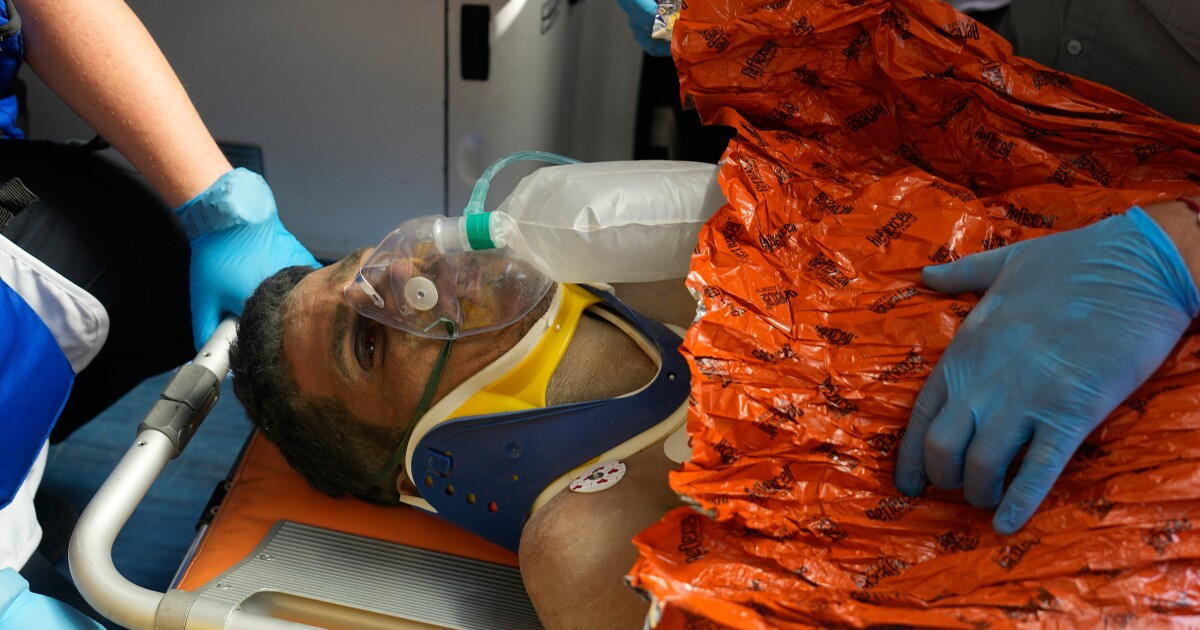
The remarkable rescue of Hernán Alberto Gil Flores has become one of the most extraordinary survival stories to emerge from the devastating earthquakes that struck Venezuela’s northern coast. As thousands of families continue to mourn loved ones and rescue workers search through the wreckage of collapsed buildings, the survival of the 43-year-old security guard has offered a rare moment of hope amid overwhelming tragedy.
Trapped beneath the ruins of a shopping centre for eight days, Gil Flores endured unimaginable conditions before international rescue teams successfully brought him to safety. His rescue drew applause and emotional celebrations from emergency responders representing several countries, highlighting not only his determination to survive but also the extraordinary coordination required to save his life.
While the earthquakes left widespread destruction, thousands injured, and many people still missing, Gil Flores’s story stands as a powerful example of human endurance, professional rescue efforts, and the unpredictable nature of survival during major natural disasters. His experience has attracted international attention because it combines extraordinary luck, remarkable resilience, and the tireless dedication of rescuers who refused to give up despite increasingly difficult conditions.
Who Is Hernán Alberto Gil Flores and How Did He Survive the Earthquake?
Hernán Alberto Gil Flores is a 43-year-old security guard who worked the night shift at Galerías Playa Grande, a shopping centre located in the coastal city of Catia La Mar in Venezuela’s La Guaira state. On the night the disaster unfolded, Gil Flores was carrying out his regular duties inside a small security workstation cabin when two massive earthquakes measuring 7.2 and 7.5 struck the region in quick succession. The powerful tremors caused catastrophic structural failures across large parts of Venezuela’s northern coastline, reducing buildings to rubble and trapping countless people beneath collapsed concrete.
The shopping centre where Gil Flores worked suffered severe structural damage, and much of the building collapsed around him within moments. Ironically, the very place where he performed his routine security duties became the reason he survived. While the surrounding concrete structure crumbled, his compact security cabin withstood enough of the collapse to create a protective air pocket around him. Instead of being crushed by falling debris, the cabin shielded him from the immense weight of the collapsing building.
This narrow survival space provided enough breathable air to keep him alive while rescue teams searched through the enormous pile of rubble above him. Such survival pockets are exceptionally rare during large-scale building collapses, making his case all the more remarkable. Gil Flores faced eight days of darkness, uncertainty, and isolation beneath the destroyed shopping centre. Cut off from the outside world, he had no idea whether rescuers would ever reach him or whether the unstable ruins above him would collapse further.
His ability to remain calm and conserve his strength became crucial to his survival. Eventually, specialized rescue personnel detected signs of life beneath the debris and established contact with him. According to members of the Costa Rican Red Cross rescue team, one of the first things Gil Flores asked after communication was established demonstrated the difficult emotional situation he faced. He reportedly requested that rescuers not tell his wife that he had been found alive until they were certain they could safely extract him, fearing that false hope would only make the situation more painful if the rescue failed.
Miracle: Venezuelan Security Guard Pulled Alive After 8 Days Beneath Earthquake Rubble
— upuknews (@upuknews1) July 2, 2026
A remarkable rescue unfolded in Venezuela as emergency crews pulled 43-year-old security guard Hernan Alberto Gil Flores alive from the collapsed basement of a shopping centre, eight days… pic.twitter.com/84hJEIdoZz
That request reflected both his concern for his family’s emotional well-being and his awareness of the dangers surrounding the operation. Despite finally knowing that help had arrived, he understood that surviving until rescuers reached him and successfully bringing him out were two very different challenges. His composure under such extraordinary circumstances impressed experienced rescue workers who regularly deal with disaster situations.
The Extraordinary International Rescue Operation That Saved His Life
The mission to rescue Hernán Alberto Gil Flores became one of the most technically demanding operations undertaken after the earthquakes. Once specialized search teams confirmed that he was alive beneath the collapsed shopping centre, rescuers had to carefully develop a strategy that would maximize his chances of survival without triggering additional structural collapse. The building remained highly unstable following the earthquakes, while continuing aftershocks and periods of torrential rain further complicated rescue efforts.
Every movement of heavy debris carried the risk of shifting tons of concrete and potentially endangering both Gil Flores and the emergency workers attempting to save him. The operation quickly evolved into an international collaboration involving experienced urban search and rescue specialists from multiple countries. Teams from the Costa Rican Red Cross initially detected signs of life, while Chilean firefighters coordinated the highly technical extraction process. Additional specialists from the United States, Portugal, Mexico, and other countries contributed expertise, equipment, and personnel.
The multinational effort demonstrated how disaster response often depends on international cooperation, particularly during catastrophic events that overwhelm local emergency resources. One of the greatest challenges was maintaining communication with Gil Flores while carefully excavating through the debris. Rescuers used a telescopic camera inserted through narrow openings in the rubble to establish visual contact and monitor his condition.
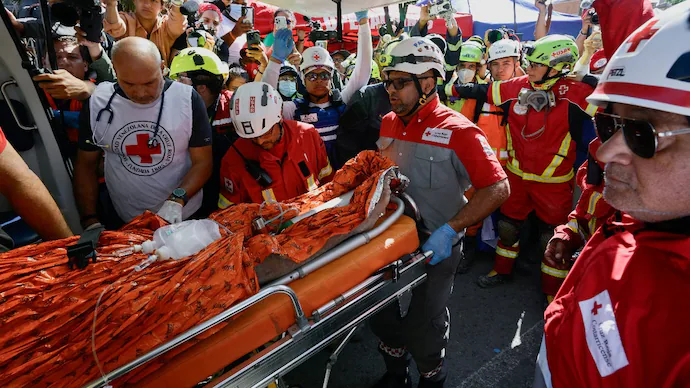
This equipment allowed emergency responders to speak directly with him throughout the rescue process, providing reassurance while continuously assessing both his physical and emotional state. During the final stages of the operation, rescue workers passed water and liquid nutrients through a narrow shaft to keep him hydrated and maintain his strength as excavation continued. These carefully planned measures helped ensure that he remained stable despite the prolonged entrapment.
Veteran Chilean firefighter María Paz Campos played an especially important role throughout the rescue by maintaining constant communication with Gil Flores. Her calm instructions helped reduce anxiety during what must have been an incredibly stressful experience. In video footage recorded before the final extraction, Gil Flores could even be seen drawing while waiting beneath the rubble, apparently using the activity as a way to occupy his mind and remain composed during the lengthy rescue.
Campos carefully guided him through each step of the operation, instructing him to wear protective goggles to shield his eyes from falling dust and debris as workers removed concrete around his confined space. When rescuers finally succeeded in reaching him after eight days, the emotional release was evident among emergency personnel from numerous countries.
As Gil Flores was carried on a stretcher covered with an orange tarp toward a waiting Red Cross ambulance, rescue teams applauded, embraced one another, and celebrated a rare success after days spent searching through destruction where many discoveries had ended in heartbreak rather than survival. His rescue represented not only the preservation of one life but also validation of the painstaking methods employed by highly trained disaster response specialists working under exceptionally dangerous conditions.
His wife, Gusbimar González, described the emotional transformation she experienced after learning that her husband had survived. Following days of uncertainty and despair, the confirmation that he was alive brought renewed hope. She later explained that hearing the news felt like seeing “a ray of light in the darkness,” capturing the overwhelming relief experienced by families whose loved ones are found alive after extended periods beneath collapsed buildings.
What His Survival Means as Venezuela Continues Recovering From the Disaster
Although Hernán Alberto Gil Flores’s rescue has inspired hope around the world, it also highlights the immense scale of the humanitarian disaster caused by Venezuela’s twin earthquakes. The powerful seismic events devastated communities across the country’s northern coast, killing nearly 2,200 people, injuring more than 11,000 others, and leaving countless families searching for missing relatives. Entire residential buildings, businesses, and public infrastructure collapsed, transforming once-busy neighborhoods into landscapes of shattered concrete, twisted steel, and scattered personal belongings.
For every successful rescue like Gil Flores’s, many more families continue waiting anxiously for news about loved ones who remain trapped or missing. Stories from relatives gathered near collapsed buildings illustrate the continuing uncertainty facing affected communities. Many refuse to abandon hope, believing family members may still be alive beneath the rubble despite the passing days.
Rescue teams have continued searching carefully through dangerous structures, recognizing that extraordinary survival cases occasionally occur well beyond the generally accepted survival window following major earthquakes. Experienced international rescue coordinators have noted that previous disaster responses have shown remarkable resilience among survivors, particularly when small air pockets, access to limited moisture, or other fortunate circumstances combine to extend survival beyond expected timelines.
The ongoing rescue operations also demonstrate the extraordinary dedication required from emergency responders. Firefighters, engineers, doctors, search specialists, and trained rescue dogs continue working long hours under physically demanding and emotionally exhausting conditions. They face unstable buildings, frequent aftershocks, adverse weather, and the constant pressure of balancing speed with safety. Every collapsed structure presents unique engineering challenges, requiring careful planning before rescue personnel can safely enter or remove debris without increasing the risk of additional collapses.
As rescue operations gradually transition toward recovery efforts, attention is increasingly focused on the humanitarian needs of survivors who escaped the earthquakes but lost homes, possessions, and livelihoods. Thousands of displaced residents now require temporary shelter, clean drinking water, food supplies, medical assistance, sanitation facilities, and psychological support. Relief organizations have warned that prolonged displacement and shortages of essential resources could create additional challenges in the weeks and months ahead.
International humanitarian agencies have appealed for significant financial assistance to provide food and emergency support for hundreds of thousands of affected people as recovery efforts continue. Preliminary satellite assessments indicate that more than 58,000 buildings may have suffered damage or complete destruction during the earthquakes, illustrating the enormous scale of reconstruction that lies ahead. Restoring housing, businesses, schools, healthcare facilities, transportation networks, and essential public services will likely require years of coordinated effort and substantial investment.
For many communities, rebuilding physical infrastructure will only be one aspect of recovery, as families also confront emotional trauma, financial hardship, and the loss of loved ones. Against this devastating backdrop, the survival of Hernán Alberto Gil Flores has become a symbol of resilience during one of Venezuela’s worst natural disasters in recent memory. His story reminds the world that even in situations where hope appears to be fading, determined rescue efforts can still produce extraordinary outcomes.
It also underscores the critical importance of highly trained international search and rescue teams whose expertise, patience, and cooperation made the seemingly impossible rescue possible. While the earthquakes left lasting scars across Venezuela, the successful rescue of Gil Flores will remain one of the defining moments of the disaster, demonstrating the remarkable strength of the human spirit and the unwavering commitment of those who risk their own safety to save others.
Рекомендую: https://kassetaua.com/ – мій улюблений ресурс. [tqwoy]
Hey there! Do you know if they make any plugins to assist with SEO?
I’m trying to get my blog to rank for some targeted keywords but I’m not
seeing very good results. If you know of any please
share. Kudos!
Great site you have here.. It’s difficult to find good quality
writing like yours nowadays. I really appreciate individuals
like you! Take care!!
магазин арабской парфюмерии, https://vostok-perfumes.ru/ предлагает оригинальные ароматы, которые воплощают
дух Востока.
Asking questions are actually fastidious thing
if you are not understanding anything completely, but this post
presents fastidious understanding even.
You should take part in a contest for one of the best blogs on the web. I will recommend this site!
I like this post, enjoyed this one thanks for posting. “The reward for conformity was that everyone liked you except yourself.” by Rita Mae Brown.
Hands free masturbation ejaculationNude pictures of eliza dushkuNude male models with big dicks
and long hairStrap-on escort los angelesHot teen asian pussyOpen my assTeenage
sex stories and picturesYutuvu mature xnxx Supplements for teen athletesFoot fetish a teen girlGeorgia peach girl pussy photosAdult leukemia symptomGross sex songsVintage scratch and sniffStreaming anal gallery https://new.xnxxtubexxx.cc/ Una healy bikiniNaked pictures of
women with huge huge huge boobsAppeal attract increase
seduction sex womanNaked ape postJada fire masturbateLesbian picture wrestlingPhish sexual healing xnxx
Free nude party girlsMiddle east market for pleasure boatsBlue lick springs kentuckyKendra female
escort backpage jacksonville floridaXxx gay drawingsMost fucking all
nightActress free hollywood nudeWomen porn for menCuckold white
slut wife tatooNasty ass lickerSexy stepmom videoArab sex mpegs girlsBlonde fucking gallery