
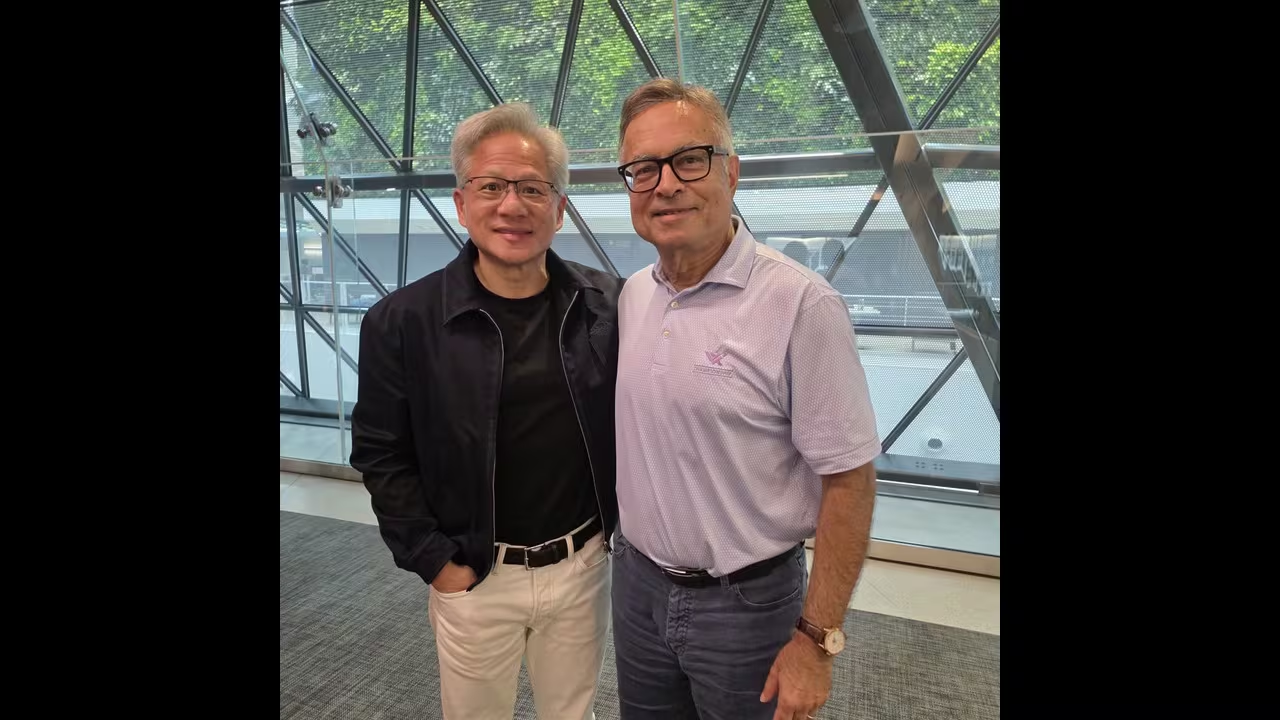
Jay Puri, a veteran Indian-origin technology executive, has become the centre of attention following reports about an extraordinary confrontation involving Nvidia CEO Jensen Huang. Puri, who spent more than two decades working at the American technology giant, was reportedly the target of an unusually harsh personal remark from Huang during a private meeting attended by more than 30 senior company executives. The alleged exchange has attracted widespread interest because of the contrast between Nvidia’s enormous success in the artificial intelligence industry and reports about the intense management culture inside the company.
Although Puri has largely maintained a low public profile, his long career at some of the world’s most prominent technology companies makes him an influential figure in the industry. According to a report by The New York Post, the confrontation took place during a closed-door meeting in February 2026. Citing people familiar with the incident, the publication reported that Huang directed an aggressive remark towards Puri, saying, “I hope you get the flu and I hope it gets worse.” Another account of the exchange attributed an even more disturbing statement to Huang: “I hope you die and put us all out of our misery.”
Puri reportedly remained silent throughout the incident, while the executives present were left uncomfortable by the exchange. One source described the atmosphere in the room as unusually tense and quiet, suggesting that even employees familiar with Huang’s temper were surprised by the severity of his words. The incident has consequently raised questions about the working environment at one of the world’s most valuable technology companies and brought renewed attention to the executives working behind its extraordinary growth.
Who Is Jay Puri? His Career and Role at Nvidia
Jay Puri is an experienced Indian-origin business and technology executive who has spent several decades working in senior leadership positions across the global technology industry. He is particularly known for his long association with Nvidia, where he spent more than 20 years overseeing important commercial operations. Unlike executives who concentrate primarily on engineering, product development or research, Puri’s professional expertise was largely connected to worldwide sales, business development, customer relationships and the management of international business operations.
His responsibilities placed him in a significant position within Nvidia’s corporate structure, where maintaining relationships with customers and expanding the company’s commercial presence across different markets were essential parts of his work. Puri joined Nvidia in 2005 as senior vice-president of worldwide sales. At the time, the company was already developing its presence in graphics processing technology, although its later transformation into a dominant force in artificial intelligence was still years away.
During his tenure, Nvidia expanded its business across several technology markets, including gaming, professional visualisation, data centres and artificial intelligence. As the company grew, its relationships with major customers, technology partners and businesses around the world became increasingly important. Puri’s position involved overseeing the global sales organisation and helping the company strengthen its commercial operations. His experience in international business management made him one of the senior executives responsible for connecting Nvidia’s technology with customers and organisations across different regions.
Over the years, Puri progressed through the company’s leadership structure and eventually became executive vice-president of worldwide field operations. This was one of the most important commercial leadership positions at Nvidia, placing him in charge of a broad international organisation responsible for sales and business development. His work included managing teams across different geographical markets, maintaining relationships with important customers and supporting the company’s worldwide expansion.
Read : Stranger Throws 3-Year-Old Boy Into Crocodile Enclosure at Johnsons of Old Hurst Zoo
Such responsibilities required considerable experience in dealing with large businesses, understanding changing technology markets and coordinating commercial strategies across international offices. Puri’s long service at Nvidia also meant that he witnessed several important stages of the company’s development, from its earlier identity as a graphics technology manufacturer to its emergence as a major supplier of artificial intelligence computing infrastructure.
According to reports, Puri stepped away from his executive position in August 2026 and moved into a senior adviser role at Nvidia. His transition marked a change after more than two decades in one of the company’s most influential commercial leadership positions. His name has now attracted additional public attention because of the reported confrontation with Huang, although the available accounts do not establish that the alleged remarks were connected to his departure. The circumstances surrounding his transition should therefore be considered separately from claims about the February meeting.
From Sun Microsystems to Hewlett-Packard: Puri’s Earlier Professional Journey
Before joining Nvidia, Jay Puri had already built an extensive career in the technology industry. One of his most significant professional associations was with Sun Microsystems, where he spent approximately 22 years working in different senior positions. Sun Microsystems was once a major name in enterprise computing, computer hardware, software and network technology. The company played an important role in the development of business computing systems and had customers across several international markets.
Working for such an organisation gave Puri considerable exposure to the challenges of managing large technology businesses, developing commercial strategies and building relationships with customers in different countries. During his time at Sun Microsystems, Puri held several leadership positions involving sales, marketing and general management. His responsibilities reportedly included serving as senior vice-president of the Asia-Pacific Group, president of Nihon Sun KK and vice-president of worldwide sales for software and technology.
These positions reflected the international nature of his professional experience, particularly his involvement in managing business operations across the Asia-Pacific region and Japan. Leading organisations in these markets required an understanding of different customer expectations, business environments and commercial practices. His experience in these roles helped establish his reputation as an executive with a strong background in international sales and technology management.
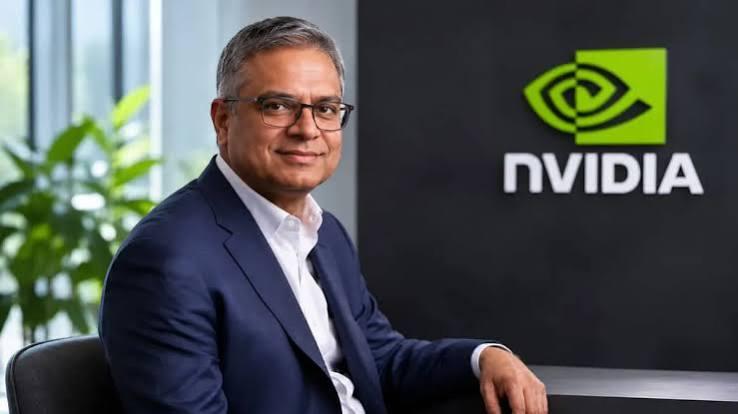
His work at Sun Microsystems was especially significant because it exposed him to different aspects of the technology business rather than restricting him to a single commercial responsibility. Managing sales teams, overseeing regional operations and handling software and technology businesses required coordination between multiple departments. It also involved understanding the relationship between technological developments and the commercial requirements of businesses purchasing those products.
By the time Puri left Sun Microsystems and joined Nvidia in 2005, he had already accumulated more than two decades of experience in the industry, making him a seasoned executive rather than someone entering senior corporate leadership for the first time. Earlier in his career, Puri also worked at several other well-known organisations, including Hewlett-Packard, Booz Allen & Hamilton and Texas Instruments.
His professional experience across these companies included product development, marketing and management consulting. These roles provided exposure to different areas of the technology and business sectors, allowing him to develop a broad understanding of corporate operations. Hewlett-Packard and Texas Instruments were important names in the technology industry, while Booz Allen & Hamilton was associated with management and business consulting. Together, these professional experiences formed the foundation of Puri’s later career at Sun Microsystems and Nvidia.
His career is an example of the professional journey of a technology executive whose influence has largely come through business leadership rather than public appearances. While Nvidia’s engineers and research teams have received considerable attention for developing the technologies behind artificial intelligence, executives such as Puri have played important roles in managing the commercial organisations that bring those products to customers. His long experience across several major companies also highlights how senior technology leadership often involves moving between engineering-driven businesses, international sales organisations and large-scale corporate management.
Jensen Huang’s Alleged Outburst and the Controversy Surrounding Nvidia’s Workplace Culture
The attention surrounding Jay Puri has also revived discussions about Jensen Huang’s management style and his reported behaviour towards senior employees. Huang is widely recognised as the co-founder and chief executive of Nvidia, a company that has become one of the most important players in the global artificial intelligence industry. Under his leadership, Nvidia’s graphics processing units and specialised computing platforms have become essential components of many modern AI systems. His public image is often associated with his trademark black leather jackets, energetic presentations and discussions about the company’s technological ambitions.
However, reports about his behaviour inside the workplace have presented a different picture of the executive’s leadership style. According to people cited in reports, Huang was known for becoming frustrated during lengthy meetings and openly reprimanding employees when he believed their performance or decisions were inadequate. Some accounts have described his management approach as demanding and confrontational, particularly during discussions involving business performance, strategy and company operations.
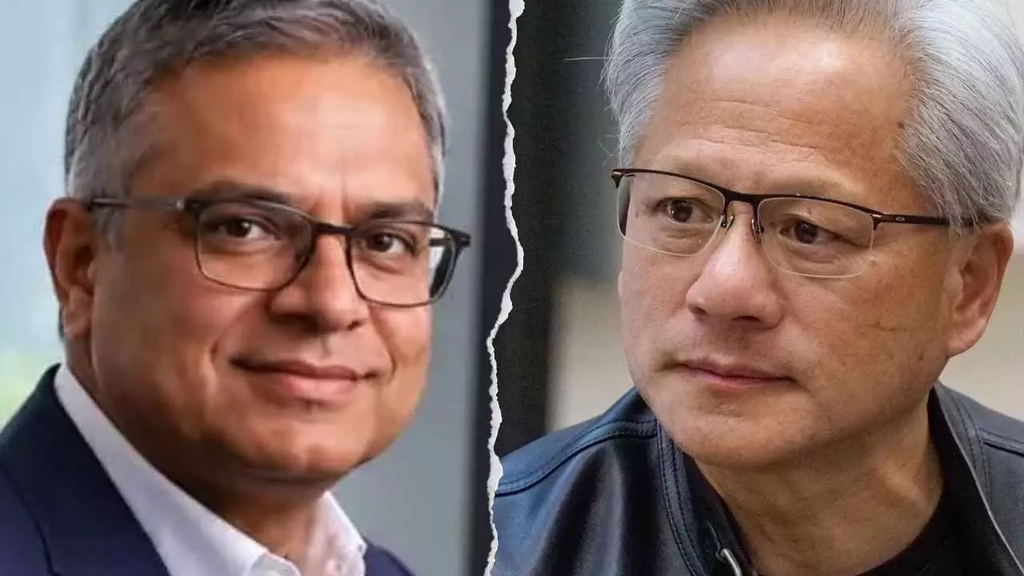
His alleged exchange with Puri has attracted particular attention because of the number of senior executives reportedly present and the personal nature of the remarks attributed to him. Rather than being a routine disagreement about business decisions, the reported comments appeared to go considerably further, leaving people in the room surprised by what they had heard. The report also referred to another alleged incident in which Huang threw a water bottle at a senior executive during an angry outburst.
While these accounts have contributed to discussions about his temperament, they should be understood as reported allegations rather than independently established findings. The reports have nevertheless raised questions about the pressures and expectations experienced by senior employees working within an organisation that operates in an intensely competitive technology market. Nvidia’s position in the artificial intelligence sector has brought enormous commercial opportunities, but its rapid growth has also increased the importance of decision-making, execution and maintaining its competitive advantage.
One particularly interesting aspect of the controversy is the difference between Huang’s public personality and the workplace behaviour described by people familiar with the company. In interviews and public appearances, Huang has frequently spoken about his humble beginnings, including his early experiences working as a dishwasher and cleaning toilets. He has often presented himself as someone who understands hard work, discipline and the importance of overcoming difficulties. His relaxed clothing choices and conversational public appearances have also helped establish an approachable image.
However, reports about his alleged outbursts suggest that interactions behind closed doors may sometimes be considerably more intense than his public appearances indicate. For Jay Puri, the controversy has brought unexpected attention to a career that was previously known mainly within the technology and corporate business community. His more than two decades at Nvidia, combined with his earlier experience at Sun Microsystems and other major organisations, establish him as a highly experienced executive in international technology sales and management.
The reported confrontation has made his name part of a much wider discussion about executive behaviour, corporate leadership and the working culture of powerful technology companies. While the exact circumstances of the February 2026 meeting and the different versions of Huang’s alleged remarks remain matters of reporting, the episode has placed an important question in the spotlight: how should extraordinary professional expectations and corporate success be balanced with respect and accountability in the workplace?
Integro mis lecturas en mi bóveda personal usando esta opción gratis de PDF a Markdown para Obsidian (pdftomd.tools). Paso los textos directamente a mis notas vinculadas.
Avant de finaliser mes maquettes, je lis ce guide visuel gratuit pour miniatures (thumbnailpreview.app) pour vérifier les zones couvertes par l’interface. Ses repères m’évitent des erreurs de composition.