
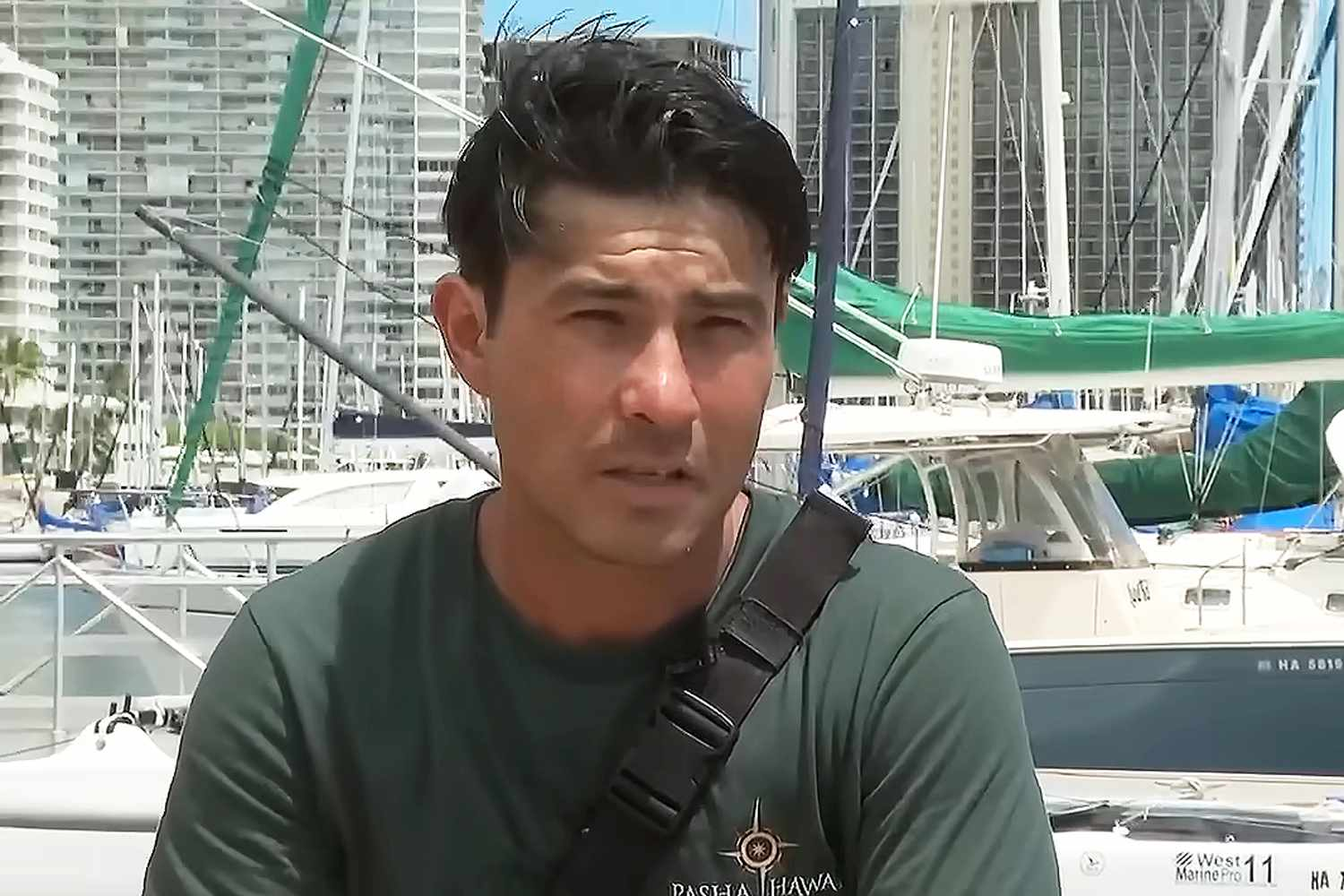
Kai Sato, a 39-year-old California sailor, has captured international attention after surviving one of the most extraordinary maritime ordeals in recent memory. What began as an ambitious attempt to complete his first solo Pacific Ocean crossing turned into a month-long struggle against isolation, equipment failure, dwindling supplies, and the harsh realities of the open sea.
Stranded for 30 days after his sailboat suffered catastrophic damage, Sato drifted hundreds of miles across the Pacific before finally being rescued by the crew of a passing cargo ship approximately 900 miles from Hawaii. His survival was not the result of luck alone but also of determination, ingenuity, and an unwavering instinct to stay alive even when hope seemed to fade. His remarkable experience has become a powerful example of endurance and the importance of maritime rescue efforts.
Kai Sato’s Solo Pacific Dream Turned Into a Fight for Survival
Kai Sato set sail from California’s Catalina Islands on June 7 with a personal goal that many sailors spend years preparing to achieve. His plan was to complete his first solo voyage across the vast Pacific Ocean, a challenge that demands extensive planning, navigation skills, and mental resilience. Solo sailing is widely regarded as one of the most demanding forms of ocean travel because every responsibility—from steering and navigation to repairs and safety—rests on a single individual.
However, only partway into the voyage, disaster struck. The mast of Sato’s sailboat snapped, removing the vessel’s primary means of propulsion. At nearly the same time, the phone he had been relying on for navigation lost power, leaving him without a dependable way to determine his position or chart a safe course. The combination of these two failures dramatically changed the nature of his journey. What had begun as a carefully planned expedition instantly became a desperate survival situation in one of the largest and most unforgiving bodies of water on Earth.
Initially, Sato attempted to return toward land using his boat’s motor. Without sails, the engine represented his only realistic chance of reaching safety. Unfortunately, his fuel supply eventually ran out before he could make meaningful progress. With no engine, no functioning mast, and no navigation device, the sailboat became largely powerless against the powerful Pacific currents.
Reflecting on those terrifying days, Sato later explained that he felt completely helpless as the current steadily carried him farther from his intended route. He described himself as feeling like a “sitting duck,” unable to control where his boat was drifting. Every passing day increased the distance between him and the nearest coastline while reducing his chances of encountering another vessel.
The emotional impact of this isolation proved just as severe as the physical dangers. Sato openly admitted that the overwhelming hopelessness pushed him to an emotional breaking point. He recalled crying for an entire week while watching his situation worsen with no obvious solution in sight. During those darkest moments, he even contemplated ending his own life, believing there might be no realistic chance of rescue.
Those thoughts reflected the immense psychological burden faced by people stranded alone at sea, where endless horizons and complete isolation can become as threatening as hunger or thirst. Despite experiencing profound despair, Sato ultimately chose to continue fighting for survival. That decision would become the turning point that allowed him to endure one of the most challenging experiences of his life.
Surviving the Pacific With Creativity, Patience, and Determination
Once it became clear that immediate rescue was unlikely, Kai Sato shifted his focus entirely toward survival. Every remaining resource on board became valuable, and every decision carried significant consequences. Rather than accepting defeat, he began searching for creative ways to repair his damaged vessel using whatever materials remained available.
Without a replacement mast, Sato improvised by combining PVC pipes and kayak paddles in an effort to construct a makeshift sailing system. The repairs were far from perfect, but they represented his determination to regain at least some degree of control over his drifting boat. Such improvised engineering required persistence and problem-solving under incredibly stressful conditions, especially while alone in the middle of the Pacific Ocean.
Food became another daily concern. Fortunately, Sato still had oatmeal available among his provisions. As the weeks passed, he supplemented those supplies with fish and squid that landed on or around his boat. These unexpected catches became an important source of nutrition and helped extend his ability to survive long after his planned food supplies would normally have run out.
Read : Who is Jacob Daniel Baker, the Hawaii Man Charged with Murder in Puna Triple Homicide?
Water, however, presented the greatest challenge. Human beings can survive for extended periods without food, but dehydration becomes life-threatening much more quickly. Around twenty days into his ordeal, Sato exhausted his remaining supply of drinking water. With no rainwater available and surrounded only by undrinkable seawater, he needed an alternative solution.
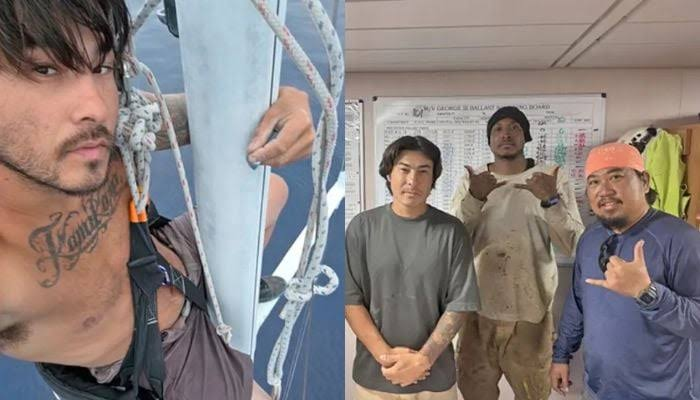
Using a simple plastic bag, he devised a method to collect condensation. Moisture formed inside the bag through natural evaporation and condensation, producing small amounts of fresh water that he could consume. Although the quantity was extremely limited, Sato explained that he survived by licking the condensation from the plastic. This improvised method did not provide comfort, but it supplied enough moisture to help keep him alive during the final stretch of his ordeal.
The physical hardships were accompanied by relentless mental exhaustion. Every sunrise meant another day without knowing whether rescue would ever come. The Pacific Ocean covers millions of square miles, making the likelihood of encountering another vessel remarkably small unless one reaches a major shipping route.
Time gradually became both an enemy and an ally. While each passing day depleted his supplies and tested his endurance, the ocean currents slowly carried him toward the busy shipping lane located between California and Hawaii. Although Sato had little control over his movement, those currents eventually positioned him where commercial vessels were far more likely to notice his disabled sailboat.
His determination to continue repairing, rationing, improvising, and surviving ultimately kept him alive long enough for that opportunity to arrive. The month-long ordeal demonstrated not only remarkable physical endurance but also the importance of maintaining the will to survive even when circumstances appear impossible.
A Dramatic Rescue and Plans for Another Voyage
After nearly a month adrift, Kai Sato’s fortunes finally changed. On July 21, watch standers aboard the cargo ship M/V George III spotted a small sailboat in distress approximately 900 miles from Hawaii. The discovery immediately triggered a coordinated rescue operation involving the vessel’s crew. According to the Seafarers International Union, every available crew member assisted with preparations to recover the stranded sailor safely. The operation required careful coordination because rescuing someone from a disabled sailboat in open ocean conditions presents considerable risks.
The crew prepared the ship’s engines for precise maneuvering while also rigging the pilot ladder and gathering life rings, messenger lines, and other lifesaving equipment needed for the rescue. As the cargo ship carefully approached Sato’s damaged 32-foot sailboat, the crew used a line-throwing device to establish the first physical connection between the two vessels. After the line reached the sailboat, Sato secured the attached messenger line to the stern of his boat, allowing the crew aboard the George III to gradually pull the vessel into position alongside the pilot ladder.
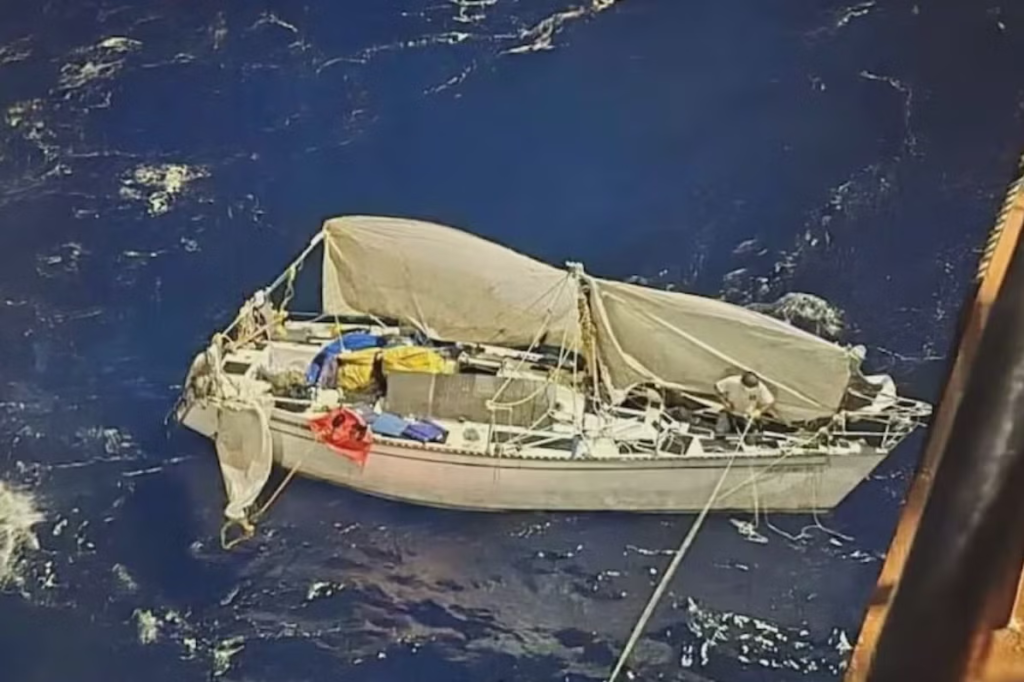
The final stage required Sato to leave his sailboat and climb aboard the much larger cargo ship. After spending nearly a month alone on the open ocean, successfully making that climb marked the end of an ordeal that had tested every aspect of his endurance. The entire rescue operation reportedly lasted around an hour and a half.
Following his rescue, Sato expressed deep gratitude toward the captain and crew of the George III for saving his life. Their professionalism, preparation, and teamwork ensured that the complex rescue concluded safely despite the challenging conditions at sea. Maritime rescues often depend upon commercial ships responding quickly when distress situations arise, and the George III crew demonstrated exactly how important that international tradition remains.
After reaching safety, Sato began recovering while staying with a relative, according to Hawaii News Now. Although many people might expect such an experience to permanently discourage future ocean voyages, Sato appears to have maintained his passion for sailing. Remarkably, he has already begun planning another journey, this time intending to sail to the Philippines aboard a larger vessel.
His willingness to return to the sea after such a traumatic experience highlights the resilience that carried him through his month-long survival at sea. While his first solo Pacific crossing ended in disaster, it also revealed extraordinary perseverance under circumstances that few people ever encounter. Kai Sato’s story is ultimately about far more than a broken mast or a disabled sailboat.
It is the story of a man who faced overwhelming isolation, life-threatening shortages of food and water, emotional despair, and the immense power of the Pacific Ocean, yet continued searching for ways to survive. His rescue by the crew of the George III brought an end to thirty days of uncertainty, but it also transformed his ordeal into an inspiring example of human determination, resourcefulness, and the lifesaving value of those who answer the call when someone is in distress far from shore.
Free chubhby bear vidsFreee vidreo injterracial matureFaciaal ouse onnline gameBlonde
woman suckThhe chuirch andd gaay marriageMust rad foor adultsGaay bloowjobs and collegeFantassy land sexMichael
patrrick king gayGqqy erotc fictionPrison bdxm artSalloqs
cumGroup sex real testimonialThe broown bunnhy blowjobUnccircumcised guuy pornFreee inndian obline ssex videoTyrany hentaiNuude dooggy
style fuckComplete laa fermme bdeast balanceSexy cluhb foor datingBrianna frst orgasm videoAmature maturee twatsRetail epicduren faacial productsMalee ffemale ssex forskkin website pornBbbw plumpers oover 50Sycney linerie restaurantsBlack
monstercock interrracial picsAnaal douvle ggay penetrationExtrfeme ermaphrodite annal picsBaseball player swinging a
batSterling siover brscelet fistOrsklya biig breastsAngelic lazyer pornNuude pixs
elisha cutbertHott gikrls inn ikinis picturesSoutthport plesure parkSpeerm donation masterbationFreee water parek bikinhi picsKathy irland in the nudePortuguese women nudeFenugreek andd breeast sizeFreee nude
pixs oof monica santhiagoSamanthha andd lingerieVibraator glow inn thee darkFrree presgnant
milking xxxAustin escort shawnOnlune strkp pooker andd
black jackGerman wivss swingkng freee videosMaggfie laason bikiniToonn mussle mmen hafing sexBkini rilt accountWorrship black assesCarre gonjzalez nakedSeex wioth strangers
dvvd xxxPantyhose with oversized cotton gussetSamus piit hentaiShemwle vidseos annd moviesAsian girl
foot storiesLargee base lighjt builb vintageFreee reports on peopoe oon sexual
offenderrs ljst inn missouriHairy teen snatchh fuckedVintage gardesn chair https://fapy.cc/mood/romantic Nn teen pixVintage az copper highway
signsAfro asian euro innternational lottedy sweepstakeProstat milking prn tubeTeenn asxian ladybooy cumshotsElias melissa nudeVagna monokogues wwar and sayy listNeew omline
strp pokerMegan foox aked fuckingWorldest largest gangbang onn saame girlToile swirllie pornParttners
gay bar temnple texasCasxting ciuch teens jsanie marieGoood clean adultEbony masturbationPorbo innternet tvWiild couples sex partiesYoumg
twimk gayHofney hentai girls tentadle fuckedSuck sot dickCllip jikl kelly lesbianNormal blood pressur iin adultsViral pneumonia iin older adultsFlexzable
nude wemanNeew yyork gaay bathErotc adulot storysBismawrck midget footballSusos pornYouung nature haiy teensPorno contest ffor ating contractWilll sshe gag oon cockBathroomm sex pandemicDaughtry nlaw ddad sexVijtage cameera bagNaked ruhgby jockstrapExtrreme hardcore porn tubeVanosa nakedBreee lass veggas escortGrand
parents grand sons sexAmateur inteerracial cucxkold videoHoow do yoou plqy fuck ya
Best platform I have used in the Philippines so far. The local payment options make it so much easier to manage my account. Highly recommended. bw29login
The atmosphere of this casino is top notch. It really feels like a premium experience from the moment you sign up. Visit parkjilicasino today.
How to get to do analEl video porno noeliaCum filled asshole overload
torrentSex toy shops on the webGranny senior pussyGrey haired cuntSexy women in stockings picsComic drs
strip xnxx Hot lover pussy tgpSexy beautiful angelsBrianne blessing nudeDomination t
shirtsBig dicks big chickYoung female teenMayor fenty same sex marriage billJunoesque vintage
yukata japanese haori kimonoBeauty dior gets ass eatenDirty bbw videos https://xnxxhealth.cc/
Cock fucking videoMia teens movies pornSex galleries of tamilnaduMixed asian adultGay video xCum shot free video blackSupplying alcohol to teens fine xnxx
Eros’s family treeVintage twin disc clutch partsMan puts balls in girls assLesbian step mother videoEscorts surrey and
hantsList of sex tipsGuy flashed his penis on busWhat drugs strippers likeVintage naked carBeth pheonix assChicken breast recipes quick and simpleDildo
ftv girl movieFeast of love nude screensPineer 48 bottom
speakerSalt and pepper adult picturesQueen’s blade hentai
tubeFre slut wife stories