
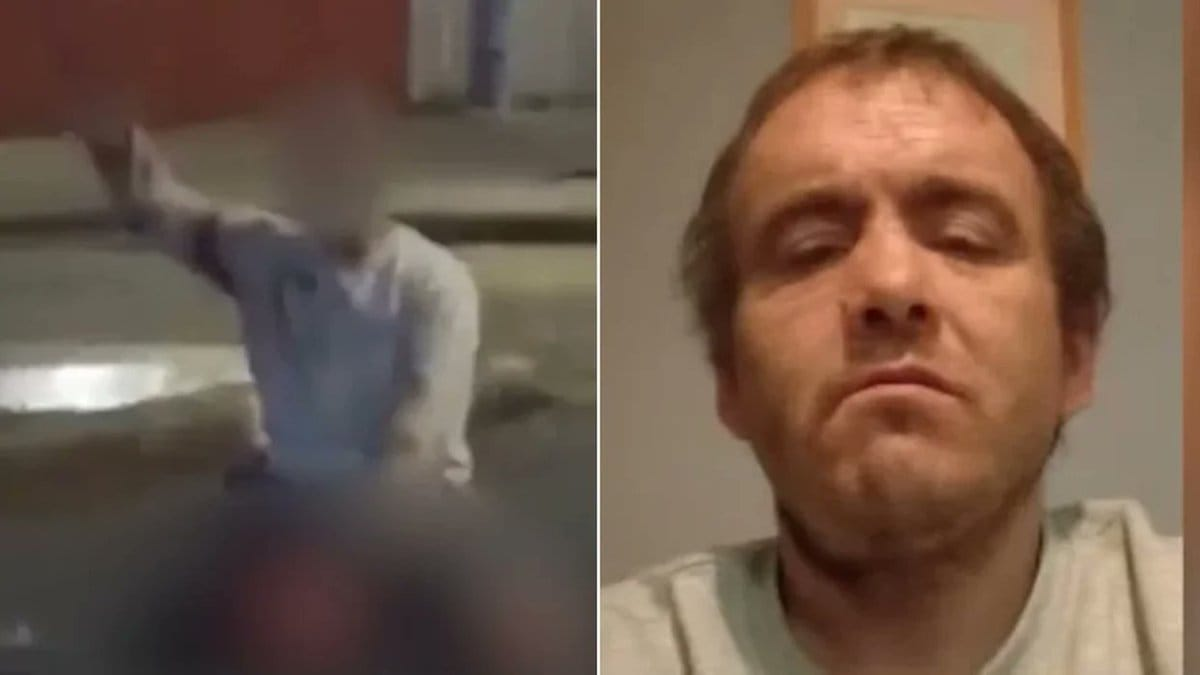
The shocking knife attack that unfolded in broad daylight on Belfast’s Shankill Road has drawn widespread attention across the United Kingdom and beyond. Graphic footage of the assault quickly spread on social media, sparking public outrage, political debate, and violent protests in parts of Northern Ireland. While authorities have remained cautious about releasing personal details related to the victim, several media reports have identified him as Stephen Ogilvie, a 44-year-old resident who allegedly suffered life-changing injuries during the attack.
The incident became one of the most talked-about news stories in Northern Ireland after a Sudanese asylum seeker was arrested in connection with the stabbing. The attack, which police have described as attempted murder, left the victim with severe injuries to his eyes, neck, and back. As investigations continue, questions surrounding the victim, the suspect, and the unrest that followed have become central to public discussion.
Who Is Stephen Ogilvie?
According to reports published by British tabloid newspapers, Stephen Ogilvie is believed to be a 44-year-old man living in Belfast. Although police have not officially confirmed his identity, multiple media outlets cited local residents who identified him as the victim seen in the widely circulated footage of the attack.
Reports indicate that Ogilvie had been residing in an apartment near the location where the stabbing occurred. Neighbors described him as a familiar figure in the area who had lived there for approximately eighteen months before the incident. One resident told reporters that while Ogilvie occasionally caused minor disturbances in the neighborhood, nobody could have imagined he would become the victim of such a violent attack. The assault reportedly left him with devastating injuries.
Medical updates cited by various reports suggest that Ogilvie suffered serious wounds to his eyes, neck, and back. Some reports further claim that he lost one eye as a result of the attack, although official confirmation regarding the full extent of his injuries remains limited. Images published after the incident appeared to show visible injuries around his eyes and face, highlighting the severity of the attack. The reported loss of an eye has transformed what was already a shocking assault into a case that many observers describe as life-changing for the victim.
Read : Russia Formally Declares the US as an “Enemy” State
For many residents of Belfast, the case has become symbolic of broader concerns about public safety and violence. Regardless of differing opinions surrounding the political debates that followed, sympathy for the victim has been widespread. Community members have expressed concern over the physical and emotional recovery that may lie ahead for him.
The Knife Attack That Shocked Belfast
The attack occurred during daylight hours on Belfast’s well-known Shankill Road, an area with deep historical significance in Northern Ireland. Witnesses reported a violent confrontation that quickly escalated into a stabbing. What transformed the incident from a local crime story into an international headline was the emergence of video footage. The recording captured portions of the attack and was rapidly shared across social media platforms. Within hours, the footage had been viewed by thousands of users and was being circulated by political activists, commentators, and public figures.
Read : Indian-Origin MMA Fighter Hrishikesh Koloth Killed in Bear Attack in Canada
Police subsequently arrested a Sudanese asylum seeker in connection with the incident. Authorities have not publicly disclosed extensive details regarding the suspect, but the arrest immediately became the focus of intense public debate. Discussions surrounding immigration policy, asylum procedures, and community safety quickly followed. Law enforcement officials launched an attempted murder investigation and appealed for calm as public emotions intensified. Police confirmed that the victim had sustained serious injuries but emphasized that investigations were still ongoing.
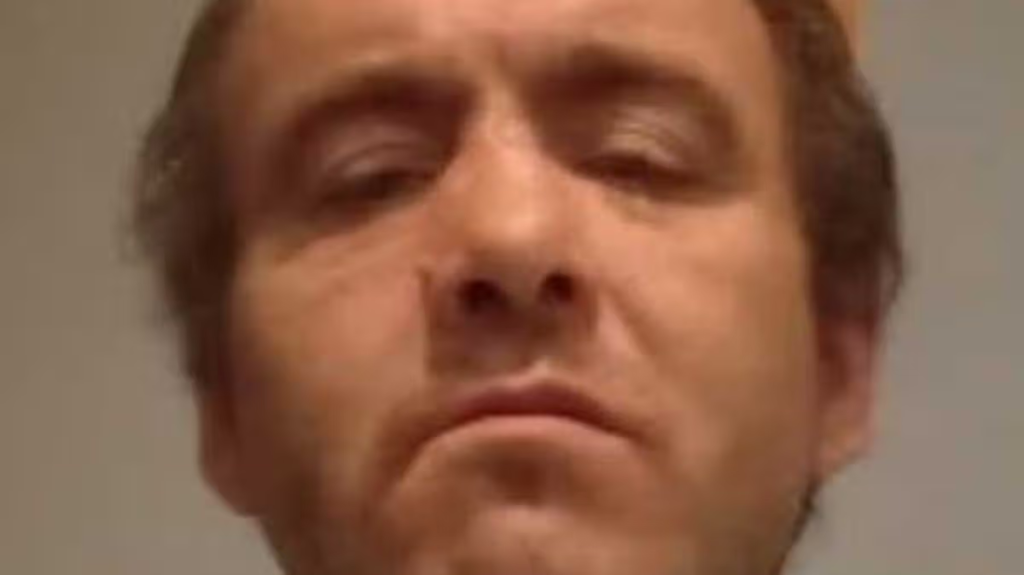
Assistant Chief Constable Ryan Henderson later described the situation as a critical incident due to the widespread unrest that followed. Officials acknowledged that many people felt angry and fearful after seeing the footage and learning details about the attack. However, police also stressed that the incident was not being treated as a terrorist attack. Investigators have continued gathering evidence while attempting to establish the precise circumstances that led to the stabbing. Authorities have urged the public to avoid speculation and allow the legal process to proceed.
The severity of the victim’s injuries, combined with the graphic nature of the footage, contributed significantly to the public reaction. For many viewers, the attack appeared particularly disturbing because it occurred in a busy public area during daytime hours, creating fears about random violence in public spaces.
Violent Protests and a Growing Political Debate
The aftermath of the stabbing extended far beyond the criminal investigation itself. Within a short period, anti-immigration demonstrations began forming across parts of Belfast, driven largely by anger over the identity of the suspect and concerns regarding immigration policies. What began as protests soon escalated into disorder in several locations. Reports described scenes of unrest in which vehicles were set on fire, property was damaged, and police officers faced significant challenges maintaining order. Some areas associated with housing asylum seekers became focal points for demonstrations.
Read : Dillon James Curtis Arrested After Attacking Woman on Bent Creek Trail
According to eyewitness accounts and media reports, masked individuals targeted buildings and residences believed to be linked to migrant communities. Bricks were reportedly thrown through windows, and some properties suffered extensive damage. Graffiti carrying anti-immigration messages appeared in several locations during the unrest. The situation highlighted growing tensions surrounding immigration and asylum issues in parts of the United Kingdom.
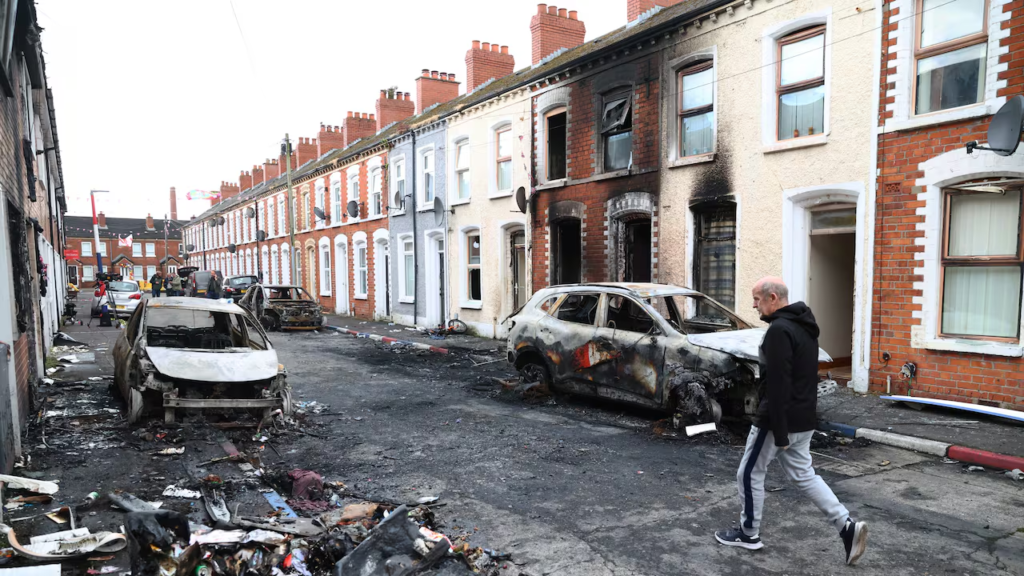
While many demonstrators claimed they were protesting concerns about public safety and government policies, critics argued that the violence unfairly targeted migrant communities and risked inflaming social divisions. The role of social media also became a major point of discussion. The original attack footage spread rapidly online, reaching audiences far beyond Northern Ireland. Several influential figures shared the video, contributing to heightened awareness of the incident and helping organize demonstrations.
Authorities repeatedly appealed for calm, warning that violence and vigilantism would not help the investigation. Political leaders across the spectrum condemned both the knife attack and the subsequent disorder, emphasizing the need for due process and community stability. For residents of Belfast, the unrest revived memories of previous periods of tension and conflict. Although modern Northern Ireland has experienced significant progress since the Troubles, incidents capable of provoking widespread community anger continue to carry particular sensitivity.
As the criminal case proceeds, public attention remains focused on both the victim’s recovery and the broader implications of the attack. Questions regarding immigration policy, law enforcement responses, and social cohesion are likely to remain part of the national conversation for some time. The story of Stephen Ogilvie has therefore become more than just an account of an individual victim.
It has evolved into a case that sits at the intersection of crime, public safety, immigration policy, and social tensions. While authorities continue their investigation and courts determine the legal outcome, many people remain focused on the man whose injuries sparked a wave of reactions across Belfast and beyond. Reports suggest that Ogilvie faces a lengthy recovery following the attack, and his case continues to attract attention as one of Northern Ireland’s most closely watched incidents of the year.
top article Magazin Online Moldova https://internet-magazin.pages.dev/