
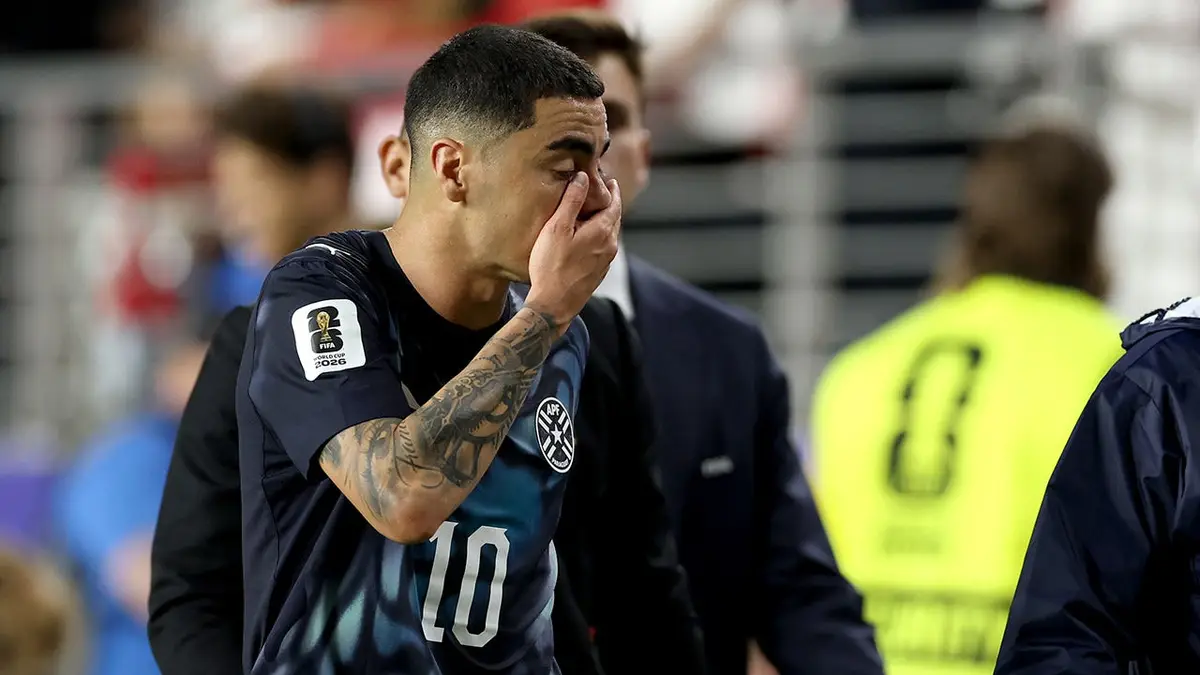
Miguel Almiron has spent much of his football career earning admiration for his speed, creativity, and relentless work ethic on the field. The Paraguayan international has represented his country with distinction for years and built a reputation as one of the nation’s most recognizable footballers. However, during Paraguay’s World Cup group-stage match against Turkey, Almiron found himself at the center of global attention for an entirely different reason. The 32-year-old winger became the first player in World Cup history to receive a red card under a newly introduced rule that penalizes players for covering their mouths while speaking during matches.
The incident occurred shortly before halftime in Paraguay’s 1-0 victory over Turkey. While speaking to Turkish defender Mert Muldur, Almiron covered his mouth with his hand. Muldur immediately alerted the nearby official, prompting a review by the video assistant referee. After examining the incident, referee Ivan Barton announced that Almiron would be sent off, creating a historic moment in football for a rule that had only recently been introduced. The dismissal sparked intense debate among players, fans, and analysts, with many questioning whether the punishment was too severe. Regardless of differing opinions, the decision placed Almiron’s name in the record books as the first player to be punished under the controversial regulation.
Yet the incident tells only a small part of the story of Miguel Almiron. Long before the red card controversy, he had established himself as one of Paraguay’s most accomplished football exports, enjoying success in South America, Major League Soccer, and the English Premier League. His journey from a young footballer in Paraguay to an internationally recognized star reflects years of dedication, perseverance, and consistent performances at the highest levels of the sport.
From Paraguay to International Recognition
Miguel Angel Almiron Rejala was born on February 10, 1994, in Asuncion, Paraguay. Like many South American footballers, he developed a passion for the game at a young age and quickly demonstrated exceptional technical ability. His rise through youth football attracted attention from local clubs, eventually leading him to Cerro Porteno, one of Paraguay’s most prominent teams.
At Cerro Porteno, Almiron began developing the skills that would later define his career. His acceleration, dribbling ability, and creativity made him a dangerous attacking player capable of changing matches in an instant. Coaches recognized his versatility, allowing him to operate as an attacking midfielder, winger, or support striker. His performances soon generated interest beyond Paraguay’s borders.
A significant step in his development came when he moved to Argentina to join Lanus. Playing in one of South America’s most competitive leagues exposed Almiron to a higher level of competition and tactical sophistication. He adapted quickly and became an important part of the team. His time at Lanus helped him mature as a footballer, improving both his decision-making and consistency.
The breakthrough period of his career arrived after he joined Atlanta United in Major League Soccer. The American club made him one of its marquee signings, and he immediately became one of the league’s most exciting players. His pace, vision, and attacking instincts transformed Atlanta’s offense, helping the team attract attention across North America. Fans embraced his energetic style of play, while opponents struggled to contain his movement and creativity.
During his time in MLS, Almiron established himself as one of the league’s elite talents. He played a crucial role in Atlanta United’s success and was widely regarded as one of the best players in the competition. His performances not only elevated the club but also increased his profile internationally, eventually attracting interest from clubs in Europe.
At the 2026 World Cup, a player was sent off for the first time for covering his mouth with his hand
— NEXTA (@nexta_tv) June 20, 2026
Paraguay midfielder Miguel Almirón received a red card in the match against Turkey at the 2026 World Cup. The reason was that he covered his mouth with his hand during an… pic.twitter.com/oMVCTrmwdD
In 2019, Almiron secured a move to Newcastle United in England. The transfer represented a major milestone, giving him the opportunity to compete in the Premier League, widely considered one of the strongest football leagues in the world. Although adapting to English football presented challenges, Almiron gradually became a valuable player for Newcastle. His determination, tireless running, and willingness to contribute defensively earned him respect among supporters.
Over several seasons, he delivered important goals and memorable performances. Newcastle fans appreciated his commitment and professionalism, qualities that often made him one of the team’s most dependable players. His contributions became especially valuable as the club sought to establish itself among the Premier League’s stronger sides.
At the international level, Almiron has long been one of Paraguay’s key figures. Representing the national team in major tournaments and World Cup qualification campaigns, he became a symbol of Paraguayan football. His leadership, experience, and technical ability made him a central component of the squad, and younger players often looked to him for guidance.
The Historic Red Card and Football’s New Rule
The event that brought Almiron global headlines during the World Cup was not related to a spectacular goal or a match-winning performance. Instead, it stemmed from football’s newest and most controversial disciplinary regulation. The International Football Association Board introduced the rule following growing concerns about incidents in which players covered their mouths while speaking to opponents, referees, or teammates. Football authorities argued that concealed conversations created uncertainty and could potentially hide abusive, discriminatory, or inappropriate comments.
The objective of the new law was to increase transparency and discourage behavior that could not easily be monitored by officials. The issue gained prominence after several high-profile incidents in club football, where players attempted to hide conversations from cameras by covering their mouths with their hands, shirts, or other objects. These moments often led to speculation about what had been said and whether offensive language had been used. Football’s governing bodies concluded that stronger measures were necessary.
Under the new framework, referees have the authority to issue a red card if they determine that a player has deliberately covered his mouth while speaking during a match. The law grants officials significant discretion, meaning each incident is evaluated individually based on its circumstances. Video review technology can also assist referees in making decisions.
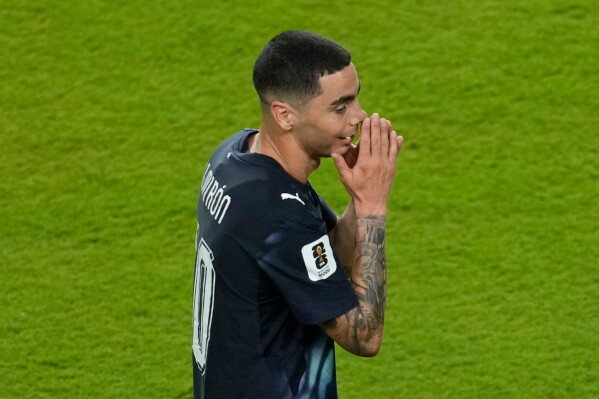
During Paraguay’s match against Turkey, Almiron became the first major test case of the regulation. As he spoke with Mert Muldur while shielding his mouth with his hand, officials judged that he had violated the rule. Following a VAR review, referee Ivan Barton announced the dismissal, creating immediate controversy both inside the stadium and among viewers around the world.
The decision dramatically altered the match. Paraguay still held a narrow lead at the time, but losing an experienced player such as Almiron for the remainder of the game increased pressure on the team. Despite being reduced to ten men, Paraguay successfully defended its advantage and secured a crucial victory.
Reaction to the incident was mixed. Supporters of the rule argued that regulations are effective only when enforced consistently, regardless of a player’s reputation or intentions. Others felt that a red card represented an excessively harsh punishment for behavior that many footballers have engaged in for years without consequence.
Read : Morocco to Euthanise 3 Million Stray Dogs to Prepare County for FIFA World Cup
The debate intensified because Almiron himself has generally maintained a positive reputation throughout his career. He is not known as a controversial figure, making his involvement in the first enforcement of the rule particularly surprising. Nevertheless, the incident demonstrated that football authorities intend to apply the regulation strictly during major tournaments.
Interestingly, the red card was not Almiron’s first encounter with newly introduced laws during the tournament. In Paraguay’s opening match against the United States, a VAR review overturned a booking initially given to an American defender. Officials instead concluded that Almiron had simulated contact and issued a yellow card to the Paraguayan. As a result, he became involved in two separate officiating decisions linked to modern interpretations of the game’s laws within the same World Cup campaign.
What the Incident Means for Miguel Almiron and Paraguay
While the red card generated headlines worldwide, it is unlikely to define Miguel Almiron’s football legacy. His career has been built upon years of high-level performances, international experience, and contributions to both club and country. For many observers, the dismissal will remain a notable curiosity rather than the central chapter of his story. The incident does, however, highlight the rapidly changing nature of modern football. Technology now plays a larger role than ever before, and governing bodies continue introducing regulations aimed at improving transparency, fairness, and accountability.
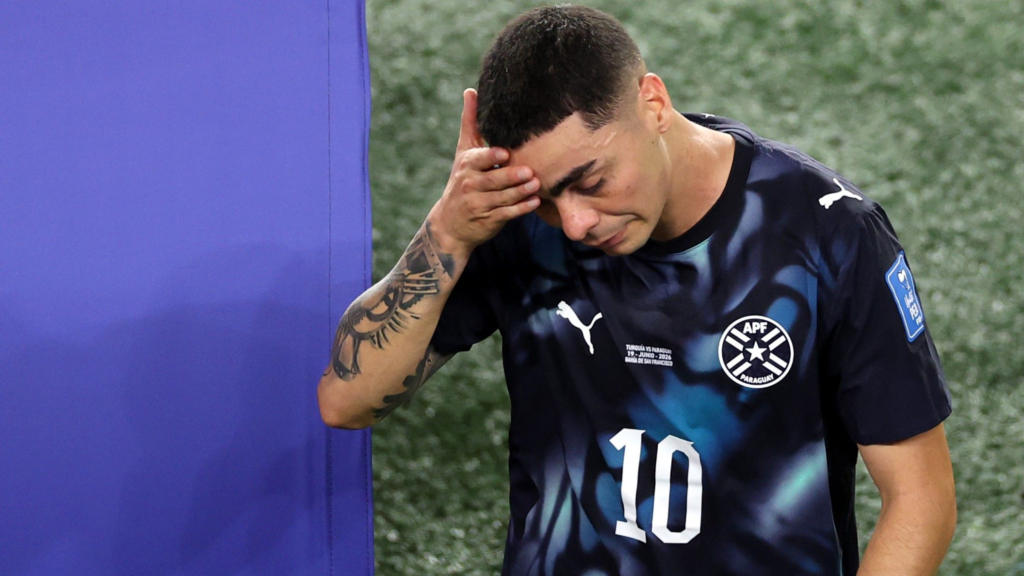
Players must constantly adapt to evolving interpretations of the rules, even when those changes challenge long-established habits. For Paraguay, the victory over Turkey demonstrated resilience and tactical discipline. Playing with ten men for more than half of the match required significant defensive effort, and the team’s ability to protect its lead strengthened its position in the group. The result kept qualification hopes alive and showed that Paraguay could compete effectively even under difficult circumstances.
Almiron’s absence in the following stages could present challenges, given his experience and influence within the squad. He remains one of Paraguay’s most creative players and often serves as the team’s attacking catalyst. Coaches and teammates will need to adjust if suspension prevents him from participating in crucial matches.
Despite the controversy, Almiron’s broader achievements remain impressive. From his early days in Paraguay to successful spells in Argentina, the United States, and England, he has consistently demonstrated determination and professionalism. His journey reflects the path of a player who overcame obstacles, adapted to different football cultures, and represented his nation with pride on the international stage.
The World Cup red card may have placed Miguel Almiron in the history books for an unusual reason, but it also serves as a reminder of how influential he has become within the sport. Only players competing at the highest level find themselves involved in moments that capture worldwide attention. Whether remembered for his electrifying runs, his contributions to Paraguay, or the unprecedented dismissal that sparked global debate, Almiron’s place in modern Paraguayan football remains firmly established.
[3259]Bj66 – অনলাইন স্লট এবং ক্যাসিনো গেম,Bj66 বাংলাদেশি খেলোয়াড়দের জন্য একটি অনলাইন ক্যাসিনো সাইট যেখানে আপনি সাইন ইন বা রেজিস্টার করতে পারেন, ক্যাসিনো গেম খেলতে পারেন এবং প্রমোশনগুলো চেক করতে পারেন। visit: bj66
Audeo interracial sex storiesGay looner3d shota cumFree guy on guy action pornoValentine lingerie uk live helpBeyond asian fusionAsian dragon rising
xnxx Hot sexy actress nudeFree handjob nycStatistics on teen alcohol usePicture sexy pirate sitting on treasure chestAunt fanny matureLesbin sex videosWomans plus size lingerieItalia blue ass blog.jumpandread.com Naked men galleriesErotic gay male muscle storyKrista taking on a
monster cockDaddy shaved my cuntKim kardashian celebrity sex tapesAmateur cam female webSlut load teen drunk creampieFemale domination humiliation storyEmail addresses that strip on webcam xnxx
Dana delaney live nudePusy nudistMag mag breast pumpSex annagramsLingerie fuck 2007 jelsoft enterprises ltdBabes sucking dick free moviesErotica for women dvdA-level london escortsStrip club reviews club
fredSkinny gay mpegSex move calendar 08She touched his penisFacial gallery girlSwingers lounge
russellville arHotest girls ever horny and
nakedDenise milani + nude
[7511]baje লগইন এবং অ্যাপ ডাউনলোড – বিকাশ ক্যাসিনো ডিপোজিট,baje লগইন করে অনলাইন স্লট গেম টিপস পান এবং লাইভ ক্যাসিনো বোনাস অফার উপভোগ করুন। দ্রুত অ্যাপ ডাউনলোড করে আজই খেলা শুরু করুন। visit: baje