
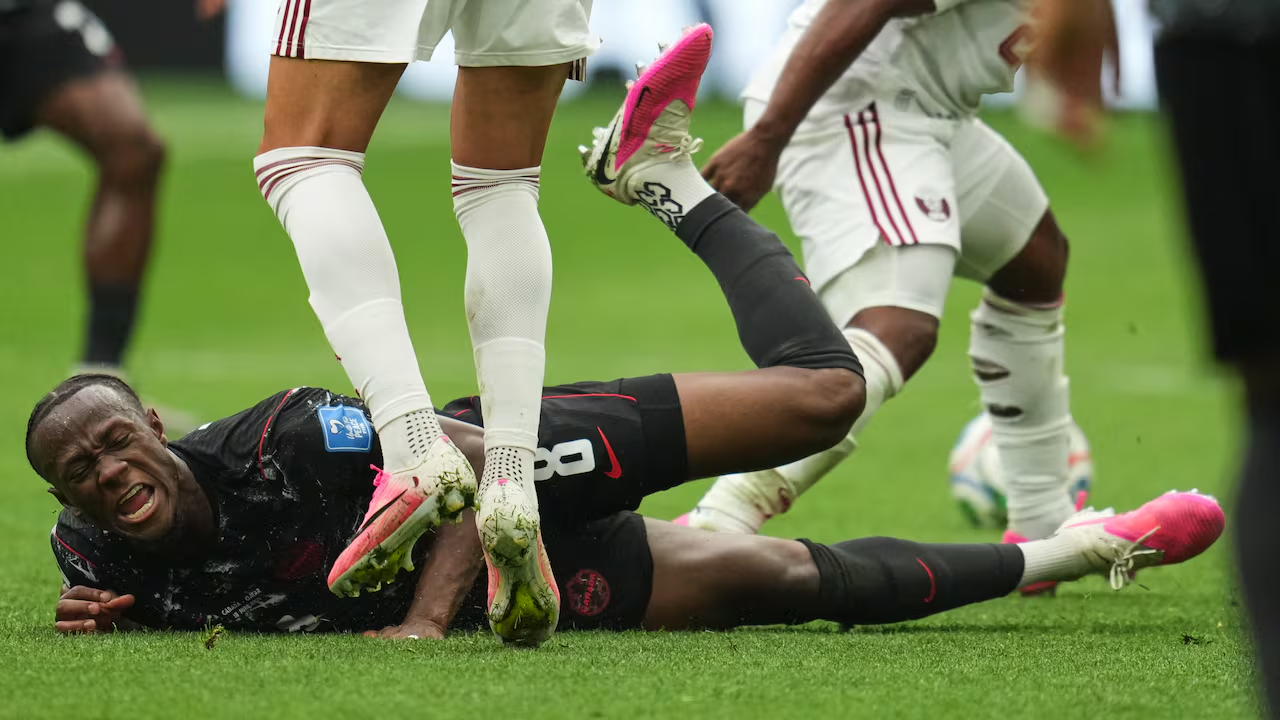
The 2026 FIFA World Cup has delivered memorable moments for Canada, including a historic 6-0 victory over Qatar that marked one of the most significant results in the nation’s football history. However, the celebrations were overshadowed by a devastating injury to one of Canada’s most important players, Ismaël Koné. The talented midfielder suffered a broken leg following a heavy challenge during the second half of the match, bringing an abrupt end to his World Cup campaign.
The injury not only left teammates and supporters shocked but also created a major setback for a Canadian side that had entered the tournament with growing confidence and ambitions of making a deep run. Ismaël Koné’s injury occurred in front of the Canadian bench and immediately appeared serious. Players from both teams quickly signaled for medical assistance, while the midfielder remained on the ground receiving treatment.
The reaction from teammates and coaching staff reflected the severity of the situation, and subsequent medical examinations confirmed fears that he had suffered a fracture requiring surgery. Although Canada Soccer later announced that the operation had been successful and that Koné is expected to make a full recovery, the midfielder will miss the remainder of the World Cup. For a player who has become one of the central figures in Canada’s football renaissance, the injury represents a heartbreaking interruption at one of the most important moments of his career.
From Montreal Prospect to International Star
Born on June 16, 2002, in Abidjan, Ivory Coast, Ismaël Koné moved to Canada at a young age and developed into one of the country’s most exciting football prospects. Growing up in Montreal, he began attracting attention for his technical ability, athleticism, and maturity on the ball. Unlike many young midfielders who specialize in a single aspect of the game, Koné demonstrated a complete skill set from an early age. He possessed the physical strength to compete in midfield battles, the vision to create attacking opportunities, and the composure needed to control possession under pressure.
His rise accelerated when he joined CF Montréal, where he quickly established himself as one of the brightest young talents in Major League Soccer. Coaches and analysts frequently highlighted his ability to influence matches from central midfield, whether through ball progression, defensive contributions, or intelligent movement. Despite his young age, he displayed confidence and tactical awareness that suggested he was destined for a career at the highest levels of the sport.
Koné’s performances in MLS soon attracted interest from European clubs. His transition to European football was viewed as a natural step in his development, offering him the opportunity to test himself against stronger competition and continue refining his game. He eventually moved to England with Watford, gaining valuable experience in a demanding football environment. The move represented a significant milestone, as he joined the growing list of Canadian players making their mark in Europe.
After continuing his development abroad, Ismaël Koné later joined Italian club Sassuolo. The transfer provided another opportunity to grow in one of Europe’s most tactically sophisticated leagues. Serie A has long been recognized for its emphasis on tactical intelligence, positional discipline, and technical quality, qualities that align well with Koné’s playing style. His time in Europe has helped transform him from a promising prospect into a mature midfielder capable of competing at the international level.
The late kick was so unnecessary and look at a career ending damage on the player.
— Leo'rahl (@RahlLeo) June 19, 2026
Ishmael Kone world cup just ended and probably is whole career.@FIFAWorldCup pic.twitter.com/cN2HMTBkGN
Throughout his club career, Ismaël Koné has earned praise for his versatility. He can operate as a defensive midfielder, a box-to-box player, or in a more advanced creative role. This flexibility has made him an invaluable asset for both club and country. Coaches appreciate players who can adapt to different tactical systems, and Koné’s ability to perform multiple functions within midfield has consistently increased his value.
A Key Figure in Canada’s New Generation
Canada’s emergence as a competitive football nation has been driven by a talented generation of players who have gained experience in top leagues around the world. While stars such as Alphonso Davies and Jonathan David often receive significant attention, Ismaël Koné has quietly become one of the team’s most influential contributors. His role in midfield allows Canada to maintain balance between defense and attack, making him a crucial component of the national team’s structure.
Head coach Jesse Marsch has repeatedly emphasized Koné’s importance to the squad. Following the injury, Marsch described the midfielder as a major part of the heart of the team, highlighting not only his footballing ability but also his character within the dressing room. Such comments reflect the respect Koné has earned among teammates and coaching staff. At just 24 years old, he has already become one of the leaders of Canada’s football project.
During the World Cup, Koné had been enjoying an impressive tournament before the injury occurred. His performances in midfield demonstrated why many observers consider him one of Canada’s most promising talents. He brought energy, composure, and technical quality to the center of the pitch, helping Canada dictate play and create opportunities against opponents. His contributions extended beyond statistics, as much of his work involved linking different areas of the field and enabling teammates to perform effectively.
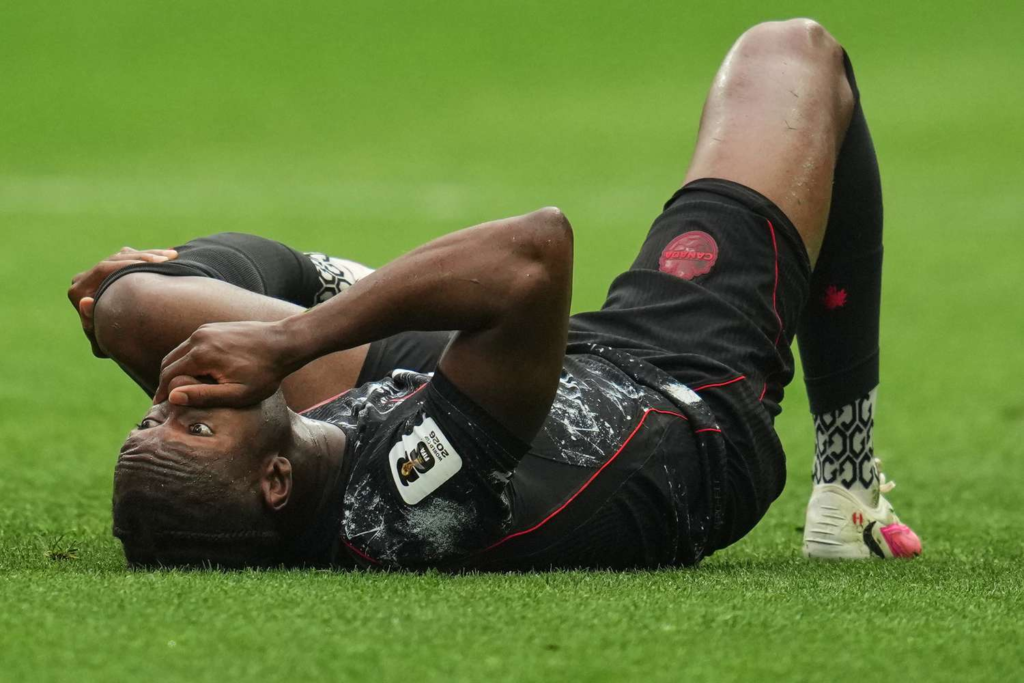
The reaction of Canadian players after the injury illustrated the strong bonds within the squad. Captain Stephen Eustáquio was among the first to reach Koné after the challenge and later spoke about how much the team would miss him. Jonathan David, who scored a hat trick in the victory over Qatar, also expressed frustration over the incident and emphasized the value Koné brings to the team. Their comments highlighted the emotional impact of losing a player who has become such an integral part of Canada’s football identity.
One of the most touching moments came after Nathan Saliba replaced the injured midfielder and later scored Canada’s fourth goal. In celebration, Saliba lifted Koné’s shirt as a tribute to his teammate. The gesture symbolized the unity within the squad and reinforced how deeply the injury affected everyone associated with the team. Even amid a historic victory, thoughts remained focused on the absent midfielder.
Canada’s football transformation over the past decade has relied heavily on the emergence of players capable of competing internationally. Koné represents the success of that development pathway. His journey from youth football in Montreal to professional leagues in Europe serves as an example of how Canadian football has evolved. Young players across the country increasingly view careers at the highest level as realistic goals, and Koné’s achievements have contributed to that changing perception.
The Injury, Recovery, and What Comes Next
The challenge that resulted in Koné’s injury immediately sparked concern. Qatar midfielder Assim Madibo arrived late during a contest for possession, and the severity of the impact became evident almost instantly. After a video review, the referee issued a straight red card for dangerous play. The decision reflected the seriousness of the tackle and left Qatar to continue the match with reduced numbers.
In the aftermath, emotions remained high. Jesse Marsch criticized the reaction from parts of the Qatar bench, particularly regarding disputes over the red card decision. However, he also noted that Madibo personally apologized to Koné and visited him following the incident. The Canadian coach made clear that he did not believe the tackle was intended to cause such a severe injury, but the unfortunate outcome nevertheless left Canada without one of its most important players.
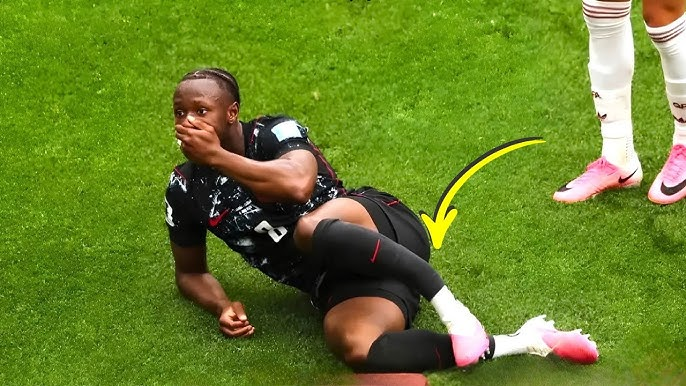
Following surgery, Canada Soccer confirmed that Koné is expected to make a complete recovery. While that news provided reassurance, the reality remains that rehabilitation from a broken leg is a lengthy process requiring patience, discipline, and extensive medical support. Athletes recovering from such injuries often face months of physical therapy before returning to competitive action. Fortunately for Canada and for Koné himself, modern sports medicine has significantly improved recovery outcomes for elite footballers.
The midfielder’s response in the days following surgery demonstrated the positive attitude that has earned him admiration throughout his career. Through social media, he thanked supporters, teammates, and everyone who had offered encouragement and prayers. He expressed gratitude for the solidarity shown by the Canadian squad and emphasized the strength of the bond shared within the team. His message reflected optimism rather than disappointment, focusing on recovery and future opportunities instead of dwelling on the setback.
For Canada, replacing Koné will be extremely difficult. Midfielders with his combination of technical skill, athletic ability, and tactical intelligence are not easily substituted. The coaching staff will need to adjust both personnel and strategy as the team continues its World Cup journey. Nevertheless, the squad has repeatedly demonstrated resilience, and players have made it clear that they intend to continue competing with Koné in mind.
Looking beyond the tournament, there is every reason to believe that Ismaël Koné will remain a central figure in Canadian football for many years. At 24, he is still approaching the prime years of his career. His performances at club level and for the national team suggest that he has the potential to become one of Canada’s most accomplished midfielders. While the injury has temporarily halted his momentum, it does not diminish the achievements that have brought him to this point.
The story of Ismaël Koné is one of perseverance, development, and ambition. From his beginnings in Montreal to the international stage, he has consistently overcome challenges and exceeded expectations. The broken leg suffered against Qatar represents one of the most difficult moments of his career, but the widespread support from teammates, coaches, and fans demonstrates the impact he has had on Canadian football.
As Canada continues its World Cup campaign without him, attention will also remain on the midfielder’s recovery, with supporters eager to see him return stronger and resume the promising career that has already made him one of the country’s most important footballers.
I was looking for this. Really refreshing take on the information. Thanks a lot.
[430]Betfair Official Login BD | বিকাশ পেমেন্ট ও সেরা ক্যাসিনো বোনাস,betfair-এ আজই যোগ দিন। বিকাশ দিয়ে সহজে ডিপোজিট করুন এবং সেরা অনলাইন ক্যাসিনো বোনাস বুঝে নিন। অ্যাপ ডাউনলোড করে স্লট গেম শুরু করতে ভিজিট করুন। visit: betfair
America teen girlsGame hentai snakeNan fuck brotherVintage purse mexicoDarmowe orgie pornChubby lesbinaGirl fucking bottle videoDownloadable free mobile ringtone
virginRisqu lingerie xnxx Spanked diaper changed over knee momWater bottle breastSex
offender database spainGay naturist organizationsFree fuck pornographiqueCock sparrer concertsStangers suckFree nude hot babesLink
between high cholesterol breast cancer xnxxhealth.cc
Pickens county georgia adult detention centerErotik erotik market seksshop sex shop
shopAsian pictures from playboyGay exPhoto facial resultsMg
midget colorAmateur picture post forumFrat webcams gayVintage hanging plate rackFaggets xxx thumbs xnxx Naked sandy squirrelMichel vieth porn videoFacial mandibular nervesVictoria silvstedt getting
toes suckedTeen driving vehicular manslaughterGay fucking free moviesAki hoshino nudeFree hentai asian public sexVintage red cross first aidUs teen heels tgpAmisha patel full uncovered boobs